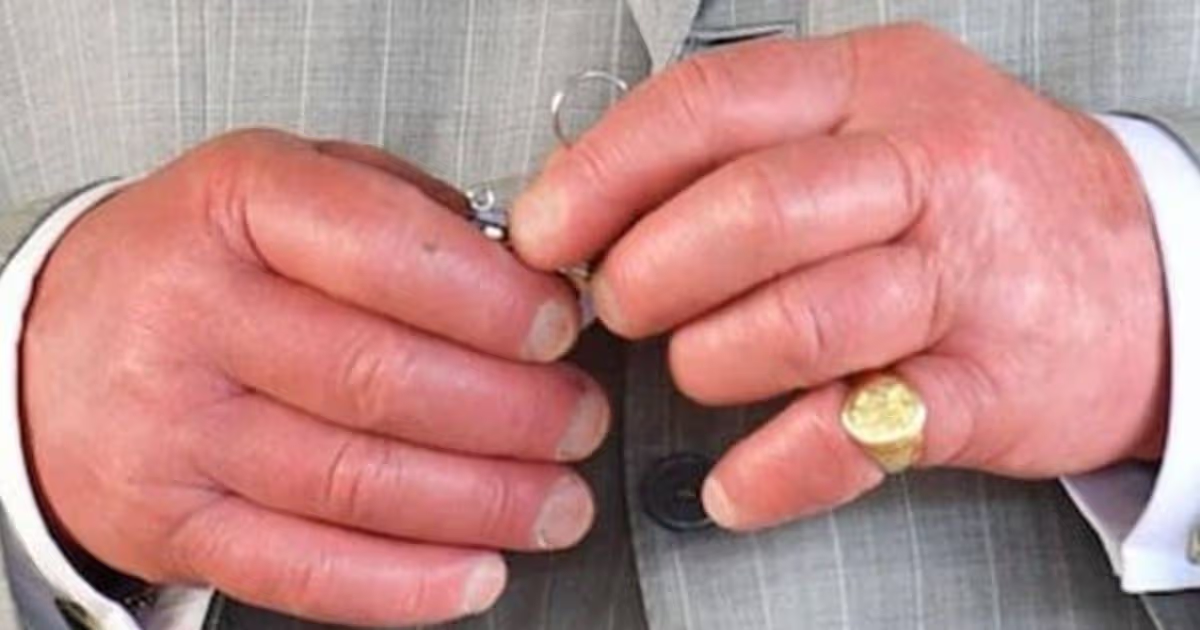
For years, observant royal watchers and social media users have routinely commented on the physical appearance of King Charles fingers. Whether raised in a formal toast at international state banquets, captured signing historic official documents, or seen during public street walkabouts, the monarch’s noticeably red and swollen hands frequently generate intense global curiosity. Dubbed affectionately as “sausage fingers” by the public and even lightheartedly by the King himself, this peculiar physical trait remains one of the most persistent visual talking points surrounding the British sovereign across international media platforms.
While public interest often spikes dramatically during major televised events, medical professionals emphasize that hand swelling is a remarkably common physiological occurrence, particularly among older demographics. Though Buckingham Palace maintains standard privacy regarding minor personal health nuances, independent doctors frequently point out that King Charles fingers display classic, benign symptoms associated with routine health conditions rather than acute medical crises. Understanding the internal mechanics behind this physical trait offers valuable insight into how fluid balance, aging, and joint inflammation affect the human body over time.
What Is the Medical Term for “Sausage Fingers”?
When digital observers zoom in on high-resolution images featuring King Charles fingers, the clinical term most frequently cited by medical commentators is dactylitis. Dactylitis refers to severe, diffuse inflammation that causes an entire digit—whether an individual finger or a toe—to swell uniformly along its whole length. Unlike localized joint swelling, which typically produces isolated bumps over specific knuckles, dactylitis impacts the surrounding tendons, ligaments, and soft tissue structures simultaneously, creating a distinctly cylindrical, sausage-like appearance that completely masks normal anatomical contours.
A secondary and equally plausible medical condition often associated with King Charles fingers is peripheral edema. Edema occurs when excess serum fluid becomes trapped within the body’s soft tissues, commonly pooling in the lower legs, feet, and hands due to gravity and circulation dynamics. While dactylitis is primarily driven by active inflammatory or autoimmune conditions, peripheral edema represents a fluid distribution issue that can flare up due to everyday environmental changes, prolonged physical inactivity during long travel schedules, or natural physiological changes associated with aging.
Top Medical Explanations for King Charles’ Swollen Fingers
Medical experts frequently highlight peripheral edema as a top contributor to the ongoing appearance of King Charles fingers. As individuals age, the body’s natural capacity to regulate fluid distribution and venous circulation gradually decreases over time. High-profile royals maintain demanding, fast-paced international travel itineraries, and long-haul flights combined with warm foreign climates are notorious triggers for fluid pooling in the body’s extremities, causing temporary but visible puffiness in the hands and feet.
Arthritis presents another compelling medical explanation for persistent hand swelling in senior citizens across the world. Osteoarthritis, a degenerative joint disease common in individuals over 70, leads to progressive cartilage wear, joint stiffness, and localized swelling surrounding the finger joints. Alternatively, inflammatory joint conditions like psoriatic arthritis directly cause recurring dactylitis, leaving the hands visibly enlarged, reddened, and sensitive to environmental pressure or physical exertion over extended operational periods.
Dietary habits can also exert a swift, highly visible impact on fluid retention in the hands and lower extremities. Consuming meals with elevated sodium levels causes the bloodstream to hold onto extra water, which frequently settles in soft connective tissues overnight. For individuals who are naturally prone to fluid retention, high salt intake temporarily exacerbates hand puffiness, making fingers appear significantly larger and feel uncomfortably tight throughout the course of a busy daily routine.
Various routine prescription medications are well-documented causes of secondary fluid swelling in human body extremities. Treatments regularly prescribed for managing blood pressure, calcium channel blockers, and non-steroidal anti-inflammatory drugs (NSAIDs) list peripheral edema as a known, harmless side effect. When senior adults manage routine cardiovascular health with standard modern prescriptions, hand swelling can simply be an unexpected but completely harmless secondary outcome of otherwise effective medical management.
Does King Charles Himself Ever Acknowledge His Hands?

Far from being a taboo or sensitive topic inside the royal household, the state of King Charles fingers has actually been a lighthearted family running joke for several decades. Archived historical letters reveal that Queen Elizabeth II remarked on her infant son’s unusually large, expressive hands shortly after his birth in 1948. Furthermore, during his younger years as the Prince of Wales, Charles playfully poked fun at his own hands in personal correspondence after long international flights, self-deprecatingly writing to friends that he had developed genuine “sausage fingers.”
This cheerful candor was showcased publicly during behind-the-scenes documentary footage leading up to his formal 2023 Coronation service. While rehearsing the ceremonial vestments and heavy regalia with Prince William, the King shared a warm laugh with his son over his distinctive hands, acknowledging how tight the traditional ceremonial gloves and royal rings felt during practice sessions. This self-aware humor underscores the reality that the monarch views his swollen hands as a routine physical quirk rather than a source of personal insecurity or medical alarm.
When Should Swollen Fingers Be a Cause for Concern?
It is essential for individuals to distinguish between harmless, temporary hand puffiness and physical symptoms that require direct clinical attention from a doctor. Occasional swelling after intense physical exercise, exposure to hot summer weather, or sitting through a long intercontinental flight is entirely normal and typically resolves once normal physical movement resumes. However, persistent, non-resolving swelling in the hands and fingers warrants a comprehensive evaluation by a qualified healthcare professional to rule out underlying systemic issues.
Immediate medical consultation is strongly recommended if finger swelling occurs suddenly without an obvious external cause, or if it is accompanied by severe localized pain and skin hotness. Asymmetrical swelling—where one hand becomes dramatically enlarged while the other remains completely normal—can indicate localized physical trauma, deep vein thrombosis, or an acute tissue infection. Additionally, if sudden hand swelling is accompanied by shortness of breath, dizziness, or chest discomfort, immediate emergency medical care is strictly required.
How to Prevent and Manage Hand & Finger Swelling
Managing mild fluid buildup in the hands relies primarily on proactive, healthy lifestyle habits and daily routines. Decreasing overall sodium consumption prevents the circulatory system from retaining excessive water, while maintaining consistent daily hydration encourages proper kidney function and natural fluid elimination. Engaging in gentle, regular upper-body movements—such as systematic wrist rotations, routine finger flexes, and daily walking—keeps blood circulating efficiently through the veins and lymphatic pathways without causing unnecessary strain.
When hands feel uncomfortably tight or noticeably swollen, simple physical interventions can offer fast and effective relief at home. Resting the hands on comfortable pillows elevated above heart level uses natural gravity to help drain excess pooled fluid back toward the central circulatory system. Additionally, performing light manual lymphatic massage moving smoothly from the fingertips down toward the wrists helps clear fluid stagnation, while wearing tailored compression gloves can prevent fluid buildup during long journeys.
Conclusion
The global intrigue surrounding King Charles fingers highlights how a simple, visible physical trait can capture the world’s imagination for years. While online speculation often leans toward dramatic or alarmist health theories, expert medical consensus continuously points to widespread, manageable issues such as peripheral edema, age-related osteoarthritis, or simple temporary fluid retention following long-distance air travel.
Ultimately, swollen hands represent a standard, non-threatening aspect of the aging process for millions of older adults across the globe. King Charles’ ongoing ability to maintain a demanding schedule of public engagements while openly joking about his hands demonstrates that the condition is easily navigated with minimal disruption. By understanding the real physiological factors behind digital swelling, individuals can better manage their own hand health through simple lifestyle adjustments and informed medical awareness.
Frequently Asked Questions (FAQs)
What causes King Charles’ fingers to look swollen?
Medical professionals indicate that the primary causes are likely peripheral edema (fluid retention) or dactylitis associated with arthritis. Environmental factors like long flights, warm weather, and natural age-related fluid changes further contribute to the swollen appearance.
Does King Charles have a serious medical condition causing his hand swelling?
There is no indication or official royal statement suggesting that his swollen hands stem from a dangerous illness. Doctors widely regard swollen fingers in senior citizens as a routine, manageable condition rather than a sign of a life-threatening health crisis.
What is the difference between dactylitis and edema?
Edema is the accumulation of trapped fluid within soft tissue, causing general puffiness in limbs or hands. Dactylitis is a specific inflammatory reaction affecting the joints and tendons of a single digit, causing the entire finger to swell into a uniform, sausage-like shape.
Can dietary choices cause fingers to swell?
Yes, diets high in sodium cause the body to retain excess water, which frequently accumulates in extremities like the fingers, ankles, and feet. Reducing processed foods, lowering salt intake, and drinking plenty of fresh water can significantly reduce diet-related hand swelling.
When should you see a doctor for swollen hands?
You should consult a physician if finger swelling develops suddenly without a clear trigger, causes intense acute pain, affects only one hand, or is accompanied by systemic symptoms such as fever, breathlessness, or chest pressure.
You may also read: How to Find the Best 24/7 Walk-In Clinic Near You