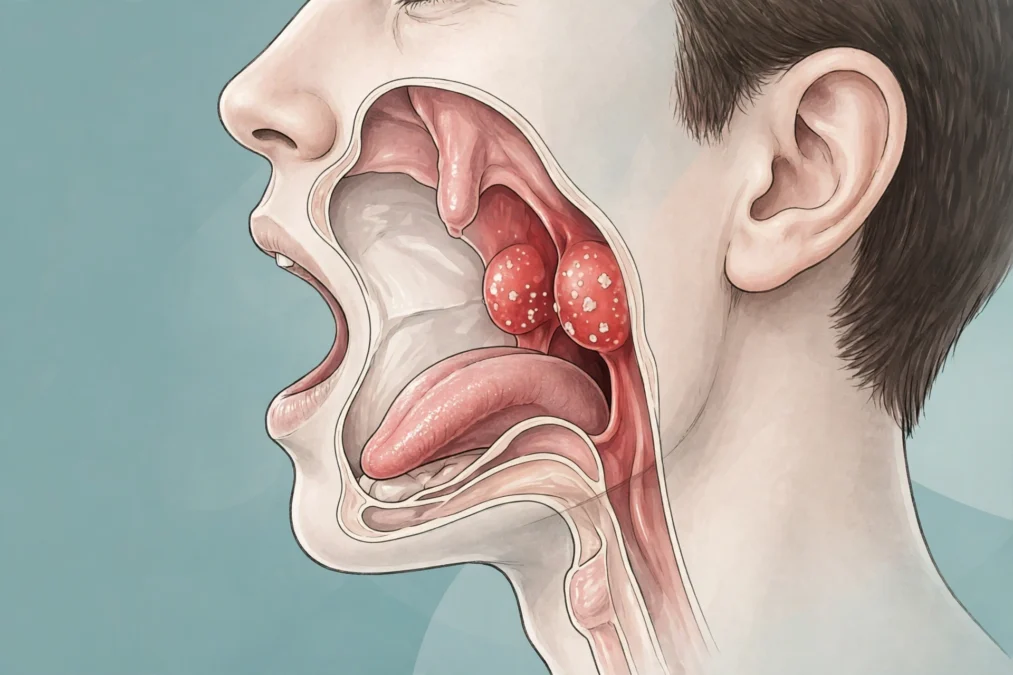
White Spots on Tonsils: Causes, Symptoms and When to See a GP
White spots on tonsils are most often a sign of tonsillitis, which is an infection of the tonsils usually caused by a virus and normally clears up on its own within a few days. The spots themselves are not a diagnosis, because the same appearance can also come from tonsil stones, oral thrush or glandular fever, so what matters most is the whole picture around them, including whether you have a temperature, how painful swallowing feels, and how long the symptoms have lasted. This article is general information only and is not personal medical advice, so if you are worried, or if eating and drinking have become difficult, speak to your GP or call NHS 111.
The tonsils are two oval pads of tissue at the sides of the throat that form part of the immune system, catching germs as they enter through the mouth and nose, and because they have folds and small pits on their surface, they are a natural place for debris, mucus and infection to show up as pale marks. As of November 2026, the NHS describes tonsillitis as a common illness in children that teenagers and adults can also get, and it lists pus-filled spots or white patches on the tonsils among its recognised symptoms.
What Are White Spots on Tonsils?
White spots on tonsils are pale or yellowish-white marks that appear on the surface of one or both tonsils at the back of the throat, and they can look like tiny dots, streaks, patches or a creamy coating depending on what is causing them. In tonsillitis the marks are often pus-filled and sit on tonsils that are red and swollen, whereas tonsil stones tend to appear as small, hard, whitish lumps tucked into the crevices, and oral thrush more often produces creamy patches that spread across the tongue and the inside of the cheeks as well. The appearance, the colour and whether the marks wipe away all give useful clues, but none of these details settles the cause on its own.
It is also worth knowing that the spots are not always a sign of illness, because the tonsils naturally collect small amounts of food debris, dead cells and mucus in their pits, and these deposits can harden into pale specks that sit there quietly without causing pain, fever or any other symptom. Many people only discover such marks by accident, perhaps while brushing their teeth, and then worry that something serious is developing when the marks have in fact been there for some time without causing trouble. The difference that matters most is the context, because marks that arrive suddenly with a sore throat and a fever point much more strongly towards infection than marks that cause no symptoms at all.
What Causes White Spots on Tonsils?
The most common cause is tonsillitis, which is inflammation of the tonsils caused by an infection, and the NHS explains that most cases are caused by a virus such as a cold or flu, while some are caused by bacteria, most often a strain called group A streptococcus, the germ behind strep throat. When the tonsils become infected they turn red and swollen, and in more severe cases pus collects on their surface and shows up as pale marks, often alongside a sore throat, a high temperature, a cough, a headache, earache, tiredness and swollen glands in the neck. The NHS notes that most people get viral tonsillitis, which clears up on its own, and that a GP may prescribe antibiotics for a bacterial cause.
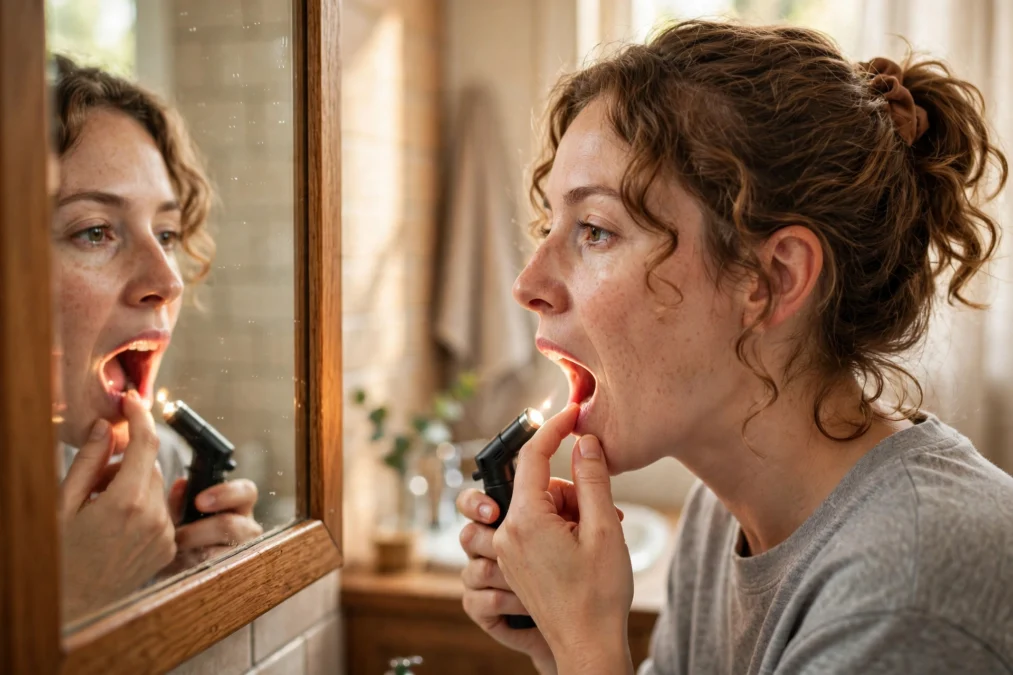
Tonsil stones, also known as tonsilloliths, are another common cause, and they form when debris such as food particles, dead cells and mucus becomes trapped in the small pits of the tonsils and hardens into small white or yellow lumps. Unlike tonsillitis, a tonsil stone is not itself an acute infection, so it often appears without a fever or a very sore throat, although larger stones can cause bad breath, a feeling that something is stuck, or discomfort when swallowing. Oral thrush is a third possibility, and it is a fungal infection caused by a yeast called Candida, which the NHS describes as producing a red mouth with white patches that leave red spots that may bleed when wiped away, along with soreness and a loss of taste.
What Other Symptoms Should You Look Out For?
The symptoms that accompany the marks usually tell you more than the marks themselves, and the NHS lists the typical signs of tonsillitis as a sore throat with difficulty swallowing, a high temperature, a cough, a headache, feeling sick, earache and feeling tired, together with red and swollen tonsils, pus-filled spots, swollen and painful glands in the neck, and bad breath. If several of these arrive together, an infection is the most likely explanation, and the combination also helps a GP or pharmacist judge how unwell you are and whether you need to be seen in person.
There are also specific warning signs that should never be ignored, and knowing them in advance means you can act quickly instead of wondering whether you are overreacting. The NHS advises getting help from NHS 111 now if you have pus-filled spots on your tonsils, if your sore throat is so painful that it is hard to eat or drink, or if your symptoms are severe or getting worse rather than better. Children deserve extra care here, because a child who refuses fluids, becomes unusually drowsy, or develops a rash alongside a sore throat should be assessed promptly, and parents should trust their instincts and seek advice rather than waiting for things to get worse.
How Are White Spots on Tonsils Diagnosed and Treated?
Diagnosis usually starts with a simple conversation and a look at the back of the throat, because a GP will ask when the marks appeared, whether you have a fever, how painful swallowing is, and whether you have had tonsillitis before, then examine the tonsils, the glands in your neck and your temperature to build up the full picture. This hands-on examination matters because the marks alone cannot distinguish a viral infection from a bacterial one, and a doctor will also be checking for other explanations such as thrush, glandular fever or tonsil stones. In many cases that is enough for the GP to advise rest, fluids and pain relief, without any tests at all, which can feel anticlimactic but is actually reassuring.
When the cause is less clear, or when antibiotics are being considered, the GP may take a throat swab, which is a quick test in which a cotton swab is brushed across the back of the throat to collect a sample that can be checked for bacteria such as group A streptococcus. The NHS describes a swab as the way to check for bacteria, and the result helps the doctor decide whether antibiotics are genuinely needed, which matters because antibiotics do not help viral infections. For tonsil stones, treatment may involve gargling with warm salt water and staying hydrated, while oral thrush is treated with antifungal medicine, usually a mouth gel prescribed by a GP.
How Can You Look After a Sore Throat at Home?
Looking after a sore throat at home is mostly about comfort, fluids and rest, and a few simple habits can make the worst days of tonsillitis noticeably easier while the infection runs its course. Drinking plenty of fluids is the single most useful step, because a sore throat makes people drink less, and dehydration then makes the pain, tiredness and headache worse, so sipping water regularly, and trying warm drinks, ice lollies or diluted squash if plain water feels harsh, can all help. Gargling with warm salt water, made by dissolving half a teaspoon of salt in a glass of warm water, is a traditional remedy that many people find soothing, and it can also help to clear mucus and debris from around the tonsils.
Rest matters just as much as fluids, because the body fights infection best when it is not being pushed hard, so taking a day or two off work or school and avoiding smoke, strong fumes and alcohol while the throat is sore can all support recovery. Our related guide on sore throat remedies (https://healthnes.co.uk/https-www-quora-com-what-kills-a-sore-throat-fast-overnight/ covers more ways to ease a sore throat at home, and it is worth reading alongside this article if swallowing is painful. Over-the-counter pain relief can help with both the pain and any fever, but always read the label, keep to the recommended dose, and ask a pharmacist if you are unsure, especially if you are pregnant, take regular medication, or are giving medicine to a child.
When Should You See a GP Urgently?
Most cases settle within a few days without any medical treatment, but there are clear situations where you should not wait, and knowing them in advance removes the guesswork that makes people either panic unnecessarily or delay when they should have acted. The NHS advises getting help from NHS 111 now if you have pus-filled spots on your tonsils, if your sore throat is so painful that it is hard to eat or drink, or if your symptoms are severe or getting worse, and you should see a GP if a sore throat does not improve after a week, if you keep getting tonsillitis, or if you notice a white patch that does not go away. These thresholds are deliberately practical, because they separate ordinary infections that need only rest and fluids from the smaller number of cases where a swab, antibiotics or a closer look are genuinely needed.
You should call 999 or go to A&E straight away if you cannot swallow, are drooling, cannot open your mouth, have swelling on one side of the throat or neck, are struggling to breathe, or have a stiff neck with a high temperature, because these can be signs of a complication such as quinsy, which the NHS describes as an area filled with pus between the tonsils and the wall of the throat, and which needs urgent hospital treatment. The same urgency applies to a child who is not drinking, is unusually sleepy, or has a rash that does not fade when pressed, and to anyone whose symptoms improve and then suddenly worsen again with a new fever. If you are ever unsure, calling NHS 111 is the right move, because advisers can listen to your symptoms and direct you to the right service.
Conclusion
White spots on tonsils are a common and often worrying sight, but in most cases they are a sign of tonsillitis, usually caused by a virus, and they settle within a few days with rest, fluids and simple pain relief, while tonsil stones and oral thrush explain many of the remaining cases. The marks alone never tell the whole story, so the symptoms around them, how long they last, and whether eating and drinking become difficult are the details that matter most, and they are the details a GP will ask about if you seek advice. As of November 2026, NHS guidance remains clear and reassuring: most tonsillitis clears up on its own, antibiotics are reserved for bacterial cases, and urgent help is available through NHS 111 whenever swallowing becomes difficult or symptoms are severe.
If you have noticed the marks and something does not feel right, trust that instinct, keep an eye on the warning signs listed above, and speak to your GP or a pharmacist, because a short conversation can turn a worrying discovery into a clear plan and a much calmer few days. Most people who search for this symptom go on to recover fully within a week, and the small number who need medical treatment are usually glad they sought it promptly, which is the best reason of all not to sit and worry alone.
Are they always a sign of infection?
Not always, although infection is the most common cause, and the marks can appear with tonsillitis, which may be viral or bacterial, but they can also be tonsil stones, which are harmless deposits of debris that harden in the pits of the tonsils, or oral thrush, which is a fungal infection that produces creamy white patches. The key difference is usually the company the marks keep, because marks that arrive with a sore throat, fever and swollen glands point towards infection, while marks without any pain or fever are more likely to be stones or debris. If the marks do not go away, keep coming back, or you feel unwell, it is worth asking a GP or pharmacist to take a look rather than trying to diagnose the cause from a photograph alone.
Can they go away on their own?
Yes, in many cases they can, because most tonsillitis is viral and the NHS says symptoms usually go away after three to four days, although they can last longer, and as the infection settles the marks fade along with the redness and swelling. Tonsil stones can also dislodge on their own, sometimes after gargling with warm salt water or during coughing, although larger ones may linger and need advice from a GP or dentist. If the marks are still there after a week, are getting bigger, or are joined by worsening pain, a fever or difficulty swallowing, you should seek medical advice instead of continuing to wait, because a bacterial infection or thrush may need treatment to clear properly.
Do they mean I need antibiotics?
No, the marks do not automatically mean you need antibiotics, because most tonsillitis is caused by a virus, and antibiotics do not work against viruses, so a GP will only prescribe them when the evidence points towards a bacterial infection. The doctor may take a throat swab to check for bacteria such as group A streptococcus before deciding, and will also consider how severe your symptoms are and how long they have lasted. If antibiotics are prescribed, finish the whole course exactly as directed, even if you feel better quickly, and never take leftover antibiotics or someone else’s prescription, because that can cause harm and make future infections harder to treat.
Are white spots on tonsils contagious?
The marks themselves are not contagious, but the infections that cause them often are, because tonsillitis is usually caused by a virus or bacteria that spreads through coughs, sneezes and close contact, in the same way as colds and flu, and the NHS notes that tonsillitis itself is not contagious while most of the infections behind it are. That means it is sensible to wash your hands often, avoid sharing cups, cutlery and towels while you are ill, and keep some distance from others if you have a fever, especially from babies, older people and anyone with a weakened immune system. Tonsil stones and oral thrush, by contrast, are not spread from person to person in the usual sense, although oral thrush in adults is not considered contagious according to the NHS.
When should a child with white spots on tonsils see a doctor?
A child with the marks should see a doctor promptly if they have difficulty swallowing or are refusing fluids, if they have a high temperature that does not come down, if they are unusually drowsy, or if the sore throat is very painful or not improving after a few days. The NHS advises getting help from NHS 111 now if a child has pus-filled spots on the tonsils or a sore throat so painful that eating or drinking is hard, and parents should call 999 if the child cannot swallow, is drooling, cannot open their mouth, or is struggling to breathe. Children can develop complications more quickly than adults, so it is always better to seek advice early and let a professional decide, rather than waiting to see whether things improve on their own.