Hair of the Dog: Does Drinking More Alcohol Cure a Hangover?
Hair of the dog means drinking more alcohol the morning after a heavy night in the hope of easing a hangover, and the short answer is that it does not cure a hangover at all: it only delays the symptoms until the extra alcohol wears off, and it can make the hangover worse when it returns. The NHS is clear on this point, advising that drinking more alcohol the morning after does not help, that drinking in the morning is a risky habit, and that after a heavy session doctors advise waiting at least 48 hours before drinking any more alcohol, even if you do not have a hangover, to give the body time to recover. Drinkaware gives the same verdict, explaining that the idea is a myth, that more alcohol simply tops up the level of alcohol in the blood, and that the only real hangover cure is prevention. This article is general information only and is not medical advice, and if you are worried about your own drinking, your GP or an alcohol support service can help without judgement.
The idea survives because it feels as though it works, and that feeling is worth understanding rather than dismissing, because anyone who has woken up with a pounding head, a dry mouth and a churning stomach can see the appeal of a quick fix, especially when a friend swears by a morning beer or a Bloody Mary. The truth is less comforting but much more useful, because once you understand why a morning drink seems to help, why it cannot actually cure anything, and what the habit can lead to if it becomes routine, the whole idea loses its charm. As of November 2026, the advice from the NHS and Drinkaware is consistent, the science behind it is straightforward, and the genuinely helpful steps for a hangover are simple, cheap and far kinder to your body than another drink.
What Does Hair of the Dog Mean, and Where Does It Come From?
Hair of the dog is a casual expression for having another alcoholic drink the morning after drinking heavily, with the idea that a small amount of the same thing that caused the problem will somehow fix it, and it usually refers to a beer, a glass of wine or a spirit-based drink taken to take the edge off a hangover. The full form of the saying is “hair of the dog that bit you”, and it is used in pubs, at parties and in films as a kind of folk remedy, often with a wink, as though it were a harmless trick that everyone knows about. In practice it can mean anything from a single beer with breakfast to a full return to drinking that stretches into another day, and that range matters, because an occasional morning drink after a celebration and a regular habit of drinking to feel normal in the morning are very different things.
The phrase comes from an old folk belief that the best treatment for a dog bite was to place a hair from the same dog into the wound, on the principle that like cures like, and the full saying carried that idea from medicine into drinking culture over several centuries. The belief itself was a superstition, because putting a hair from a biting dog into a wound does nothing to treat a bite, but the logic was memorable, and it was eventually applied to alcohol, where the “bite” is the previous night’s drinking and the “hair” is another drink the next morning. The expression appears in English writing from at least the sixteenth century, and it has survived into modern use because it is vivid and easy to remember, even though the remedy it describes has no more medical basis than the dog-bite cure it was borrowed from.
Why Does Hair of the Dog Feel Like It Helps?
The remedy feels like it helps because alcohol is a depressant that numbs pain, dulls anxiety and slows the nervous system, so a morning drink can temporarily take the edge off a headache, calm the shakes and make the world feel a little less harsh for an hour or two. Part of the effect is also about withdrawal, because after a heavy night the body has adapted to the presence of alcohol, and when the level falls sharply in the morning, the nervous system rebounds into a state of over-activity that produces trembling, sweating, anxiety and nausea, and a fresh drink pushes that rebound back down again. This is the same mechanism that makes alcohol feel relaxing in the evening, and it is why the relief feels so convincing, because the symptoms genuinely do ease while the alcohol is in the system.
The problem is that the relief is borrowed from the future, because the alcohol has to be processed by the liver before it leaves the body, and while it is being processed, the dehydration, the poor sleep, the stomach irritation and the build-up of toxic by-products are all still there, waiting underneath. As the morning drink wears off, the hangover returns, often worse than before, because the body now has even more alcohol to clear, even less water in reserve, and even less sleep behind it. Drinkaware puts it plainly, explaining that more alcohol simply tops up the blood alcohol level and extends the time alcohol stays in the body, so the hangover is postponed rather than prevented, and that is the key insight that turns the trick from clever into costly.
Does Hair of the Dog Actually Cure a Hangover?
No, the morning drink does not cure a hangover, and there is no reliable scientific evidence that drinking more alcohol the morning after helps in any lasting way, because a hangover is caused by the effects of alcohol on the body, and adding more alcohol can only add to those effects, not reverse them. The NHS states this directly in its hangover guidance, saying that hangover cures are generally a myth, that there are no cures for a hangover, but that there are things you can do to avoid one and, if you do have one, to ease the discomfort, and it lists drinking more alcohol as one of the things to avoid. The guidance also notes that alcohol makes you urinate more, which leads to dehydration, and that dehydration is what causes many of the symptoms of a hangover, so a drink that dehydrates you further cannot logically be the solution.
The same conclusion comes from Drinkaware, which describes the idea as a myth and explains that the only hangover cure is prevention, either through drinking moderately, which it defines as less than six units in a session, or not drinking at all, and it warns that routine morning drinking can lead to increased tolerance, which means needing more alcohol each time to get the same effect, and that this raises the risk of becoming dependent on alcohol. No food, drink, supplement or pill has been shown to cure a hangover either, so the honest advice is always the same: the hangover ends when the body has cleared the alcohol, rehydrated and rested, and nothing can speed that process up.
What Are the Risks of Hair of the Dog?
The risks start with the obvious one, which is that the morning drink makes the hangover worse when it returns, because the extra alcohol adds to the dehydration, the sleep disruption and the toxic load on the liver, and it can turn a one-day hangover into a two-day one, with a second morning of headache, nausea and exhaustion. It also carries practical risks that are easy to overlook when you are already feeling rough, because drinking in the morning means alcohol is still in your system later in the day, which can affect driving, work, childcare and any task that needs concentration, and it is worth remembering that you can still be over the drink-drive limit the morning after a heavy night, even before you add another drink.
The deeper risk is the habit itself, because drinking to feel better in the morning is one of the earliest warning signs that a person’s relationship with alcohol is changing, and both the NHS and Drinkaware treat it as a signal worth taking seriously rather than as a joke. When a morning drink becomes the normal response to a hangover, tolerance builds, which means the same amount of alcohol has less effect, so the person drinks more to get the same relief, and over time the body can become dependent, which means stopping suddenly can cause withdrawal symptoms that need medical help. This does not happen to everyone who has ever had a morning beer after a party, and a single occasion is not a diagnosis, but the pattern is well recognised, and if you notice that you are drinking in the morning regularly, that is a good moment to talk honestly to your GP or to an alcohol support service.
What Actually Helps a Hangover?
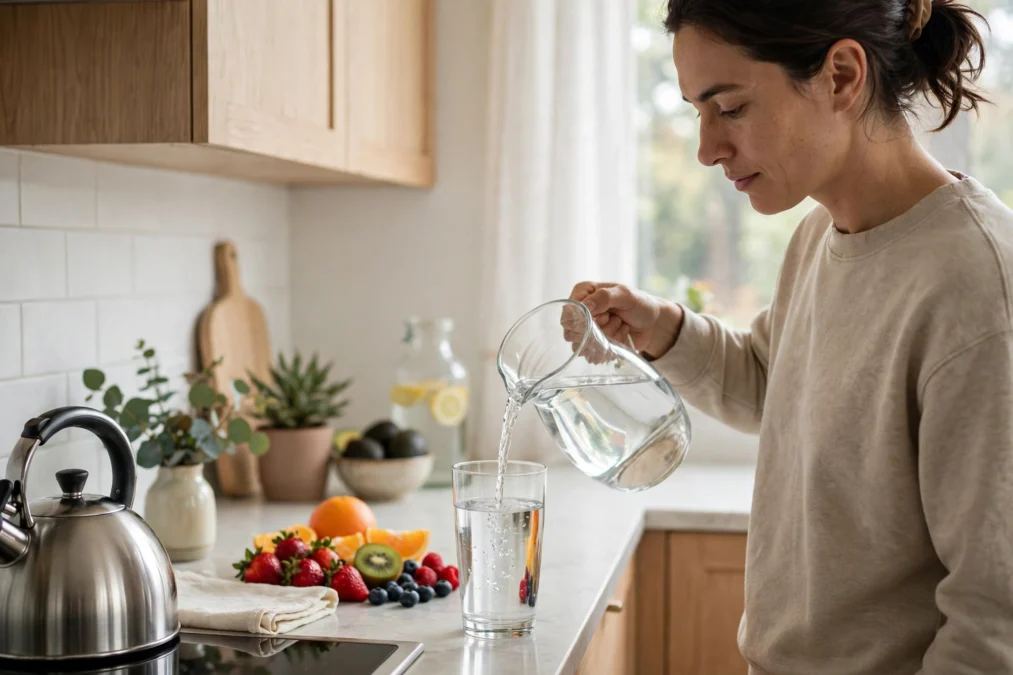
What actually helps a hangover is unglamorous but reliable, and it starts with water, because alcohol makes you urinate more and dehydration causes many of the worst symptoms, including the headache, the dry mouth and the dizziness, so sipping water slowly and steadily is the single most useful thing you can do. The NHS advises drinking bland fluids that are easy on the stomach, such as water, soda water or isotonic drinks, and it also suggests bouillon, a thin vegetable broth, as a good source of vitamins and minerals that can top up what was lost through drinking, along with sugary foods to help with the shakes and low blood sugar, and an antacid if your stomach needs settling first.
Rest is the second pillar of recovery, because alcohol disrupts sleep even when it makes you fall asleep quickly, so the sleep you get after drinking is lighter and less restorative, and a hungover body is essentially a tired body that needs more rest, not more stimulation. Going back to bed, keeping the room dark and quiet, and giving yourself permission to take the morning slowly can make a real difference, and over-the-counter painkillers such as paracetamol can help with a headache or muscle aches, although ibuprofen can irritate an already sore stomach, so paracetamol is often the gentler choice, and you should always follow the packet instructions. What does not help, according to the NHS, is coffee, which can dehydrate you further, a cold shower, which does nothing for the alcohol in your system, or a greasy fry-up, which can make nausea worse, and above all, another drink, which only delays the problem.
When Morning Drinking Is a Warning Sign, and When to Get Help
Drinking in the morning is a warning sign when it stops being an occasional joke after a celebration and starts becoming a routine, because needing a drink to feel normal, to stop the shakes, or to face the day is one of the recognised signs that alcohol dependence may be developing. The NHS lists the signs of alcohol-use disorder as including difficulty stopping or reducing the amount you drink even when you want to, needing more alcohol to get the same effect, and experiencing withdrawal symptoms such as shaking, sweating, nausea and anxiety when the alcohol wears off, and these symptoms typically begin within six to twelve hours of the last drink. If you recognise any of these in yourself, it does not mean you have failed, but it does mean that the time to talk to someone is now, while the problem is still manageable, rather than later when it has become harder to change.
It is also worth paying attention to the wider pattern, because dependence rarely arrives on its own and is often accompanied by other changes, such as drinking alone, hiding how much you drink, missing work or family commitments, or finding that alcohol is affecting your mood, your sleep or your relationships. Friends and family sometimes notice these changes before the person drinking does, and if someone close to you has mentioned your drinking, or if you have tried to cut down and found you could not, those are signals worth listening to rather than dismissing. If you are worried, the best first step is to speak to your GP, who can offer an honest assessment and a referral to local alcohol services, and there are also free and confidential helplines, including Drinkline on 0300 123 1110, and peer support groups such as Alcoholics Anonymous and SMART Recovery. Our guide to 30 days without alcohol (https://healthnes.co.uk/30-days-no-alcohol-before-and-after-what-really-changes-in-a-month/) looks at what actually changes in a month without drinking, and many people find that a short break is a useful way to see clearly how much alcohol has become part of their routine.
Conclusion
Hair of the dog is one of those phrases that sounds like folk wisdom and feels like it works, but the evidence points the other way, because drinking more alcohol the morning after does not cure a hangover, it only delays it, and it can make the eventual hangover worse while adding new risks of its own. The NHS and Drinkaware agree on this, and their advice is consistent and simple: rehydrate with water and bland fluids, eat something plain, rest, use paracetamol for a headache if it suits you, and wait at least 48 hours after a heavy session before drinking again. As of November 2026, there is still no proven hangover cure, and the only reliable way to avoid a hangover is to drink less, pace yourself, eat first and alternate with water, which is less exciting than a morning beer but far kinder to your body.
If morning drinking has become a habit rather than a one-off, that is worth an honest conversation with your GP, because help is available, it works, and asking for it is the strongest step you can take. It is particularly important to get medical help before stopping suddenly if you have become dependent on alcohol, because the NHS warns that stopping overnight can be very dangerous, and withdrawal symptoms can include shaking, sweating, nausea, anxiety, and in severe cases seizures. Getting help is not a sign of weakness, and it is not something to put off until things get worse, because the earlier someone speaks up, the more options there are, and the easier the path back to feeling well becomes.
Does it cure a hangover?
No, it does not cure a hangover, because a hangover is caused by dehydration, disturbed sleep, stomach irritation, low blood sugar and the toxic by-products of alcohol, and drinking more alcohol adds to all of those problems rather than reversing them. The NHS advises that drinking more alcohol the morning after does not help, and that it only delays the appearance of symptoms until the extra alcohol wears off, while Drinkaware explains that more alcohol simply tops up the level of alcohol in the blood and extends the time it stays in your system. The only things that genuinely help are water, rest, plain food, time, and, if needed, a painkiller such as paracetamol taken as directed.
Why does it feel like it works?
It feels like it works because alcohol is a depressant that numbs pain and calms the nervous system, so a morning drink can temporarily ease a headache, calm the shakes and reduce anxiety, and it can also push back the rebound over-activity that happens when alcohol levels fall sharply after a heavy night. The relief is real but short-lived, because the underlying dehydration, poor sleep and toxic by-products are still there, and as the morning drink wears off the hangover returns, often worse than before, because the body now has even more alcohol to process. That temporary easing is easy to mistake for a cure, which is why the idea has survived for so long despite having no medical basis.
How long should you wait before drinking again after a hangover?
After a heavy drinking session, doctors advise waiting at least 48 hours before drinking any more alcohol, even if you do not have a hangover, to give the body time to recover, and this is the guidance given by the NHS in its hangover advice. The UK Chief Medical Officers’ low-risk drinking guidelines also advise adults not to regularly drink more than 14 units a week, spread over three or more days, with several drink-free days each week, which is a useful framework for keeping drinking at a level that is less likely to cause hangovers or longer-term harm. If you find it hard to wait 48 hours, or hard to keep to drink-free days, that is worth mentioning to your GP, because it can be an early sign that alcohol is becoming harder to control.
What is the best thing to drink for a hangover?
The best thing to drink for a hangover is water, because dehydration causes many of the worst hangover symptoms, and sipping water slowly and steadily helps to replace what was lost, while soda water or isotonic drinks can also help. The NHS also suggests bouillon, a thin vegetable broth, as a good source of vitamins and minerals, and recommends bland fluids that are easy on the stomach, along with sugary foods to help with the shakes and an antacid if your stomach needs settling. Coffee is not a good choice, because it can dehydrate you further, and alcohol is the worst choice of all, because it only delays the hangover and makes it worse when it returns.
Is drinking in the morning a sign of alcohol dependence?
Drinking in the morning can be a sign of alcohol dependence, especially if it happens regularly, if you need a drink to feel normal or to stop shaking, or if you find it hard to stop or cut down even when you want to, and the NHS lists difficulty stopping, needing more alcohol for the same effect, and withdrawal symptoms within six to twelve hours of the last drink among the signs of alcohol-use disorder. A single morning drink after a celebration is not, on its own, a diagnosis, but a regular pattern of morning drinking is something to take seriously and to talk about with your GP or an alcohol support service. If you have become dependent, do not stop suddenly without medical advice, because withdrawal can be dangerous and needs to be managed safely by a doctor.