Burst Blood Vessel in Eye: Causes, Treatment and When to Worry
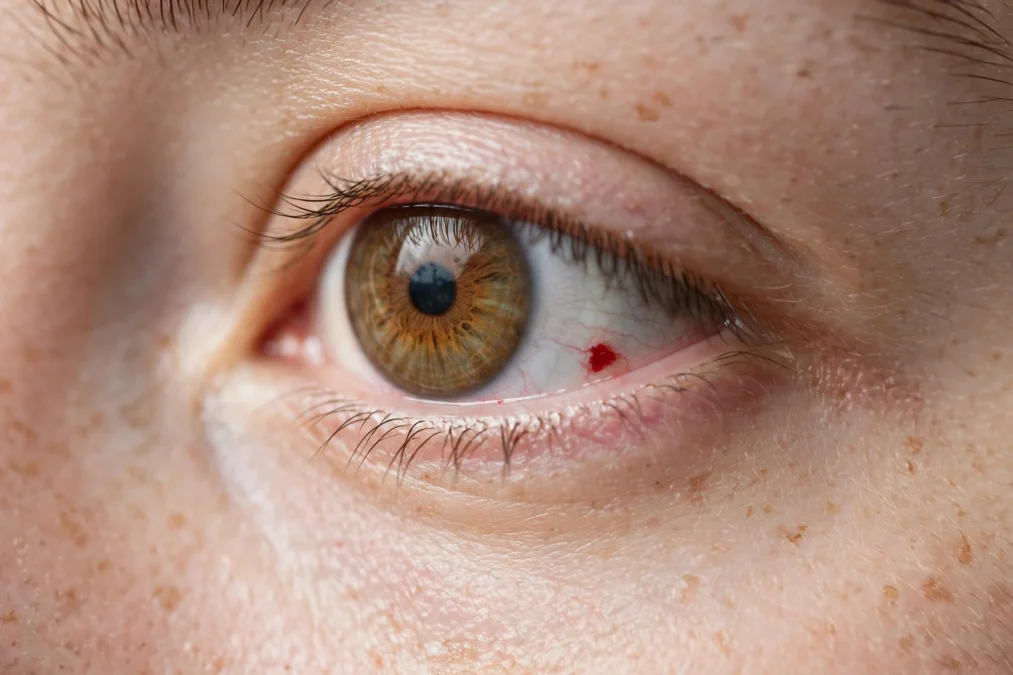
A burst blood vessel in the eye, known medically as a subconjunctival haemorrhage, is a small bleed under the clear surface of the white of the eye that looks alarming but is usually harmless and needs no treatment. The bright red patch appears when one of the tiny blood vessels in the conjunctiva, the transparent membrane covering the white of the eye, leaks a small amount of blood that sits between the conjunctiva and the sclera underneath. It does not usually hurt, it does not affect your vision, and in most cases it clears up on its own within one to two weeks as the body slowly reabsorbs the blood. This guide explains what causes a burst blood vessel in the eye, how long it takes to heal, what you can do at home, and the warning signs that mean you should see a GP or seek urgent care.
What Is a Burst Blood Vessel in the Eye?
A burst blood vessel in the eye is called a subconjunctival haemorrhage, and it happens when one of the tiny, fragile blood vessels in the conjunctiva breaks and leaks blood into the space between the conjunctiva and the white of the eye, known as the sclera. The result is a flat, bright red patch that can cover part or sometimes all of the white of the eye, and because the blood has nowhere to spread, the colour often looks far more dramatic than the problem actually is. Most people first notice a burst blood vessel in the eye when someone else points it out or when they catch sight of themselves in a mirror, because the condition usually causes no pain, no itching, and no change to vision at all. According to patient guidance from Moorfields Eye Hospital NHS Foundation Trust, subconjunctival haemorrhages are very common precisely because the blood vessels in the conjunctiva are so delicate and can bleed easily, and in most cases there is no specific cause behind the bleed.
The red patch from a burst blood vessel in the eye is similar in nature to a bruise on the skin, and the way it heals follows the same slow, steady pattern as a bruise fading away. The blood is trapped just under the surface, so it cannot drain away quickly, and the body has to reabsorb it gradually over days, which is why the patch often changes colour as it heals, shifting from bright red to a darker shade and sometimes to a yellowish tint before it disappears completely. It is important to understand that this kind of bleed is not the same as a bloodshot eye caused by tiredness, irritation, or conjunctivitis, because those conditions make the whole white of the eye look pink or veiny, while a subconjunctival haemorrhage produces one distinct, solid patch of red. If the redness covers the whole eye, if there is pain, or if your vision has changed, the problem is probably something different, and you should get your eye checked rather than assuming it is a simple subconjunctival haemorrhage.
What Causes a Blood Vessel to Burst in the Eye?
Most cases of a burst blood vessel in the eye happen for no clear reason at all, and doctors describe these as spontaneous, meaning the tiny vessel simply leaked without any obvious trigger or underlying illness. The blood vessels in the conjunctiva are extremely fragile, so even a small, everyday rise in pressure inside the body can be enough to break one, and this is why the condition becomes more common with age as blood vessel walls naturally weaken over time. According to NHS patient information from Cambridge University Hospitals, the most common causes include coughing, sneezing, straining, blowing your nose hard, vomiting, and heavy lifting, all of which briefly raise the pressure in the head and chest. A burst blood vessel in the eye can also follow a direct knock to the eye, rubbing the eye very hard, or recent eye surgery, and people who take blood-thinning medicines such as aspirin, warfarin, apixaban, or rivaroxaban may find the bleed looks larger or takes a little longer to clear.
Certain health conditions can make a burst blood vessel in the eye more likely, and they are worth knowing about even though most single episodes need no investigation. High blood pressure and diabetes are both associated with subconjunctival haemorrhages, because they can weaken small blood vessels over time, and NHS guidance from several hospital trusts recommends asking your GP to check your blood pressure if you have not had it checked recently, particularly if this is your first episode. Strenuous activity, such as carrying heavy shopping bags or lifting weights, is another recognised trigger, and the same pressure effect explains why a burst blood vessel in the eye sometimes appears after a bout of forceful vomiting or a long coughing fit during a cold. In rare cases, repeated episodes can point to a clotting problem or another underlying condition, which is why doctors take recurrent bleeds more seriously than a one-off event, and why keeping a note of how often it happens can help your GP decide whether any tests are needed.
Is a Burst Blood Vessel in the Eye Dangerous?
A burst blood vessel in the eye is almost never dangerous, and for most people it is a harmless condition that causes no damage to the eye and no risk to vision. The blood sits on the surface of the eye, outside the eyeball itself, so it cannot press on the retina or the optic nerve, and it does not mean that there is bleeding inside the eye or in the brain, which is a common worry when people first see the bright red patch. Patient guidance from Guy’s and St Thomas’ NHS Foundation Trust states plainly that although the condition looks frightening, it is never serious, and that treatment is not necessary because the blood clears up on its own. That reassurance applies to the great majority of cases, and the main impact of a burst blood vessel in the eye is usually cosmetic, with the red patch looking worse than it feels and drawing unwanted comments from other people.
There are, however, a small number of situations in which a burst blood vessel in the eye should be checked promptly, and knowing the difference is the most important part of this guide. If the red eye followed a significant injury, such as a blow to the face or a chemical splash, you should seek urgent care, because the bleed could be a sign of damage to the eyeball itself rather than a simple surface leak. You should also seek help quickly if you have pain in the eye, any change in your vision, sensitivity to light, discharge, or a feeling that something is stuck in the eye, because those symptoms do not belong to a straightforward subconjunctival haemorrhage. If you take blood-thinning medication and the bleed is very large, or if the red patch keeps coming back again and again, your GP may want to review your medication and check your blood pressure and blood sugar. A single, painless burst blood vessel in the eye with normal vision is not an emergency, but any of these warning signs means the eye deserves a proper examination.
How Long Does a Burst Blood Vessel in the Eye Take to Heal?
A burst blood vessel in the eye usually takes between seven and fourteen days to heal, although some NHS patient leaflets note that it can take up to two or three weeks for the redness to disappear completely, particularly if the bleed is large. The healing process is gradual, and the patch often looks its worst in the first day or two before it slowly starts to fade, which can be frustrating if you have an important event coming up, but there is no safe way to speed the process up. As the body reabsorbs the trapped blood, the colour of the patch may change from bright red to a deeper maroon and then to a yellowish or brownish shade, much like a bruise on the skin changing colour as it heals. During this time you can carry on with your normal activities, including work, exercise, and wearing contact lenses if they are comfortable, although some people prefer to give their eyes a rest for a day or two.
The exact healing time for a burst blood vessel in the eye depends on how much blood leaked and on your general health, and people who take blood-thinning medicines may notice that the redness lingers a little longer than the usual one to two weeks. If the patch has not started to fade at all after two weeks, or if it is still clearly visible after three weeks, it is worth mentioning to your GP or optician, not because it is likely to be serious, but because a very slow-healing bleed deserves a second look. It is also worth remembering that a new burst blood vessel in the eye can appear while an old one is still healing, especially if you catch another cold or have another coughing fit, and that does not mean the first one has got worse. The key point is that healing is measured in days and weeks rather than hours, so patience is the main treatment, and the red patch will fade on its own as long as there are no warning symptoms alongside it.
What Treatment Helps a Burst Blood Vessel in the Eye?
A burst blood vessel in the eye does not usually need any treatment at all, and no eye drop or medicine can make the trapped blood disappear faster, because the blood has to be reabsorbed by the body at its own pace. NHS guidance from Moorfields Eye Hospital states that the condition usually settles by itself within a week or two, and that the only treatment worth considering is for comfort, not for cure. If your eye feels slightly dry, gritty, or uncomfortable, lubricating eye drops, sometimes called artificial tears, can help soothe the surface, and these are available without a prescription from any pharmacy. You should not use eye drops designed to “get the red out”, because those work by constricting blood vessels and can cause rebound redness when they wear off, and they do nothing to clear the trapped blood itself.
While a burst blood vessel in the eye is healing, a few simple habits can help you stay comfortable and avoid making the redness worse. Avoid rubbing the affected eye, even if it feels itchy, because rubbing can break more tiny vessels and enlarge the patch, and wash your hands before touching anywhere near your eyes. If you wear contact lenses, make sure they are clean and comfortable, and consider wearing glasses for a day or two if the eye feels irritated, although lenses do not normally need to be stopped. There is no need to rest in bed or avoid screens, and you can continue to exercise, although very heavy lifting that strains the face may be worth postponing for a day. If you take blood-thinning medication, do not stop it without speaking to your GP or pharmacist, because the risk of stopping the medicine is far greater than the inconvenience of a red eye, and your doctor can advise whether any adjustment is needed.
When Should You See a GP About a Burst Blood Vessel in the Eye?
You should see a GP about a burst blood vessel in the eye if the redness keeps coming back, if it does not fade within two to three weeks, or if you have any symptoms that do not fit the usual harmless pattern. NHS patient information from Harrogate and District NHS Foundation Trust advises that anyone who suffers repeated subconjunctival haemorrhages, or who notices any other unusual bleeding, such as nosebleeds, bleeding gums, or easy bruising, should see their GP, because repeated bleeds can occasionally point to high blood pressure, diabetes, or a problem with blood clotting. Your GP may check your blood pressure, ask about your medicines, and arrange a routine blood test for diabetes or clotting if the pattern suggests it is needed. This is a precaution rather than a cause for alarm, and in most cases the checks come back normal, but it is the right step when the bleeds keep happening.
There are also situations where a burst blood vessel in the eye needs same-day or urgent attention rather than a routine GP appointment. Seek urgent care if the red eye followed a serious injury, if you have pain in the eye, if your vision is blurred or reduced, if you see flashing lights or new floaters, or if the eye is very sensitive to light, because these can be signs of a more serious eye problem. You should also seek help quickly if the redness is accompanied by a severe headache, nausea, or vomiting, or if both eyes are affected at the same time, because these patterns are unusual for a simple subconjunctival haemorrhage. For a single, painless burst blood vessel in the eye with normal vision, the right approach is simply to watch it fade over one to two weeks, and to book a routine GP appointment only if it returns, lingers, or is joined by any of the warning signs described here.
Can You Prevent a Burst Blood Vessel in the Eye?
You cannot always prevent a burst blood vessel in the eye, because most episodes happen without warning and without a clear cause, but a few sensible habits can reduce the chances of a repeat episode. The most useful step is to avoid rubbing your eyes hard, especially when they are itchy from allergies or tiredness, because forceful rubbing is one of the few triggers you can directly control, and keeping allergy symptoms treated can help reduce the urge to rub. If you have high blood pressure, keeping it well controlled through the treatment your GP has prescribed, along with regular checks, supports the health of small blood vessels throughout the body, including those in the eye. The same applies to diabetes, where keeping blood sugar within the range your care team recommends helps protect fragile vessels over the long term.
Protecting your eyes from injury is another practical way to lower the risk of a burst blood vessel in the eye, particularly if you play contact sports, do DIY, or work in an environment where dust or debris can reach your eyes. Wearing safety glasses or sports goggles when there is a real risk of a knock to the eye is a simple precaution that prevents far more serious injuries as well. If you take blood-thinning medication, you cannot stop the medicine, and you should not try, but you can mention recurrent eye bleeds to the clinician who prescribes it, so they can review whether your dose or your blood pressure needs attention. Finally, treating coughs and colds promptly, staying hydrated, and avoiding very heavy straining where possible can all help, but it is worth accepting that an occasional burst blood vessel in the eye is a normal part of life for many people, and a single episode is not a sign that anything is wrong.
Conclusion
A burst blood vessel in the eye looks dramatic, but it is usually a harmless subconjunctival haemorrhage that needs no treatment and clears up on its own within one to two weeks. The bright red patch appears when a tiny vessel in the conjunctiva leaks, most often for no clear reason, or after coughing, sneezing, straining, rubbing the eye, or a minor knock. There is no medicine that speeds healing, although lubricating eye drops can ease any mild discomfort, and the best approach is simply to leave the eye alone, avoid rubbing it, and let the body reabsorb the blood. The situations that deserve medical attention are clear: pain, vision changes, a serious injury, very slow healing, or bleeds that keep coming back. If none of those apply, a single burst blood vessel in the eye is nothing to worry about, and the redness will fade just as surely as a bruise does.
If you want to look after your eyes more generally, our guide to free eye tests, top online tools and free local clinics explains where you can get your eyes checked at no cost and what to expect from the test.
What is a burst blood vessel in the eye called?
A burst blood vessel in the eye is called a subconjunctival haemorrhage. It happens when a tiny blood vessel in the conjunctiva, the clear membrane over the white of the eye, leaks blood into the space between the conjunctiva and the sclera, producing a flat, bright red patch that usually causes no pain and no change to vision.
How long does a burst blood vessel in the eye last?
A burst blood vessel in the eye usually lasts between seven and fourteen days, according to NHS patient guidance from Moorfields Eye Hospital and several other NHS trusts. Larger bleeds can take up to two or three weeks to clear completely, and the colour may change from bright red to a yellowish shade as the body reabsorbs the blood.
Is a burst blood vessel in the eye serious?
A burst blood vessel in the eye is almost never serious. It is a harmless subconjunctival haemorrhage that sits on the surface of the eye and does not affect vision. It becomes a reason to seek care only if there is pain, vision change, a serious injury, or bleeds that keep coming back, according to guidance from Guy’s and St Thomas’ NHS Foundation Trust.
What causes a burst blood vessel in the eye?
A burst blood vessel in the eye most often has no clear cause, but recognised triggers include coughing, sneezing, vomiting, straining, heavy lifting, rubbing the eye hard, a knock to the eye, recent eye surgery, high blood pressure, diabetes, and blood-thinning medicines such as aspirin or warfarin, according to NHS patient information from Cambridge University Hospitals.
Can I wear contact lenses with a burst blood vessel in the eye?
You can usually wear contact lenses with a burst blood vessel in the eye if they feel comfortable, because the bleed is on the surface of the eye and lenses do not make it worse. If the eye feels dry or irritated, lubricating eye drops may help, or you can wear glasses for a day or two until the eye feels settled again.
Should I see a doctor for a burst blood vessel in the eye?
You should see a GP for a burst blood vessel in the eye if the redness keeps coming back, does not fade within two to three weeks, or is joined by unusual bleeding elsewhere, according to NHS guidance. Seek urgent care sooner if there is eye pain, vision change, light sensitivity, or the bleed followed a serious injury.