We’ve all been there — a couple of drinks at dinner, and suddenly you’re self-conscious about every exhale. Understanding how to get rid of alcohol breath starts with one uncomfortable truth: most methods are just masking the smell, not eliminating it.
Why Is It So Hard to Get Rid of the Smell?
Here’s the thing. About 10% of alcohol leaves your body through breath and urine. Your liver breaks ethanol down using ADH and ALDH enzymes, producing acetaldehyde — a toxic compound that’s actually responsible for that stale “morning after” smell. This process happens in your blood, travels to your lungs, and exits every time you breathe out. No amount of gum fixes that.
How to Immediately Get Rid of Alcohol Breath?
You can’t fully eliminate it, but you can reduce it noticeably:
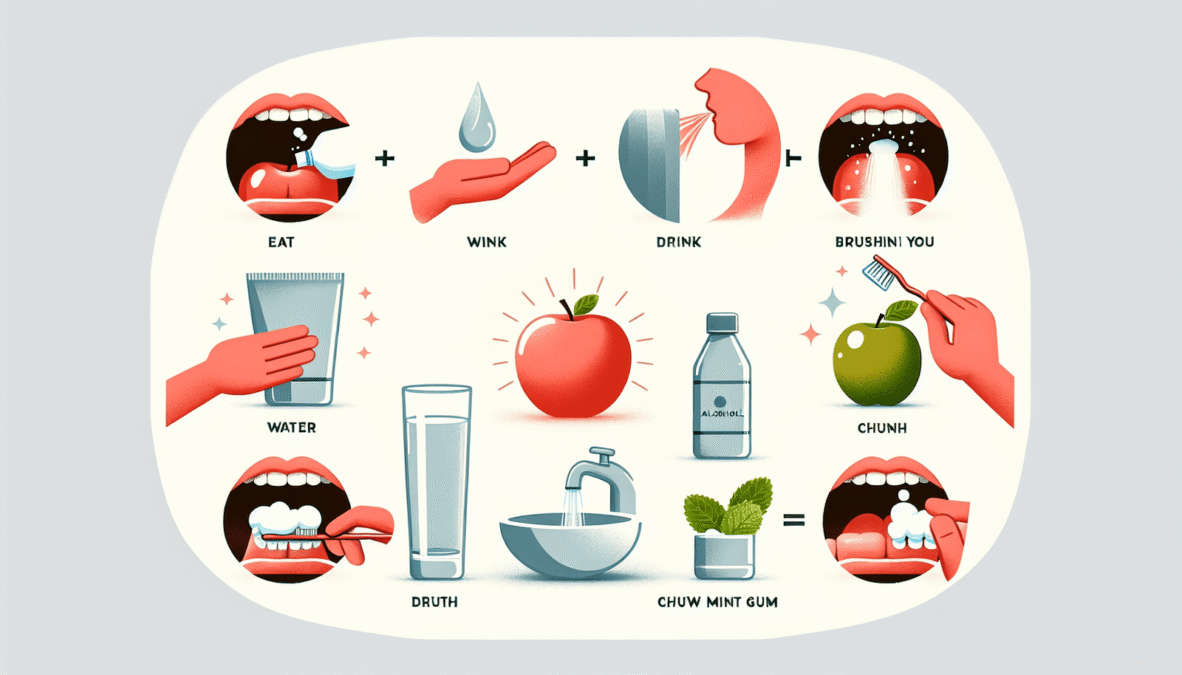
- Chew coffee beans (not just drink coffee) — polyphenols neutralize sulfur compounds in your mouth
- Eat an apple or peanut butter — a 2016 Ohio State University study found raw apple and fat-rich foods help deactivate odor compounds
- Use a tongue scraper, then floss, then rinse with alcohol-free mouthwash. This trio handles the bacterial layer that amplifies the smell
- Chew fresh parsley or mint leaves — chlorophyll acts as a natural deodorizer
One important note: mouthwash containing alcohol can actually make things worse. Fighting fire with fire doesn’t work here.
How Long Does Alcohol Smell Last on Breath?
Your body metabolizes roughly one standard drink per hour. So two beers? About 2–3 hours. A night of heavy drinking could mean 12+ hours of detectable breath. Dark liquors like whiskey and red wine tend to linger longer due to congeners — chemical byproducts of fermentation.
Beer has its own distinct smell because of hops and yeast, wich can stick around in your mouth longer than clear spirits like vodka.
Will Anything Actually Get Rid of It for a Breathalyzer?
No. Let’s be direct about this. Breathalyzers measure alcohol in your lungs, not your mouth. No mint, no coffee, no trick will change your BAC reading. The only thing that works is time. If you’re worried about an interlock device or a test — wait it out.
Does Eating Help?
Eating before and during drinking slows alcohol absorption significantly. Foods high in fat and protein — like nuts, cheese, or avocado — create a barrier in your stomach. This won’t prevent breath odor entirely but it reduces peak blood alcohol levels, meaning less alcohol reaches your lungs.
Staying hydrated matters too. Alcohol is a diuretic, so it dries out your mouth. Dry mouth = more bacteria = worse smell on top of the acetaldehyde coming from your lungs.
FAQ
Which Alcohol Doesn’t Smell on Breath?
No alcohol is truly odorless on breath since the smell comes from metabolism, not the drink itself. That said, vodka and other clear spirits produce fewer congeners and tend to be less noticeable than beer or red wine.
Alcohol Smell on Breath but Not Drinking?
Conditions like GERD, diabetes (ketoacidosis), or certain medications can mimic alcohol breath. If this happens regulary, see a doctor.
How Do People Try to Hide the Smell?
Common tricks include strong-flavored foods like garlic or onion, coffee, heavy perfume, or constant gum chewing. None of these fool a breathalyzer, but they can reduce social detection.
Final Thoughts
The honest answer is simple — time is the only real cure. Everything else is damage control. Eat well before drinking, stay hydrated, practice solid oral hygiene after, and give your liver the hours it needs to do its job. And if your mornings regularly start with worrying about alcohol breath, that might be worth reflecting on too.