
If you have ever been told to use a cream inside your nose before an operation, after a nosebleed, or because tests showed you were carrying a particular bacterium, the product you were almost certainly given is the one this guide covers. It is not a decongestant and it will not clear a blocked nose, because its job is entirely different: it reduces bacteria living in the nose, either to prevent infection or to help the lining heal. The direct answer to the question most patients have is that naseptin nasal cream is a prescription-only antiseptic and antibiotic cream used mainly to clear staphylococcal bacteria from the nose, and it only works if it is used exactly as directed for the full course.
This guide explains what is in the cream, what it is used for, how to apply it, who must not use it, and why finishing the course matters even when your nose feels fine. It is general information only and not medical advice, so if you have been prescribed this cream, follow your own prescription and leaflet, and if anything here differs from what your doctor or pharmacist told you, ask them, because their instructions for your situation take precedence over any general article.
What It Is and What Is Inside
The cream contains two active ingredients working together: chlorhexidine hydrochloride at 0.1 percent, which is an antiseptic that reduces bacteria on the skin and mucous membranes, and neomycin sulfate at 0.5 percent, which is an antibiotic that kills susceptible bacteria directly. That combination is deliberate, because the antiseptic lowers the general bacterial load while the antibiotic targets the staphylococci that commonly live in the front of the nose, and together they are more reliable for clearing nasal carriage than either ingredient alone. It is supplied as a small tube of cream, not a spray or a drop, because a cream stays where it is put and keeps working on the nasal lining between applications.
It is important to be clear about what kind of medicine this is, because it is available on prescription only and should never be borrowed from someone else or bought informally. Prescription-only status reflects the fact that it contains an antibiotic, that it can cause allergic reactions in some people, and that using antibiotics unnecessarily contributes to antibiotic resistance, which makes infections harder to treat for everyone. If a clinician has prescribed it for you, that decision was based on a test result or a clinical need, and the cream should be used only for the person and the purpose it was prescribed for, not kept for later or shared with family members.
What It Is Used For
The main use of naseptin nasal cream is to eradicate nasal carriage of staphylococci, which means clearing bacteria called Staphylococcus aureus from the nose of people who carry them without necessarily being ill. Many healthy people carry these bacteria harmlessly in the nose, but carriage matters before surgery or during a hospital stay, because bacteria from the nose can spread to a wound or to other patients, and it matters especially with MRSA, the resistant form of the bacterium, where decolonisation treatment is used to reduce the risk of serious infection. A course of nasal cream, often combined with antiseptic body washes and advice about bedding and towels, is a standard part of that decolonisation plan in UK hospitals.
The cream is also used in other nasal situations, including after nosebleeds, where it can help the lining settle and reduce the chance of further bleeding, and for crusting and inflammation inside the nose, where its antiseptic and antibiotic action helps the raw lining heal. In those cases the dosing may differ from the decolonisation course, sometimes two to four times a day for up to two weeks, depending on what your clinician advises, so the prescription itself is the guide rather than any general article. What all these uses share is a simple principle: the cream is treating bacteria and irritation on the nasal lining itself, not congestion, allergy, or a viral cold, and it will not help those conditions.
How to Use It
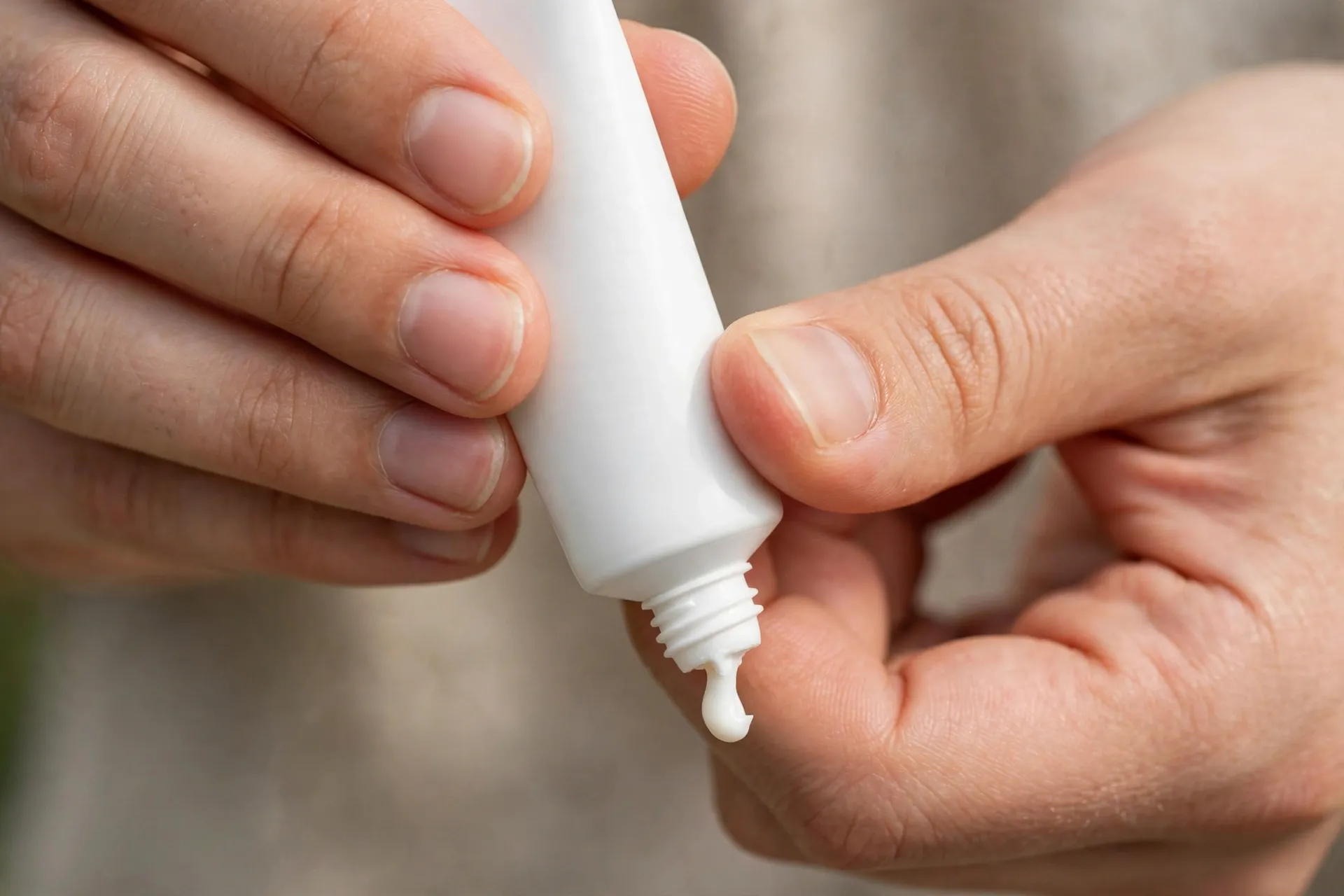
Applying naseptin nasal cream correctly is a small skill, but it matters, because cream that stays on the outside of the nostril or is wiped away immediately will not reach the bacteria living just inside the nose. Start by washing your hands thoroughly and, if your nose is blocked with mucus or crusts, blowing gently first so the cream can reach the lining. Squeeze a small amount, roughly the size of a match head, onto a clean fingertip or a cotton bud, and place it just inside one nostril, then repeat in the other nostril, taking care not to push the tube or your finger deeply into the nose, because the target area is the front part of the nasal lining.
Once the cream is in place, press the soft part of your nostrils together gently and massage them for a few moments, which spreads the cream evenly over the lining where the bacteria live. The usual decolonisation dose is a match-head-sized amount inside each nostril four times a day for ten days, but your prescription may say something different, particularly if the cream was given after a nosebleed or for crusting, so follow your own instructions exactly. Wash your hands again after applying it, avoid touching your eyes until you have done so, and try not to blow your nose hard immediately afterwards, because that can remove the cream before it has had a chance to work.
Allergies and the Peanut and Soya Warning
Allergy warnings deserve special attention with naseptin nasal cream, because it must not be used by anyone who is allergic to neomycin, chlorhexidine, or any of the other ingredients in the tube, and the leaflet lists those ingredients in full. Allergic reactions to neomycin are not rare among people with sensitive skin, and they can show up as itching, redness, swelling, or a rash inside or around the nose, or more widely if the reaction spreads, and anyone who notices those symptoms should stop using the cream and seek advice promptly. A severe allergic reaction, with swelling of the lips or face or difficulty breathing, needs urgent medical help, so do not wait to see whether it settles on its own.
There is also a specific warning about peanuts and soya that has caused confusion, because older formulations of this cream contained peanut oil, which meant it was unsuitable for people with peanut or soya allergy. The product was reformulated in 2023 to remove peanut oil, but older stock may still exist in some places, so the safe approach is to check the leaflet in your own pack and tell your prescriber and pharmacist about any peanut or soya allergy before starting. This is general information only and not medical advice, and if you have a peanut or soya allergy and have been prescribed this cream, a pharmacist can confirm whether your particular tube is from the reformulated stock and whether an alternative is needed.
Side Effects and Precautions
Most people using naseptin nasal cream experience no problems beyond mild local effects, but it helps to know what to expect so that a minor irritation is not mistaken for something serious, and vice versa. The most common effects are irritation inside the nose, such as itching, soreness, or a mild burning feeling, and occasionally a temporary change in taste or smell, which usually settles once the course is finished. Some people notice a little sneezing or a runny nose after application, which is generally harmless, but if irritation is severe, persistent, or accompanied by swelling or a spreading rash, stop using the cream and ask a pharmacist or your prescriber for advice rather than pushing through the course.
There are also straightforward precautions that make treatment safer and more effective, starting with keeping the cream out of the eyes, because it is meant for the nose only and can irritate the eyes considerably if it gets in. Do not use it for longer than prescribed or more often than directed, because prolonged or excessive use of an antibiotic cream increases the risk of irritation and of encouraging resistant bacteria, which defeats the purpose of the treatment. Tell your prescriber about other medicines you use in the nose, and about any history of allergy to antibiotics or antiseptics, because that history changes the risk assessment, and this is general information only, not a substitute for the advice of the clinician who prescribed your treatment.
Finishing the Course and Getting the Best Result
Finishing the full course is the part of treatment that patients most often neglect, because the nose usually feels normal long before the bacteria are fully cleared, and it is tempting to stop early once symptoms settle. With decolonisation treatment, however, stopping early risks leaving enough bacteria behind for carriage to re-establish itself, which means the whole effort, including any accompanying body washes and linen changes, may need to be repeated, and in a hospital setting it may delay a planned operation. The same principle applies after nosebleeds and for crusting, where stopping early can allow irritation to return, so the course length on your prescription is part of the treatment, not an optional extra.
Practical steps make completion easier, such as keeping the tube somewhere visible, setting phone reminders for each dose, and telling household members about the treatment if they are also part of a decolonisation plan, because staphylococci can pass between close contacts. Store the tube as the leaflet directs, check the expiry date before starting, and do not keep leftover cream for future use, because an opened tube can become contaminated and an old antibiotic is not a safe treatment for a new problem. If you miss a dose, apply it when you remember unless it is nearly time for the next dose, in which case skip the missed one rather than doubling up, and if you miss several doses, ask a pharmacist whether the course needs to be restarted.
Conclusion
Naseptin nasal cream is a small but important medicine, because it does a job that no decongestant or saline spray can do: it clears staphylococcal bacteria from the nose, supports MRSA decolonisation before surgery and during hospital care, and helps the nasal lining settle after nosebleeds and crusting. Its strength comes from two ingredients, chlorhexidine 0.1 percent and neomycin 0.5 percent, used together in a match-head-sized amount in each nostril, typically four times daily for ten days for decolonisation, with other regimens for other indications. Used exactly as prescribed, it is a straightforward and effective treatment, but it demands respect for its allergy warnings, its prescription-only status, and its full course length.
The warnings in this guide are not footnotes but the heart of safe use: do not use it if you are allergic to neomycin or chlorhexidine, check the peanut and soya position in your own pack leaflet given the 2023 reformulation, keep it out of your eyes, and finish the course even when your nose feels fine. This is general information only and not medical advice, and the prescription and leaflet you were given, together with your pharmacist or prescriber, are the final authority for your treatment. Ask them about anything unclear before you start, because a two-minute question is far better than a wasted course or an avoidable reaction.
FAQs
What is it used for? Naseptin nasal cream is mainly used to clear staphylococcal bacteria, including MRSA, from the nose, a process called decolonisation that reduces the risk of infection before surgery or during a hospital stay. It is also used after nosebleeds and for nasal crusting and inflammation, where its antiseptic and antibiotic action helps the lining heal. It is not a decongestant and will not clear a blocked nose caused by a cold or allergy, because it treats bacteria and irritation on the nasal lining itself rather than swelling from a viral illness, so it should only be used for the purpose it was prescribed for.
How do I apply it correctly? Wash your hands, blow your nose gently if needed, and place a match-head-sized amount of cream just inside each nostril using a clean fingertip or cotton bud, without pushing deeply into the nose. Press the soft parts of your nostrils together gently and massage briefly to spread the cream over the lining, then wash your hands again and avoid touching your eyes. The usual decolonisation dose is four times daily for ten days, but other uses may involve two to four times daily for up to two weeks, so follow your own prescription exactly and do not blow your nose hard immediately after applying it.
Can I use it if I have a peanut allergy? You must check carefully, because older formulations contained peanut oil and were unsuitable for people with peanut or soya allergy, while the product was reformulated in 2023 to remove peanut oil, although older stock may still exist. The safe approach is to tell your prescriber and pharmacist about any peanut or soya allergy before starting and to read the leaflet in your own pack, which lists the ingredients in your particular tube. This is general information only and not medical advice, and a pharmacist can confirm whether your tube is from the reformulated stock or whether an alternative treatment is needed for you.
What side effects should I watch for? The most common effects are mild irritation inside the nose, such as itching, soreness, a burning feeling, sneezing, or a temporary change in taste or smell, which usually settle when the course ends. More concerning signs include persistent or severe irritation, swelling, or a spreading rash, which may indicate an allergy to neomycin or chlorhexidine, in which case you should stop using the cream and seek advice promptly. A severe allergic reaction with swelling of the lips or face or difficulty breathing needs urgent medical help, so do not wait to see whether it improves, and keep the cream out of your eyes at all times.
Why must I finish the whole course? Finishing the course matters because bacteria may still be present even when your nose feels normal, and stopping early risks allowing carriage to re-establish itself, which can mean repeating the treatment or delaying a planned operation in a hospital setting. The course length on your prescription is part of the treatment, not an optional suggestion, and the same applies after nosebleeds or for crusting, where early stopping can let irritation return. If you miss a dose, take it when you remember unless the next dose is nearly due, in which case skip it rather than doubling up, and ask a pharmacist whether several missed doses mean the course should be restarted.
If you found this guide helpful, you may also enjoy our other health guides on this site.
You can find more related health articles here on the site.