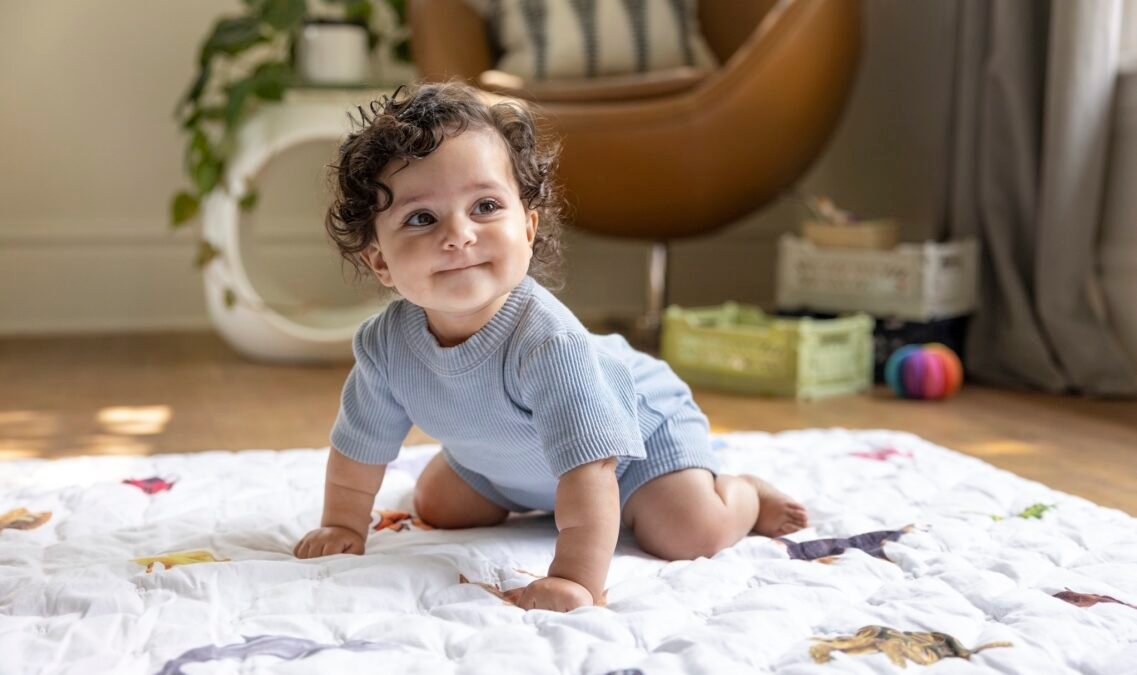
Every parent eagerly anticipates the magical moment their infant transitions from sitting still to exploring the home independently. Parents often wonder, when do babies start crawling, and what specific physical behaviors signify that this major motor milestone is on the horizon. Tracking developmental progress brings immense joy, but it also naturally invites questions regarding timelines, movement variations, and daily encouragement techniques. Understanding these early physical shifts empowers you to offer confident support while fully enjoying every single step of your baby’s unique growth journey.
The transition toward independent movement marks a crucial phase in infantile sensory and cognitive development. As babies learn to move across rooms, they do far more than travel from point A to point B; they learn to navigate three-dimensional space, judge distances, and strengthen vital muscle groups. Providing a safe, supportive environment during this foundational period allows your child to build lifelong physical confidence, body awareness, and spatial intelligence through healthy, unstructured floor play.
The Typical Crawling Timeline: What Age Do Babies Start Crawling?
When evaluating when do babies start crawling, most pediatricians and child development experts highlight the core window between 7 and 10 months of age. During this developmental phase, infants accumulate sufficient core, neck, and upper-body strength to lift their entire torso off the floor and propel themselves forward. However, infant growth rarely adheres to a strict calendar, meaning that starting a few weeks earlier or later remains completely typical for healthy, thriving infants across diverse environments.
In the months leading up to independent mobility, infants undergo continuous muscle conditioning that makes forward movement possible. Between 4 and 6 months, babies construct foundational upper-body power through consistent daily tummy time, eventually learning to push up on straight arms and roll over smoothly. By 7 to 9 months, many babies begin rocking back and forth on their hands and knees before executing their first intentional forward movements. By 10 to 12 months, most infants master coordinated cross-body propulsion, allowing them to zip around easily before pulling up to stand.
Common Signs Your Baby Is Getting Ready to Crawl
Before your little one successfully travels across the floor, you will observe distinct physical behaviors signaling their impending physical readiness. One primary indicator is independent sitting without using hands for balance, which demonstrates robust core and back muscle activation. Additionally, you might catch your baby pushing up into a classic tabletop posture on all fours, rhythmically rocking back and forth as they figure out how to generate forward momentum without collapsing onto their bellies.
Beyond pure physical mechanics, clear behavioral shifts signal that independent locomotion is right around the corner. Your infant may display intense determination—or mild frustration—when trying to reach a preferred toy placed slightly out of their reach. You might even observe them accidentally sliding backward while attempting to move forward, a standard and amusing developmental phase indicating that their arm strength is temporarily developing faster than their leg coordination.
The Different Crawling Styles (And Why Any Style Counts)
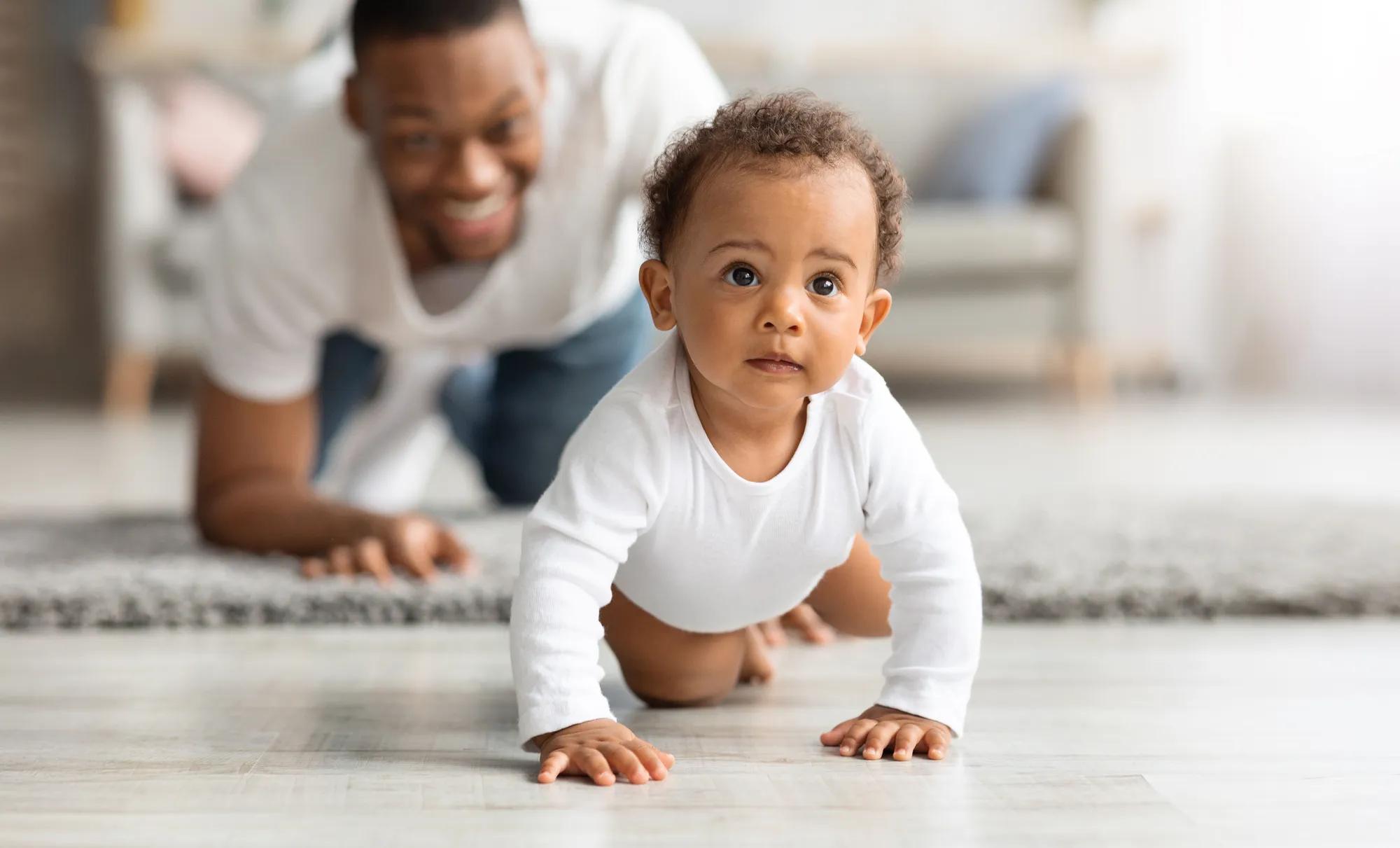
There is no singular, universal technique that every infant uses to travel across the floor during early childhood. While the classic hands-and-knees approach—where opposite arms and legs move in synchronized harmony—is widely recognized, many infants adopt creative movement strategies. Recognizing when do babies start crawling also requires understanding that belly sliding, bottom scooting, and sideways shuffling represent completely valid pathways toward independent physical exploration.
Classic Crawl: Alternating opposite hands and knees to move forward smoothly across flat surfaces.
Commando Crawl: Dragging the abdomen along the floor while pulling forward primarily using upper-body arm power.
Bear Crawl: Navigating the floor with arms and legs fully extended straight, keeping elbows and knees entirely unbent.
Crab Crawl: Pushing sideways or backward using one bent knee combined with opposite arm exertion.
Bum Shuffle: Sitting completely upright and scooting across floor surfaces using legs or hands for forward momentum.
In fact, certain healthy infants choose to skip traditional floor crawling entirely, progressing straight from sitting independently to pulling themselves up on furniture and walking. Major pediatric organizations continually emphasize that skipping traditional crawling is often a normal variation in gross motor skill execution. So long as your infant demonstrates equal balance and uses both sides of their body symmetrically to explore their environment, their specific movement technique is serving them effectively.
How to Encourage Your Baby to Crawl
If you are closely monitoring when do babies start crawling, providing daily opportunities for unrestricted floor play represents the single most effective way to foster progress. Unrestricted time spent on a clean, comfortable floor offers infants the space necessary to experiment with weight distribution, balance, and directional movement. Placing vibrant, engaging toys slightly beyond your child’s reach establishes a motivating challenge that gently prompts them to stretch, pivot, and push forward.
Minimizing the prolonged use of restrictive infant equipment—such as bouncers, swings, and seated activity centers—allows natural muscle groups and postural control to flourish without artificial support. Joining your infant on the floor to demonstrate physical movements, play interactive games like peek-a-boo, or roll soft balls back and forth offers powerful social motivation. Establishing a thoroughly baby-proofed play area with padded surfaces ensures your little explorer can safely practice moving around with total freedom.
Is Crawling Essential Before Walking?
Although classic floor locomotion delivers numerous developmental perks, it is not an absolute, mandatory prerequisite for learning how to walk independently. Crawling works wonders for developing shoulder girdle stability, wrist joint strength, and spatial perception while heavily reinforcing bilateral coordination—the complex neural communication occurring between the left and right hemispheres of the brain. These combined physical benefits help establish posture, core balance, and fine motor precision as your child grows into dynamic toddlerhood.
Should your baby decide to skip floor crawling and move directly into cruising along furniture or taking independent steps, there is no reason for concern. You can easily encourage equivalent neural pathways and cross-body motor coordination through fun, age-appropriate floor activities. Engaging games like navigating fabric tunnels, climbing over soft play cushions, or playing floor-based obstacles during early toddlerhood deliver identical physiological advantages for healthy, long-term structural development.
When to Consult Your Pediatrician
Parents keeping track of when do babies start crawling frequently wonder at what stage delayed movement warrants professional evaluation. If your infant reaches 12 months of age without demonstrating any form of self-initiated, independent mobility—whether that involves scooting, belly crawling, or rolling across the room—it is advisable to schedule a discussion with your pediatrician to gain clear, personalized guidance and peace of mind.
Furthermore, you should consult a qualified healthcare provider if you observe persistent structural asymmetry, such as an infant dragging one side of their body exclusively, or if your baby exhibits unusually stiff or limp muscle tone. Early physical therapy intervention offers exceptionally gentle, targeted support designed to help infants build foundational core strength, body confidence, and motor coordination. Trusting your parental instincts ensures your child receives optimal physical encouragement tailored precisely to their needs.
Conclusion
Grasping the nuances surrounding when do babies start crawling allows you to appreciate your infant’s individual developmental progression without experiencing unnecessary anxiety. Whether your baby begins commando crawling at 7 months, bottom-scooting at 10 months, or transitioning directly into standing up, every unique movement strategy reflects valuable physical growth. By supplying ample daily floor play, safe environments, and enthusiastic emotional support, you equip your child with the ultimate foundation for lifelong movement.
Ultimately, patience and consistent floor engagement are the most effective tools a parent can offer during this developmental transition. Every infant operates on a distinct internal timeline that reflects their unique temperament, physical build, and natural curiosity. Enjoy watching your child discover their physical capabilities day by day, and celebrate each minor achievement as they build the core strength and confidence necessary to navigate the world around them.
Frequently Asked Questions
At what age should a baby start crawling?
Most infants begin demonstrating independent movement between 7 and 10 months of age. However, some healthy babies start as early as 6 months, while others wait until 11 or 12 months before finding their stride. Every infant develops at a unique, individual pace, meaning a broad window of time is considered completely typical by medical professionals.
Is 6 months too early for a baby to crawl?
No, 6 months is not considered too early for an infant to begin moving independently. Although less common, certain infants develop high core strength and upper-body endurance earlier than average, allowing them to belly crawl or creep on all fours by 6 months. Ensure your home environment is thoroughly childproofed as soon as any mobility appears.
What if my baby is 10 months old and not crawling?
It is generally not a reason for immediate concern if a 10-month-old infant is not moving across the floor yet. Many babies at this age focus their energy on mastering independent sitting balance, fine motor skills, or vocal communication before prioritizing physical locomotion. Continue offering ample daily floor play and discuss overall gross motor progress during your standard 12-month pediatric checkup.
What is the difference between crawling and creeping?
Historically within pediatric literature, “creeping” referred specifically to moving on hands and knees with the abdomen elevated off the floor, whereas “crawling” designated dragging the belly along the ground. In modern clinical settings and general parenting discussions, both terms are used interchangeably to describe any form of self-propelled, independent floor mobility in infants.
Do all babies crawl before they walk?
No, approximately 10 to 15 percent of entirely healthy infants skip floor crawling completely during their development. These infants typically transition directly from sitting unassisted to pulling themselves up on furniture, cruising along walls, and taking independent walking steps without experiencing any long-term physical, neurological, or developmental drawbacks whatsoever.
How long after crawling do babies start walking?
On average, infants begin taking their first independent steps within 2 to 4 months after successfully mastering floor movement. For example, if an infant begins crawling confidently at around 8 months of age, they will frequently begin walking independently anywhere between 10 and 14 months, depending on their physical confidence and innate temperament.
You may also read: Comparing A&E vs Urgent Treatment Centres for Shorter Waits