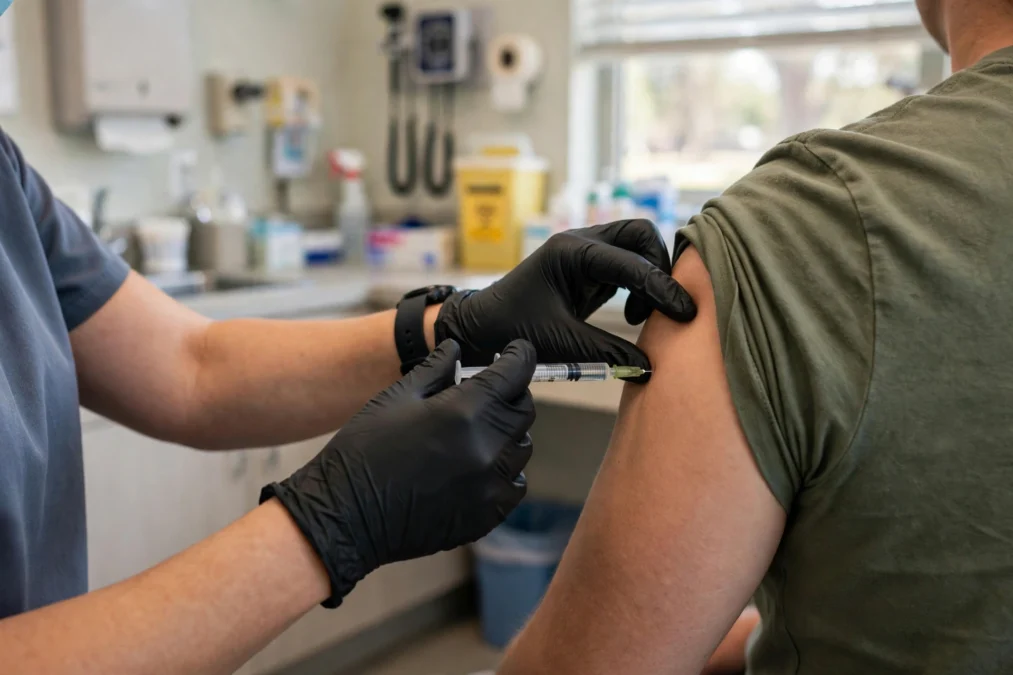
If you are travelling to parts of Africa, South America or the Caribbean, the yellow fever vaccine is one of the first travel health questions you need to settle, because for some destinations it is not merely recommended but required for entry. Yellow fever is a serious mosquito-borne viral illness for which there is no specific treatment, so prevention through vaccination and bite avoidance is the whole strategy, and the vaccine itself is one of the most effective travel vaccines ever developed. This guide explains the yellow fever vaccine in plain terms for UK travellers: who needs it, when to get it, where to get it, what it costs, who cannot have it, and what the certificate you receive afterwards actually means for your trip.
The short answer is that a single dose of the yellow fever vaccine usually protects most people for life, but only if you get it at least ten days before you travel, and only from a registered yellow fever vaccination centre. That ten-day rule catches many travellers out, because a jab given the week before departure will not count for entry purposes even though you have had the injection. Planning your travel health appointment six to eight weeks before departure, as travel clinics generally advise, gives you time to sort out this vaccine alongside any others you need, to check whether your destination requires proof of vaccination, and to deal with any health questions that might affect whether you can safely receive a live vaccine at all.
What Is the Yellow Fever Vaccine and How Does It Work?
The yellow fever vaccine is a live vaccine made from a weakened form of the yellow fever virus, known as the 17D strain, which teaches your immune system to recognise and fight the real virus without causing the disease itself in most people. It is given as a single injection into the upper arm, and after vaccination your body builds protective antibodies over the following days and weeks, with immunity developing in most people within ten days and in over ninety-nine per cent within thirty days according to World Health Organization guidance. Because it is a live vaccine, it behaves differently from inactivated vaccines, which is why the list of people who cannot have it is longer than for many routine jabs and why a proper travel health assessment matters before you roll up your sleeve.
Yellow fever itself is spread by infected mosquitoes, principally in parts of sub-Saharan Africa, parts of South America including Trinidad and Tobago, and parts of Central America, and it is not found in the United Kingdom, Europe, Asia, Australia, New Zealand or the Pacific Islands. Most people who catch yellow fever develop fever and flu-like symptoms, but a minority go on to develop severe disease affecting the liver and other organs, which can be fatal, and there is no medicine that kills the virus once infection has taken hold. That combination of a potentially fatal illness, no specific treatment, and a highly effective vaccine is exactly why entry requirements exist: countries want to stop travellers importing the virus, and they want travellers to be protected before they arrive in a risk area.
Who Needs the Yellow Fever Vaccine?
You may need the yellow fever vaccine if you are travelling to a country or area where yellow fever is present, if you are transiting through such a country, or if your destination requires proof of vaccination for entry, and the NHS guidance on who needs a yellow fever vaccine sets out these three situations as the usual triggers for recommending it. The recommendation applies to travellers from nine months of age upwards, and it applies even for short trips, because a mosquito bite does not care whether you are staying for a weekend or for six months. Some travellers also need the vaccine for work reasons, such as laboratory staff who may be exposed to the virus, and your travel clinic will weigh your exact itinerary, including stopovers, rural versus urban stays, and the season of travel, before advising you.
It is important to understand the difference between a vaccine being recommended for your own protection and being required for entry, because the two overlap but are not identical. Some countries require a valid certificate from every arriving traveller, others require it only if you are arriving from a country where yellow fever occurs, and some do not require it at all but still carry a genuine risk of the disease. Checking the entry requirements for every country on your route, including transit stops, is therefore just as important as checking the health risk, and the National Travel Health Network and Centre, known as NaTHNaC, publishes country-by-country guidance that your travel clinic will use. If you are unsure, ask the clinic rather than guessing, because being turned away at a border or quarantined on arrival is a miserable start to any holiday.
When Should You Get the Yellow Fever Vaccine?
Timing is the single most practical point in this whole guide, because the yellow fever vaccine must be given at least ten days before travel for your certificate to be valid, and that ten-day clock starts on the day of vaccination. If you are vaccinated nine days before departure, your certificate will not yet be valid when you land, and a border official is entitled to treat you as unvaccinated, which can mean refused entry or quarantine depending on the country. Travel health services therefore advise booking your appointment at least six to eight weeks before departure, which leaves room for the ten-day wait, for any other vaccines you need, and for the possibility that you need a specialist risk assessment first.

There is one more timing rule that surprises families: if you or your child has recently had the MMR vaccine, you generally need to wait at least four weeks before having the yellow fever vaccine, because live vaccines can interfere with each other when given too close together. This matters when you are planning a family trip and children are due routine immunisations around the same time, so tell the travel clinic about every recent and planned vaccination, not just the travel ones. The same appointment is also the right moment to mention any upcoming surgery, any illness you are recovering from, and any medicines that affect your immune system, because all of these can change the timing or the advice, and sorting them out early is far easier than rearranging a trip at the last minute.
Where Can You Get the Yellow Fever Vaccine in the UK?
The yellow fever vaccine is only available from registered yellow fever vaccination centres, which include travel clinics, some GP practices, and registered pharmacies such as Boots and Superdrug, and you cannot simply ask any clinic to give it without that registration. The National Travel Health Network and Centre lists designated centres across England, Wales and Northern Ireland, and your own GP practice can usually point you to the nearest one if it does not offer the service itself. When you attend, the clinician will take a travel history, check your medical history and allergies, and confirm whether the vaccine is recommended, required, or not advised for your particular trip, and that assessment is part of what you are paying for, not an optional extra.
It is worth knowing that the yellow fever vaccine is not available free on the NHS for travel purposes, so you will pay privately, and the Boots travel health advice on yellow fever vaccination confirms that the vaccination and certificate are only available from registered centres and must be paid for. Private travel clinics vary in what they charge and what the appointment includes, so when you compare options, check whether the quoted price covers the consultation, the vaccine itself, and the certificate, and whether other travel vaccines or malaria advice are included or charged separately. Booking early also helps here, because popular clinics can be fully booked in peak holiday season, and a last-minute appointment may cost more or simply not be available in time for the ten-day rule.
How Much Does the Yellow Fever Vaccine Cost?
Because the yellow fever vaccine is not funded by the NHS for travel, UK travellers pay privately, and pharmacy and travel clinic sources typically quote a price in the region of sixty to eighty-five pounds for the vaccine, although the exact figure varies by provider and by what the appointment includes. That range is a guide rather than a fixed national price, so treat any figure you see online as approximate and confirm the total cost when you book, including whether there is a separate consultation fee. Some clinics charge a single combined fee, others itemise the consultation and the vaccine, and comparing like with like matters more than chasing the lowest headline number, especially if you also need other travel vaccines or malaria prevention advice at the same visit.
For families, the cost multiplies per person, which is why it is worth checking early whether every family member actually needs the vaccine for your itinerary, since children under nine months cannot have it at all and older children are assessed individually. If your trip involves several countries, ask the clinic to confirm which of them require a certificate and which merely recommend vaccination, because that can change how many certificates your family needs and whether any exemptions apply. Keep the receipt and a note of where you were vaccinated, because if your certificate is ever lost or damaged, knowing the centre that issued it makes replacement far simpler, and some travellers also photograph their certificate as a backup while keeping the original document safe with their passport.
What Are the Side Effects of the Yellow Fever Vaccine?
Most side effects of the yellow fever vaccine are mild and short-lived, typically a sore arm where the injection was given, a headache, muscle aches, a mild fever, or tiredness in the days after vaccination, and these usually settle on their own within a week or so without treatment. The NHS describes these mild effects as common, and they are a sign that your immune system is responding to the vaccine rather than a sign that something has gone wrong. Simple measures such as rest, fluids, and paracetamol, if you can safely take it, are usually enough, but you should follow the advice given by the clinic that vaccinated you and seek medical advice if symptoms feel severe or do not settle as expected.
Serious side effects are very rare but can be severe, which is why the pre-vaccination assessment is taken so seriously, and they are more likely to be a concern in people over sixty, in people with weakened immune systems, and in people with certain other risk factors that the clinician will ask about. Rare reactions reported after yellow fever vaccination include severe allergic reactions and, extremely rarely, illness affecting the nervous system or internal organs that resembles yellow fever itself, and these risks are weighed against the risk of the disease itself for your particular journey. This is general information only and not a substitute for medical advice: if you develop a high fever, severe headache, confusion, jaundice, or any worrying symptom after vaccination, contact your GP or NHS 111 promptly, and in an emergency call 999, because early assessment matters far more than trying to work out for yourself whether a symptom is vaccine-related.
Who Cannot Have the Yellow Fever Vaccine?
Some people cannot have the yellow fever vaccine at all, and the list is important enough to check carefully before you book a trip that depends on it. Babies under six months old must not receive it, and babies between six and nine months should only be vaccinated if the risk of yellow fever during travel is unavoidable and specialist advice supports it. People with a weakened immune system, for example because of leukaemia, lymphoma, HIV, or treatment with steroids or chemotherapy, people with a thymus disorder or who have had their thymus removed, people who are allergic to any ingredient in the vaccine including egg, and anyone who has had a severe reaction to a previous dose should not receive it without specialist assessment, and in many cases should not receive it at all.
Pregnant and breastfeeding women are also advised to avoid the vaccine unless the risk of yellow fever is unavoidable, because it is a live vaccine and there is a theoretical risk to the baby, and travellers over sixty need a careful risk-benefit discussion because the risk of rare serious side effects rises with age. If you fall into one of these groups, do not simply skip the vaccine and travel anyway: ask the travel clinic about a medical exemption, which takes the form of a certified letter explaining why vaccination is not advised, and check whether your destination will accept an exemption, because some countries will and some will not. In some cases the honest answer will be to change the itinerary or postpone the trip, and hearing that from a clinician before you have paid for flights is far better than discovering it at a border.
Do You Need a Booster or a New Certificate?
For most travellers, one dose of the yellow fever vaccine is enough for life, and this is one of the biggest changes in travel health advice in recent years, because older guidance used to require a booster every ten years. In 2013 the World Health Organization’s expert advisers concluded that a single dose confers lifelong immunity for most people, and since then international rules have changed so that certificates are now valid for life, including older certificates that were originally printed with an expiry date. That means if you were vaccinated years ago and still hold your yellow card, it remains valid even if the date on it has passed, and you do not need a booster simply because ten years have gone by.
There are exceptions, and they are worth knowing about so that you do not assume lifelong cover when it may not apply to you. A small number of travellers may be advised to have a further dose, for example people who were first vaccinated in early childhood, people whose immune systems were weakened at the time of vaccination, and people travelling to a higher-risk situation than their original vaccination covered, and your travel clinic can advise whether you fall into one of these groups. If you have lost your certificate, contact the centre that vaccinated you about a replacement, and keep the new document with your passport rather than packed in checked luggage, because a certificate sitting in a suitcase in the aircraft hold is no use at passport control.
Conclusion
The yellow fever vaccine is a straightforward precaution that prevents a serious and potentially fatal disease, but it only works as a travel document and as protection if you respect its two golden rules: get it from a registered centre, and get it at least ten days before you travel. A single dose usually protects you for life, the certificate that comes with it is now valid for life as well, and the most common side effects are mild and short-lived, which makes this one of the best-value health steps you can take before visiting a risk area. The people who need to take extra care are those who cannot safely receive a live vaccine, older travellers, and anyone whose itinerary involves several countries with different entry rules, and for them an early conversation with a travel clinic is essential rather than optional.
If you are planning a trip to sub-Saharan Africa, South America, Central America or the Caribbean, book a travel health appointment six to eight weeks before departure, take your full itinerary including stopovers, and ask directly whether the yellow fever vaccine is recommended, required, or not advised for you. This article is general information only and is not a substitute for personal medical advice, so if you have a medical condition, take immune-suppressing medicines, are pregnant or breastfeeding, or are travelling with a baby, discuss your plans with your GP or a travel health clinic before you book anything that cannot be changed. With the vaccine sorted early, the certificate safely stored with your passport, and mosquito bite precautions packed alongside it, yellow fever is one risk you can largely take off your travel worries list.
Frequently Asked Questions
How long before travel do I need the yellow fever vaccine?
You need the yellow fever vaccine at least ten days before travel, because your International Certificate of Vaccination only becomes valid ten days after vaccination, and border officials can treat you as unvaccinated before that point. Travel clinics generally advise booking six to eight weeks before departure, which leaves time for the ten-day wait, for other travel vaccines, and for any specialist assessment if you have a medical condition or take medicines that affect your immune system. If you have recently had the MMR vaccine, you may also need to wait at least four weeks before the yellow fever vaccine, so tell the clinic about all recent vaccinations when you book.
Is the yellow fever vaccine free on the NHS?
No, the yellow fever vaccine is not available free on the NHS for travel purposes, so UK travellers pay privately at a registered yellow fever vaccination centre, with pharmacy and clinic sources typically quoting around sixty to eighty-five pounds as a guide. The exact price varies by provider and by whether the appointment includes a consultation fee, other vaccines, or malaria advice, so confirm the total cost when you book rather than relying on a headline figure. Keep your receipt and a note of the centre that vaccinated you, because that makes replacing a lost certificate much easier, and remember that children and other family members each need their own assessment and certificate.
How long does the yellow fever vaccine last?
For most people, a single dose of the yellow fever vaccine provides lifelong protection, and the International Certificate of Vaccination you receive is now valid for life, including older certificates that were originally printed with an expiry date. This follows a 2013 World Health Organization expert review that concluded a booster is not needed for most travellers, which replaced the older ten-year booster rule. A small number of travellers may still be advised a further dose, for example if they were first vaccinated in early childhood or had a weakened immune system at the time, so ask your travel clinic whether lifelong cover applies to your situation.
Can babies and pregnant women have the yellow fever vaccine?
Babies under six months old must not have the yellow fever vaccine, and babies between six and nine months should only be vaccinated if the risk of yellow fever during travel is unavoidable and specialist advice supports it. Pregnant and breastfeeding women are generally advised to avoid this live vaccine unless the risk of yellow fever is unavoidable, because of a theoretical risk to the baby, and travellers over sixty also need a careful risk-benefit discussion with a clinician. If vaccination is not advised for you, ask the clinic about a certified medical exemption letter, but check whether your destination accepts exemptions, because some countries do not, and you may need to change your plans.
What should I do if I lose my yellow fever certificate?
If you lose your yellow fever certificate, contact the registered centre that vaccinated you as soon as possible and ask about a replacement, because they hold the record of your vaccination and can advise what proof they can reissue. Keep the replacement with your passport rather than in checked luggage, and consider photographing it as a backup while keeping the original document safe, since border officials need to see the certificate itself at arrival. If you cannot prove vaccination and your destination requires it, you risk refused entry or quarantine, so sorting a replacement before you travel is far easier than dealing with the problem at the border.