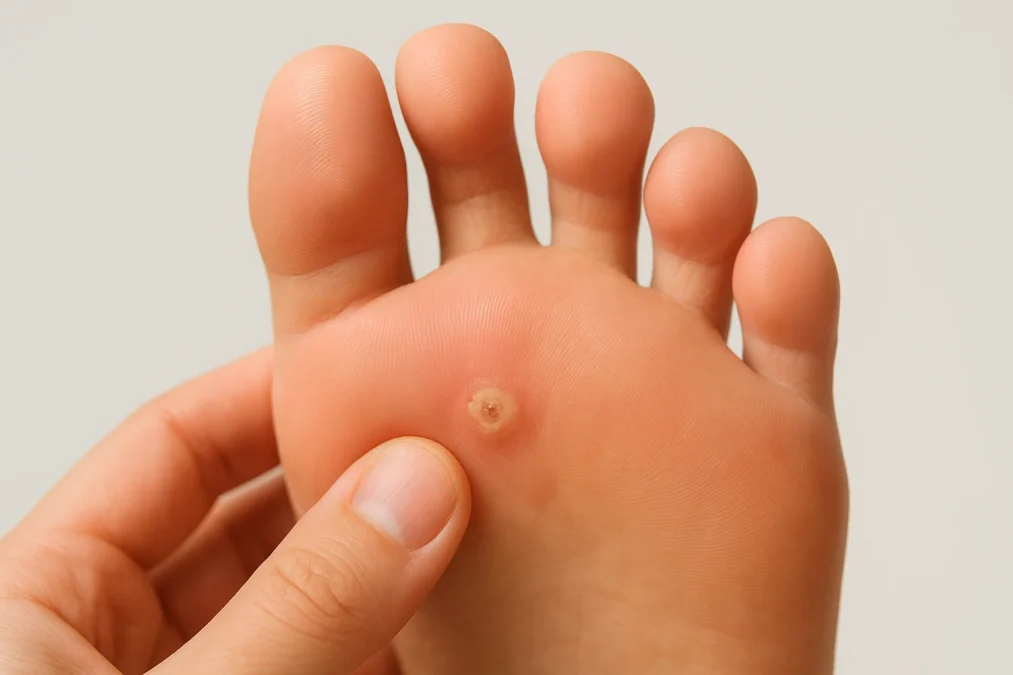
Stepping out of bed only to feel a sharp, piercing sensation on the bottom of your toe can instantly ruin your morning routine. For millions of people worldwide, this agonizing daily discomfort is caused by a stubborn corn on foot development that refuses to go away on its own. These tiny, highly concentrated areas of hardened skin are incredibly common, yet they frequently catch individuals off guard with how much severe pain they can inflict during a simple, routine walk around the neighborhood.
At its foundational core, a corn on foot is simply your body’s brilliant, defensive way of trying to protect its delicate inner layers from external harm. When repetitive friction or intense, localized pressure batters a specific spot on your skin, your dead cells pack tightly together into a dense, conical knot that points inward. While they can make every single step feel like you are walking on a jagged piece of glass, you can easily, safely, and effectively manage most minor corns right from the comfort of your home with the right knowledge.
Recognizing the Signs and Symptoms
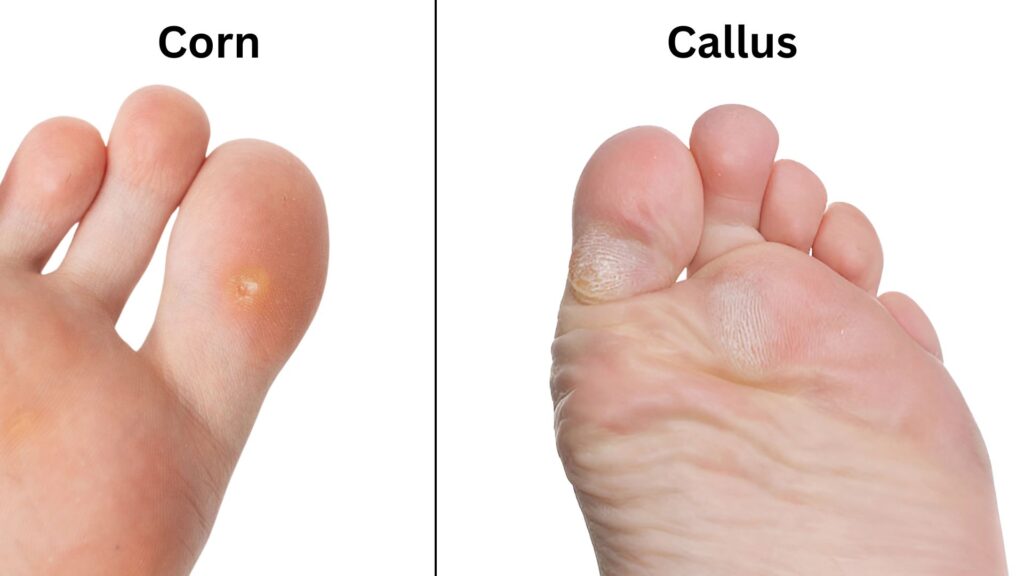
Spotting a developing corn on foot early in its cycle can save you from days of unnecessary limping and long-term structural discomfort. These unique lesions typically manifest as small, distinctly raised bumps of thick skin characterized by a rough, yellowish, or flaky texture that looks unsightly. The absolute defining hallmark of a true foot corn is its hyper-focused, incredibly hard center point—often referred to by podiatrists as the core—which presses painfully into deeper nerve layers whenever direct weight or pressure is applied.
Corns generally fall into two very distinct categories depending entirely on where they choose to set up camp on your lower extremities. Hard corns are highly dense, compacted structures that usually form on top of bony toe joints or the outer edges of your pinky toes where tight shoes rub stubbornly throughout the day. Soft corns, on the other hand, possess a much more rubbery, whitish, or spongy texture because they develop exclusively between your toes, where trapped sweat and natural body moisture keep the irritated skin layers perpetually damp.
What Causes a Corn to Develop
Your hard-working feet naturally bear the immense weight of your entire world, so they react dynamically and protectively whenever things get crowded or misaligned down there. The primary, undisputed culprit behind a painful corn on foot is sustained mechanical stress generated by poorly designed or ill-fitting modern footwear. When you consistently cram your feet into narrow toe boxes, sky-high fashion heels, or loose athletic shoes that cause constant heel slipping, your skin defends its boundaries by thickening rapidly.
Beyond your daily shoe collection, simple structural quirks in your anatomy or specific physical habits can trigger these stubborn, painful spots to form seemingly out of nowhere. Walking or running with an uneven gait shifts your body weight awkwardly, forcing highly specific, unprotected areas of your soles to absorb excessive, unnatural friction with every stride. Furthermore, frequently going barefoot outdoors or wearing rough shoes without socks drastically increases direct skin rubbing, which heavily accelerates the formation of these uncomfortable, hardened boundaries.
Step by Step Guide to Safe Home Treatment
To successfully dissolve a stubborn corn on foot, you must first break down its tough, defensive exterior layers through a dedicated softening ritual. Submerge your affected foot into a clean basin filled with warm water mixed with soothing Epsom salts or a few drops of therapeutic essential oils for roughly fifteen minutes. This relaxing, simple ritual deeply hydrates the compacted layers of dead keratin, making the entire structure incredibly pliable, soft, and perfectly prepared for gentle manual removal without causing pain.
Once the hardened skin is thoroughly softened and pruned, gently grab a clean, sanitized pumice stone or a fine-grit emery board to begin the reduction phase. Sweep the stone across the surface of the corn using light, rhythmic, one-directional strokes to gradually file away the loose, dead tissue layers without rubbing too deeply into the healthy skin. You must absolutely never use razor blades, pocket knives, scissors, or sharp metal tools to cut the corn yourself, as doing so frequently triggers severe, deep-tissue bacterial infections.
After completing the gentle filing process, you must immediately lock in deep hydration to keep the newly exposed skin layers supple and prevent rapid hardening. Apply a generous layer of a thick moisturizing lotion or specialized foot cream containing potent ingredients like urea, salicylic acid, or ammonium lactate, which actively dissolve tough skin bonds overnight. Wrapping your foot in a clean, breathable cotton sock right after application helps the skin absorb the moisture deeply while you sleep through the night.
The final, crucial phase of effective home care involves shielding the healing skin from ongoing daily friction so it does not immediately reform. Apply a non-medicated, ring-shaped silicone gel toe sleeve or a soft, donut-shaped protective moleskin pad directly around the sensitive area before putting on your shoes. These protective barriers smartly deflect daily shoe pressure away from the healing core, giving your skin cells the quiet, undisturbed space they desperately need to fully regenerate and heal.
When to Skip Home Care and See a Podiatrist
While conservative DIY methods work absolute wonders for standard cases, certain medical situations require you to immediately step away from home remedies for your own safety. If your corn on foot becomes intensely red, swollen, hot to the touch, or begins leaking clear fluid or pus, it has officially become infected by environmental bacteria. Seeking professional care from a certified podiatrist ensures the underlying infection is treated safely with medical-grade tools and prescription antibiotics before it spreads further up your leg.
Furthermore, individuals dealing with chronic, underlying systemic health issues must completely bypass home treatments and schedule a professional medical evaluation right away. If you currently live with diabetes, poor arterial blood circulation, or peripheral neuropathy, attempting to file or treat a foot corn yourself can accidentally create catastrophic, non-healing open ulcers. A podiatrist can safely and painlessly shave down the corn using sterile scalpel techniques and provide custom orthotics to permanently correct your foot mechanics.
Preventative Steps to Stop Future Corns
Banishing a corn on foot permanently from your life requires addressing the environmental root causes rather than just treating the temporary, painful symptoms. Begin this process by auditing your entire footwear collection and prioritizing high-quality shoes designed with a wide, accommodating toe box that allows your digits to wiggle freely. It is always best to shop for new footwear much later in the afternoon or evening when your feet are naturally swollen from daily activity.
Additionally, keeping your skin naturally supple and friction-free goes a long way in maintaining smooth, pain-free feet throughout the changing seasons. Apply a quality, dedicated foot cream daily after showering and wear high-performance, moisture-wicking socks to reduce the raw rubbing that sparks abnormal callus and corn growth. If your toes naturally press tightly against one another due to genetics, utilizing soft silicone toe separators can effectively neutralize those hidden pressure points before corns ever get a chance to form.
Conclusion
Dealing with a painful, throbbing corn on foot can certainly slow down your busy lifestyle, but it remains a highly treatable condition that responds beautifully to consistent care. By committing yourself to a safe, patient routine of warm soaking, gentle pumice filing, and proactive daily cushioning, you can easily restore total comfort to your stride. Always remember to listen to your body’s warning signs and prioritize long-term safety over quick, aggressive, or dangerous cutting fixes.
Ultimately, achieving permanent relief from foot discomfort comes down to the small, everyday choices you make regarding your overall foot health and hygiene. Investing in comfortable, properly fitting footwear and protecting your skin from unnecessary friction will keep your feet moving happily and remaining entirely pain-free for years to come. Keep your daily steps light, give your feet the ample room they need to breathe naturally, and never hesitate to seek professional podiatric guidance when a spot looks concerning.
Frequently Asked Questions
Can you pull a corn out of your foot?
No, you cannot physically pull a corn out of your foot like a splinter or a thorn. A corn is not a foreign object embedded in your flesh; it consists entirely of tightly compacted, hardened layers of your own skin tissue. Attempting to rip, dig, or gouge it out with tweezers or needles will tear healthy flesh, cause intense pain, and introduce dangerous bacteria that lead to serious infections.
How long does it take for a foot corn to go away?
With consistent, daily home care—including proper soaking, gentle pumice filing, and completely eliminating shoe pressure—a minor corn typically disappears within two to four weeks. However, if you continue to wear the exact same tight or poorly fitting shoes that caused the friction in the first place, the corn will simply remain or return immediately.
Are over the counter medicated corn pads safe to use?
Medicated pads usually contain high concentrations of salicylic acid, which chemically burns away dead skin cells over multiple days. While they can be effective for some healthy individuals, they frequently slip and leak onto the surrounding healthy skin, causing painful chemical burns or severe ulcerations. They should be used with extreme caution and are strictly forbidden for anyone with diabetes or poor circulation.
Is a corn on the foot contagious?
No, foot corns are completely non-contagious because they are not caused by a living organism. Unlike plantar warts, which are caused by a highly contagious viral infection known as the Human Papillomavirus (HPV) and can easily spread across skin surfaces, corns are purely mechanical injuries. They are caused strictly by physical friction and pressure, meaning they cannot spread to other people or to other parts of your body.
You may also read: ‘And So It Is’ and the ‘MeSsy’ Podcast: Amplifying Her Voice