
If you live in Mansfield, Ashfield, or Newark and Sherwood, King’s Mill Hospital is almost certainly the hospital you will be referred to for serious illness, surgery, maternity care, or an emergency, because it is the largest hospital in Sherwood Forest Hospitals NHS Foundation Trust and the main acute hospital for around four hundred and thirty thousand people. This guide brings together everything patients and visitors most often need in one place: where King’s Mill Hospital is, who runs it, what services it provides, how emergency and maternity care work, how appointments and referrals are handled, what visiting is like, and how to get there. It is written for patients, families, and carers, and it is general information only, not a substitute for advice from your own clinical team about your individual care.
One important clarification comes first, because it prevents a surprisingly common mix-up: this article is about King’s Mill Hospital in Sutton-in-Ashfield, Nottinghamshire, and not about Mercy Health Kings Mills Hospital in Mason, Ohio, in the United States, which is a different and much newer hospital that happens to share a similar name. If you are searching from the United Kingdom for appointments, visiting, or contact details, the Nottinghamshire hospital described here is the one you need, and the addresses, phone numbers, and services below all relate to that site. Keeping that distinction in mind will save you from ringing the wrong continent when you need help close to home.
Where Is King’s Mill Hospital and Who Runs It?
King’s Mill Hospital stands on Mansfield Road, Sutton-in-Ashfield, Nottinghamshire, NG17 4JL, on the boundary between Sutton-in-Ashfield and Mansfield and close to the main A38 road, which makes it reachable from across north Nottinghamshire and from parts of Derbyshire and Lincolnshire. It is run by Sherwood Forest Hospitals NHS Foundation Trust, which was formed in 2001 when King’s Mill joined with Newark General Hospital and the Ashfield and Mansfield district community hospitals, and which achieved foundation trust status in 2007. The trust’s headquarters are on the King’s Mill site itself, and the hospital is its primary site, which means that many of the trust’s specialist services, senior clinical teams, and support services are based here rather than spread thinly across smaller sites.
The hospital’s main switchboard number is 01623 622515, and the NHS contact details for King’s Mill Hospital also list the appointments line on 01623 672383 and the Patient Advice and Liaison Service, known as PALS, on 01623 672222, with email contacts for bookings and for patient experience respectively. Those three numbers cover most of what patients and families need: the switchboard for general enquiries and ward connections, the appointments line for checking, changing, or cancelling an outpatient appointment, and PALS for confidential advice, support, and help resolving concerns about care. If you are unsure which number to ring, start with the switchboard and explain what you need, because staff there can direct you to the right department far more quickly than a general internet search.
What Services Does King’s Mill Hospital Provide?
King’s Mill Hospital is a modern acute hospital providing a wide range of services, including emergency care, maternity services, inpatient wards, outpatient clinics, therapy services, and specialist treatments, and the Care Quality Commission inspection summary describes it in exactly those terms as the trust’s largest hospital. The hospital has approximately six hundred beds, with more than five hundred and fifty inpatient beds, over half of them in single-occupancy en-suite rooms, together with thirteen operating theatres and a twenty-four-hour emergency department. Each year it handles more than forty-five thousand inpatient admissions and thirty-six thousand day case patients, around one hundred thousand people attend its emergency department, and around three thousand five hundred babies are delivered there, which gives a sense of the scale at which this single site operates for its local population.
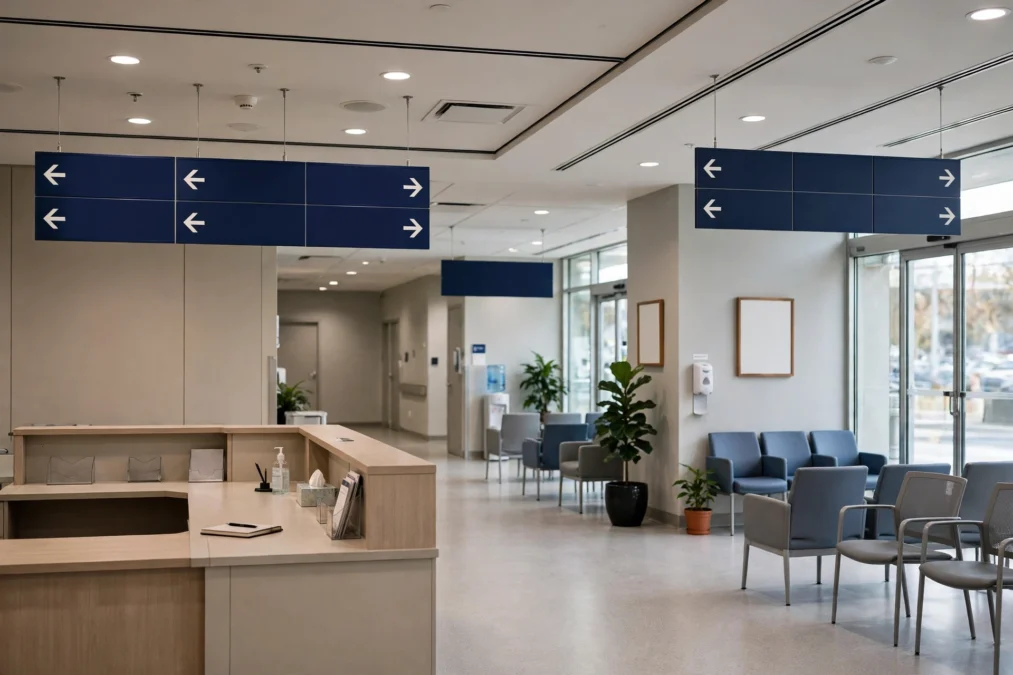
Beyond those headline figures, the hospital provides the full range of district general hospital services that most patients will ever need, from diagnostics and imaging through to surgery, medicine, stroke care, critical care, and rehabilitation, alongside dedicated women’s and children’s services and an emergency assessment unit for patients who arrive acutely unwell. The site also hosts its own hospital radio station, Millside Radio, which broadcasts around the hospital around the clock, and a multi-faith centre, a bereavement centre, and a mortuary viewing room, reflecting the fact that a large hospital must care for families and faith needs as well as for medical conditions. If you have been referred for a particular specialty, your referral letter and appointment details will confirm whether your care takes place at King’s Mill or at one of the trust’s other sites, such as Newark Hospital, so always check the location on your letter rather than assuming every appointment is at King’s Mill.
What Should You Know About Emergency Care at King’s Mill Hospital?
The emergency department at King’s Mill Hospital is open twenty-four hours a day for genuine emergencies, and it is supported by a helipad used by the air ambulance, an emergency assessment unit, critical care, and a stroke unit, which together allow the hospital to receive and treat seriously ill and injured patients at any hour. If you arrive by ambulance, the East Midlands Ambulance Service station nearby on the A38 works closely with the department, and if you make your own way there, the department is signposted from the main entrance and from the car parks. For problems that are urgent but not emergencies, the hospital also has a twenty-four-hour primary care centre, known as PC24, which provides care for non-urgent cases, and NHS 111 can advise whether you need the emergency department, the primary care centre, your GP, or a pharmacy.
Knowing when not to attend the emergency department matters almost as much as knowing when to go, because emergency departments are busiest with patients who could have been treated elsewhere, and long waits follow for everyone. The NHS advises calling 999 for life-threatening emergencies such as chest pain, severe breathing difficulty, heavy bleeding, stroke symptoms, or a serious accident, and using NHS 111, your GP, or a local pharmacy for problems that are worrying but not immediately life-threatening. This article is general information only: if you are unsure whether a problem is an emergency, call 999 or NHS 111 rather than trying to judge it yourself, and if you are already at the hospital, ask a member of staff, because triage exists precisely to make that judgement safely.
What Maternity and Children’s Services Are Available?
Maternity services at King’s Mill Hospital include the Sherwood Birthing Unit and a neonatal unit, and the women’s and children’s services building, into which maternity relocated from the Dukeries Centre in 2013, brings delivery suites, postnatal care, and newborn care together on one site. Around three thousand five hundred babies are born at King’s Mill each year, and the neonatal unit cares for babies who need extra help after birth, with facilities for parents including double en-suite bedrooms on the unit, a parents’ sitting area, and meal vouchers for parents of babies in neonatal care, as described in the unit’s own family information. Ward rounds on the neonatal unit take place in the late morning on weekdays, quiet time runs daily in the early afternoon, and entry to the unit is through a locked door with a buzzer, which protects vulnerable babies while still welcoming parents at any time.
Children’s services beyond the newborn period include a paediatric ward, play specialists available on request, and specialist feeding support, with a neonatal psychologist and a counsellor accessible to families through unit referral, and bereavement support also available through referral. The hospital’s end of life care services, which were inspected by the Care Quality Commission on 27 and 28 May 2026 and retained a rating of good, are based at King’s Mill and at Newark Community Hospital, and during that inspection the team visited the emergency department, critical care, the stroke unit, and several wards as well as the bereavement centre and multi-faith centre. If you are expecting a baby or your child has been referred to King’s Mill, your midwife, health visitor, or paediatrician remains your first point of contact for questions about your individual care, and the hospital’s own maternity and children’s pages will confirm current visiting and tour arrangements.
How Do Appointments and Referrals Work?
With the exception of emergency care, most hospital treatment at King’s Mill Hospital requires a referral, usually from your GP, and first hospital outpatient appointments are booked through the NHS e-Referral Service, which lets you choose an appointment time once your referral has been made. To get an update on an appointment with Sherwood Forest Hospitals NHS Foundation Trust, or to check, change, or cancel it, phone 01623 672383 or email the bookings team, and have your NHS number and appointment details ready, because that allows staff to find your record quickly. If your appointment letter says a different hospital or a community clinic, attend the location on the letter rather than King’s Mill, and if you have not heard anything within the timescale your GP mentioned, chase the referral through your GP practice first, since the practice can see whether the referral was sent and accepted.
If something about your care worries you, or you feel you have not been given the information you need, the Patient Advice and Liaison Service at King’s Mill Hospital exists to help patients, families, and carers with confidential advice, support, and information on health-related matters, and you can contact PALS on 01623 672222. PALS is not a complaints department in the formal sense, but it can resolve many problems quickly, explain what has happened, and connect you with the right team, and it can also signpost you to formal complaints routes and to advocacy services if you need them. Keeping copies of your referral letters, appointment letters, and any written advice you receive will help every conversation with the hospital go more smoothly, because staff can then see exactly what was promised and when.
What Are the Visiting Arrangements and Facilities?
Visiting arrangements at King’s Mill Hospital vary by ward, because intensive care, maternity, neonatal, and children’s wards all have different needs, so the safest approach is to check the arrangements for the specific ward before you travel rather than relying on a single hospital-wide rule. On the neonatal unit, for example, siblings have open access, other visitors are welcome between one in the afternoon and seven in the evening, numbers are limited to two visitors plus parents or carers per cot, all visitors must be accompanied by a parent, and children under sixteen other than siblings are not permitted, which reflects the vulnerability of the babies being cared for. Other wards publish their own visiting times and numbers, and the hospital’s website and ward staff can confirm the current position, which is worth doing because visiting rules can change at short notice during outbreaks of infection.
Facilities for visitors include car parking, food and drink outlets, a hospital restaurant, faith services, translation and braille services, and accommodation for some families, such as the neonatal unit’s parent bedrooms, and the hospital states that accessibility, counselling and support, and amenities on site are available for patients and visitors. Parking is a practical point that catches many visitors out: the nearest car park is car park one, opposite the hospital main entrance, and saver passes for longer stays have been reported, including a seven-day pass and a four-week pass, although prices and availability can change, so check the current parking information before you travel rather than relying on figures from older pages. If you are visiting regularly, ask ward staff about any concessions for families of long-stay patients, because help is sometimes available that is not obvious from the car park signs.
How Do You Get to King’s Mill Hospital?
King’s Mill Hospital is on Mansfield Road, Sutton-in-Ashfield, NG17 4JL, next to the A38 between Sutton-in-Ashfield and Mansfield, and by car the most reliable approach is via the A38 and Mansfield Road, following hospital signs to car park one opposite the main entrance. By public transport, the nearest bus stop is directly outside the hospital, with services connecting Mansfield, Sutton-in-Ashfield, and surrounding towns, and the nearest railway station is Mansfield station on Station Road, from where a bus or taxi completes the journey. If you are staying nearby, the Travelodge at Lakeside Point on Mansfield Road, Sutton-in-Ashfield, is approximately a five-minute drive from the hospital, which is useful for families of patients who live further away and need to stay close for several days.
For patients with mobility needs, it is worth telling the hospital in advance, because accessible parking, drop-off points, and help within the building can then be arranged, and the hospital lists accessibility services among its facilities. Allow extra time for your first visit, because the site is large and finding the right ward, clinic, or department can take longer than expected, and the main reception team can direct you if you arrive at the wrong entrance. If you are attending an appointment, bring your appointment letter, your NHS number, a list of medicines you take, and any recent test results or referral letters you hold, because having those to hand speeds up every stage of your visit and reduces the chance of delays or repeat tests.
Conclusion
King’s Mill Hospital is the hospital that most people in Mansfield, Ashfield, and Newark and Sherwood will rely on when they need emergency care, surgery, maternity services, or specialist treatment, and its scale reflects that role, with around six hundred beds, thirteen operating theatres, a twenty-four-hour emergency department, and thousands of births and admissions every year. Knowing the essentials before you go — the address on Mansfield Road, the switchboard number 01623 622515, the appointments line 01623 672383, and PALS on 01623 672222 — removes much of the stress from what is often already a difficult day, and understanding how referrals, e-Referral bookings, and ward visiting work helps you get the right care in the right place. The hospital’s recent Care Quality Commission inspection of end of life care, retaining a rating of good in May 2026, is a further reassurance about the quality of care at the site.
If you or a family member has been referred to King’s Mill Hospital, check your letter carefully for the exact location, date, and department, keep your NHS number and medicines list ready, and use the numbers in this guide to confirm anything you are unsure about before you travel. This article is general information only and cannot replace advice from your own GP, consultant, midwife, or the hospital team caring for you, so for questions about your individual treatment, contact the team named on your letter, or PALS if you need help finding the right person. With the practical details sorted in advance, you can focus on what matters most: getting the care you need and supporting the person you are visiting.
Frequently Asked Questions
What is the address and phone number for King’s Mill Hospital?
King’s Mill Hospital is at Mansfield Road, Sutton-in-Ashfield, Nottinghamshire, NG17 4JL, and its main switchboard number is 01623 622515, as listed in NHS contact details supplied by Sherwood Forest Hospitals NHS Foundation Trust. For appointment queries, including checking, changing, or cancelling an outpatient appointment, phone 01623 672383, and for confidential advice and support about your care, contact the Patient Advice and Liaison Service on 01623 672222. If you are unsure which number you need, start with the switchboard and explain what you are trying to arrange, because staff there can direct you to the right department and save you from being passed between numbers.
Does King’s Mill Hospital have an emergency department?
Yes, King’s Mill Hospital has a twenty-four-hour emergency department, supported by an emergency assessment unit, critical care, a stroke unit, and a helipad used by the air ambulance, and it handles around one hundred thousand emergency attendances each year. Call 999 for life-threatening emergencies such as chest pain, severe breathing difficulty, heavy bleeding, stroke symptoms, or a serious accident, and use NHS 111, your GP, or a pharmacy for problems that are worrying but not immediately life-threatening. The hospital also has a twenty-four-hour primary care centre for non-urgent cases, and NHS 111 can advise which service is right for your problem, so when in doubt, call for advice rather than guessing.
How do I book or change an appointment at King’s Mill Hospital?
Most first hospital outpatient appointments at King’s Mill Hospital are booked through the NHS e-Referral Service after a referral from your GP, which lets you choose an appointment time once the referral has been accepted. To check, change, or cancel an appointment with Sherwood Forest Hospitals NHS Foundation Trust, phone 01623 672383 or email the bookings team, and have your NHS number and appointment details ready so staff can find your record quickly. If your appointment letter names a different hospital or clinic, attend the location on the letter, and if you have not heard anything within the timescale your GP mentioned, chase the referral through your GP practice, which can see whether it was sent and accepted.
What maternity services does King’s Mill Hospital offer?
King’s Mill Hospital provides maternity services including the Sherwood Birthing Unit and a neonatal unit for babies who need extra care after birth, with around three thousand five hundred babies delivered at the hospital each year. The women’s and children’s services building brings delivery suites, postnatal care, and newborn care together, and the neonatal unit offers parent bedrooms, a parents’ sitting area, meal vouchers for parents of babies in neonatal care, and specialist feeding, psychological, and bereavement support through referral. Your midwife or health visitor remains your first point of contact for questions about your individual pregnancy or baby, and the hospital’s maternity pages will confirm current visiting, tour, and partner arrangements.
Is there parking at King’s Mill Hospital?
Yes, King’s Mill Hospital has on-site car parking, with car park one opposite the hospital main entrance being the nearest car park for most visitors, and saver passes for longer stays have been reported for families visiting regularly. Parking prices and availability can change, so check the hospital’s current parking information before you travel rather than relying on figures from older pages, and ask ward staff about any concessions for families of long-stay patients, because help is sometimes available that is not obvious from car park signs. By public transport, the nearest bus stop is directly outside the hospital, and the nearest railway station is Mansfield station, from where a bus or taxi completes the journey to the hospital.