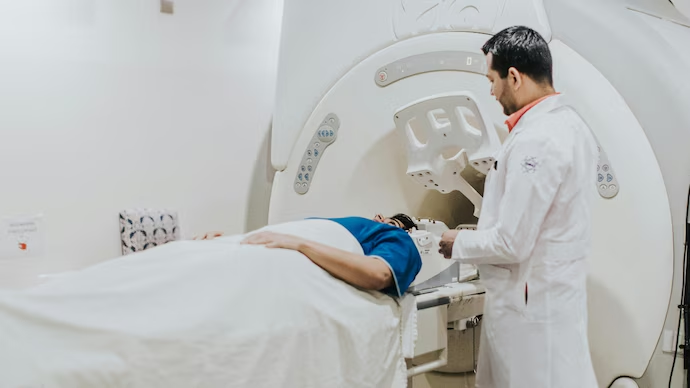
A routine medical visit turned into a horrific nightmare at Nassau Open MRI in New York, shining a harsh light on the invisible dangers lurking inside modern imaging facilities. The tragic incident involved 61-year-old Keith McAllister, who suffered a fatal medical episode after a heavy metallic chain around his neck was violently grabbed by the scanner. This rare but devastating mri necklace death serves as a stark reminder of the lethal force possessed by medical magnets. The sheer velocity at which the object was pulled left absolutely no time for intervention, demonstrating the unforgiving nature of high-powered diagnostic equipment when safety protocols are inadvertently bypassed.
Understanding the gravity of this accident requires looking closely at how safety protocols broke down in an instant. McAllister was not even the individual scheduled for the scan; he was simply a devoted husband stepping into the room to assist his wife after her appointment concluded. The sudden, violent nature of the mri necklace death underscores why strict metal restriction policies are a vital necessity rather than a mere administrative formality. It emphasizes that anyone crossing the threshold into an imaging room—whether a patient, a relative, or a staff member—must be subject to the exact same rigorous screening standards to prevent catastrophic outcomes.
The Tragic Timeline of the Long Island Clinic Accident
The catastrophic chain of events unfolded swiftly in July 2025 within the Westbury-based imaging center on Long Island. Keith McAllister stepped into the highly restricted scanning suite, completely unaware that the heavy 20-pound iron chain he wore for weight training was a ticking time bomb near the machinery. The moment he crossed the threshold, the scanner’s immense pull instantly targeted the massive collar around his neck, dragging him forcefully toward the core. The speed of the pull pinned him instantly against the structure, creating a high-pressure trap that defied physical escape.
Pinned helplessly against the machinery, the intense physical trauma and sudden shock triggered a severe medical emergency. Emergency responders rushed him to a nearby hospital, but the damage from the crushing force caused multiple heart attacks that ultimately claimed his life. The heartbreaking mri necklace death rapidly captured national attention, sparking intense industry debates regarding clinic entry protocols and visitor safety oversight. It brought forward tough questions about how such a highly visible, heavy metallic object managed to pass through the clinic’s outer safety boundaries without being noticed by the technicians on duty.
The Invisible Physics Behind Powerful MRI Magnets
To comprehend how a tragic mri necklace death can occur, one must understand that diagnostic scanner magnets are never turned off. They remain continuously active every hour of the day to maintain their superconducting state within the liquid helium cooling system. When a ferromagnetic object enters this invisible field, it undergoes what physics terms the “missile effect,” transforming ordinary everyday items into high-velocity projectiles drawn violently toward the center. The magnetic field lines grow exponentially closer and stronger near the bore, creating an inescapable vacuum for iron-based metals.
A standard 1.5T or 3.0T diagnostic machine generates a magnetic pull thousands of times stronger than the Earth’s natural magnetic field. This immense force treats heavy iron, steel, or nickel objects like a heat-seeking torpedo, accelerating them with thousands of pounds of force. When unsecured metal gets too close to the active scanner, the resulting kinetic velocity makes it virtually impossible for a human being to fight against the machine’s relentless grasp. Even multiple adults pulling together cannot break the magnetic lock once a heavy object becomes attached to the core.
Legal Aftermath and the Fight for Clinic Accountability
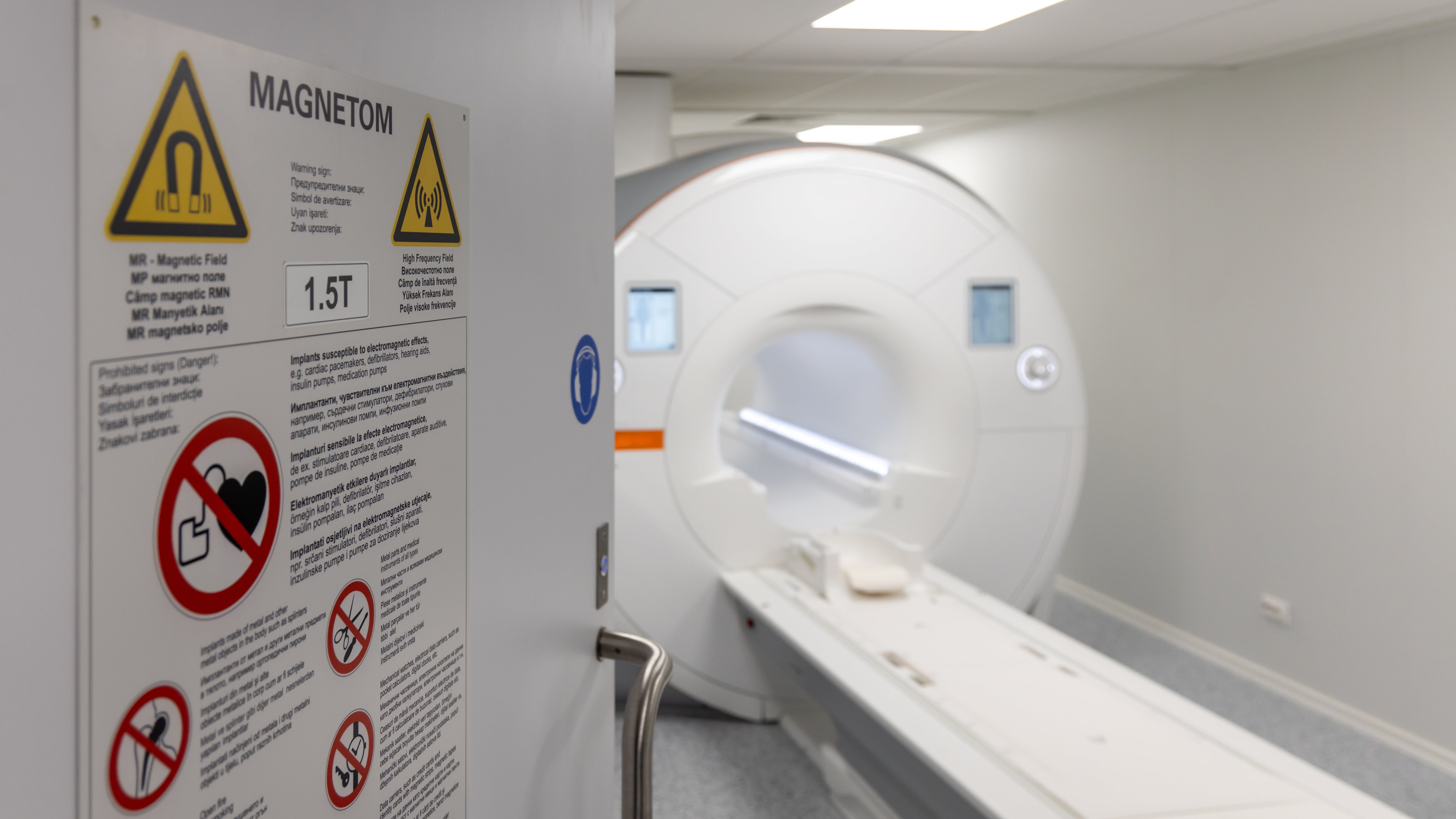
In the wake of the tragedy, the victim’s widow, Adrienne Jones-McAllister, launched a major lawsuit against the Nassau Open MRI facility. The legal action alleges severe negligence on behalf of the clinic’s medical personnel for failing to properly screen visitors before allowing entry into Zone IV. The lawsuit argues that staff should have noticed the massive, highly visible weight-training chain and stopped him from entering the room. By failing to issue a direct warning or physical check, the facility allegedly breached its fundamental duty of care to the public.
This specific mri necklace death highlights a critical vulnerability in outpatient safety: the casual screening of accompanying family members. While patients are routinely changed into gowns and scanned with metal-detecting wands, visitors often bypass these rigorous checks due to assumptions or rushed schedules. The legal battle aims to establish stricter universal boundaries, ensuring that clinics face severe penalties if they fail to protect the public. It serves as a warning to the entire healthcare industry that safety screening cannot stop at the patient alone.
Everyday Jewelry Safety: From Luxury Items to Fashion Pieces
Many consumers wonder if everyday accessories present the same lethal threat seen in the infamous mri necklace death case. While a delicate gold necklace for women or a classic pearl necklace won’t exert a 20-pound pull, they still pose severe operational hazards. Even high-end pieces like a tiffany necklace, van cleef necklace, dior necklace, or vivienne westwood necklace can contain hidden magnetic components. The risk extends beyond the physical pull, as the radiofrequency fields can induce electrical currents directly into the metal loops.
Smaller personal items like a custom name necklace, an initial necklace, a cross necklace, or a symbolic st christopher necklace often use white gold or platinum alloys mixed with nickel. Furthermore, delicate designs like a clover necklace or a swarovski necklace might use small iron pins inside their custom clasps or rhodium platings that react weakly to magnetic fields. Under the scanner’s influence, these tiny components can rapidly heat up against the skin, causing severe, deep-tissue thermal burns. For safety, a popular pandora necklace or diamond necklace must be removed entirely before entry.
Implementing Foolproof Universal Metal Screening Protocols
Preventing future imaging room accidents requires an industry-wide overhaul of how medical facilities manage their structural safety zones. Modern radiology centers utilize a strict four-zone setup, keeping the general public in Zone I and restricting the actual scanner room to Zone IV. No individual should ever cross into Zone III without passing a rigorous physical inspection and removing all external metallic items. The boundaries must be physically locked and monitored by trained staff at all times to avoid accidental entries.
To eliminate human error, modern hospitals are increasingly installing advanced ferromagnetic detection portals at the entrance of every scanning room. These specialized sensor pathways sound a loud alarm the moment any iron-based material tries to pass through the threshold, independent of human observation. Combining these automated alerts with mandatory visitor check-in forms ensures that oversight errors never cost another human life. Tech-driven screening serves as the final line of defense against cognitive fatigue or distractions faced by busy medical staff.
Conclusion: A Vital Lesson in Medical Safety Awareness
The heartbreaking loss of Keith McAllister stands as a solemn lesson for patients, visitors, and healthcare administrators worldwide. It proves that the invisible power of diagnostic machinery demands absolute respect and unwavering vigilance from everyone nearby, regardless of their role. Ensuring that all jewelry items, from a casual silver necklace to heavy training gear, are left outside is the only way to ensure safety. The technology that saves lives through detailed imaging can just as easily take life if its operating principles are ignored.
Ultimately, keeping medical environments secure requires removing human error from the equation through better education, stricter facility layouts, and automated warning systems. By keeping safety rules strictly updated and universally applied, the healthcare industry can ensure that an exceptional tragedy like this remains a dark anomaly. Awareness is our greatest defense against the hidden dangers of these indispensable, life-saving medical systems, reminding us that safety in medicine requires absolute cooperation from everyone involved.
Frequently Asked Questions (FAQs)
Can wearing a standard fashion necklace cause a serious MRI accident?
While a typical necklace will not create the immense, crushing force seen in the weight chain tragedy, it remains highly unsafe. The metal can interfere with image clarity, warp under magnetic strain, or cause localized skin burns due to rapid electrical currents induced by the radiofrequency fields. Every piece of body jewelry, regardless of size, must be taken off before crossing the safety threshold.
Why can’t doctors just turn off the MRI machine during an emergency?
These scanners rely on supercooled liquid helium to keep their internal electrical currents running smoothly without resistance. Disabling the magnet instantly, a process known as “quenching,” vents the expensive helium gas rapidly and can cause millions of dollars in structural damage while posing an asphyxiation risk, so it is reserved only for extreme life-or-death situations.
Are gold and silver necklaces completely safe from magnetic pull?
Pure gold and pure silver are naturally non-ferromagnetic, meaning they do not react directly to magnetic fields. However, almost all commercial jewelry items utilize small spring-loaded clasps containing steel or iron alloys, or use base metals that will actively react to the scanner’s intense pull, making manual testing or total removal mandatory.
What is the most important lesson from the Nassau clinic accident?
The main takeaway is that safety rules apply equally to everyone entering the facility, not just the patient undergoing the active scan. Visitors must be completely transparent about any metal objects they are carrying, including keys, phones, watches, coins, and concealed body jewelry, respecting the invisible boundaries of the facility.
You may also read: Shape and Additions in Diverticulitis Stool