Parenthood is a deeply rewarding journey filled with heartwarming milestones, yet few experiences test a caregiver’s mental and physical endurance quite like a sudden, unexplained shift in nighttime habits. When an infant who previously slept through the night begins waking up every single hour, exhaustion quickly takes over the entire household. Navigating sleep regression ages successfully requires transforming panic into informed preparation, recognizing that these choppy, sleepless nights signal major neurological, cognitive, or physical growth rather than a permanent loss of healthy sleeping skills.
Understanding these developmental phases allows parents to approach nighttime disruptions with empathy and patience instead of frustration. Every infant and toddler undergoes incredible bursts of brain development that temporarily disrupt their internal rhythms. By familiarizing yourself with the common sleep regression ages and learning what triggers these disruptions, you can build a proactive strategy. This comprehensive guide explores the exact timelines, underlying biological causes, and actionable coping mechanisms to help your family navigate these rocky chapters and restore peaceful rest.
Understanding Sleep Regressions: What Are They and Why Do They Happen?
A sleep regression is formally defined as a temporary period, typically lasting between two and six weeks, where a previously well-sleeping baby or toddler abruptly begins fighting bedtime, waking up frequently during the night, or taking significantly shorter naps. These frustrating phases connect directly to massive leaps in brain development, neurological rewiring, and major physical milestones. As an infant’s brain processes new information and learns how the world works, their sleep architecture undergoes natural restructuring, temporarily knocking their fragile sleep routines off balance and leading to overtiredness and increased night wakings.
It is absolutely crucial for caregivers to distinguish a true developmental sleep regression from short-term disruptions caused by other common environmental factors. Temporary sleep issues are frequently triggered by routine illnesses, painful teething episodes, acute ear infections, or sudden shifts in daytime schedules such as starting daycare or traveling. True regressions, on the other hand, are strictly tied to internal maturation and cognitive expansion. Recognizing this distinction helps families avoid unnecessary interventions and focus on providing the consistent comfort and reassurance their child needs while their brain rapidly develops behind the scenes.
The Complete Sleep Regression Ages Timeline
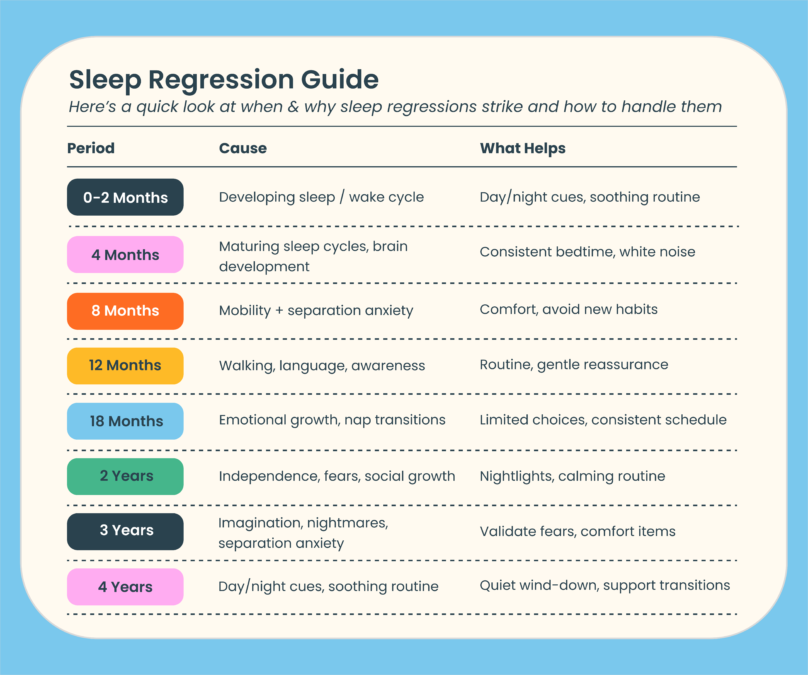
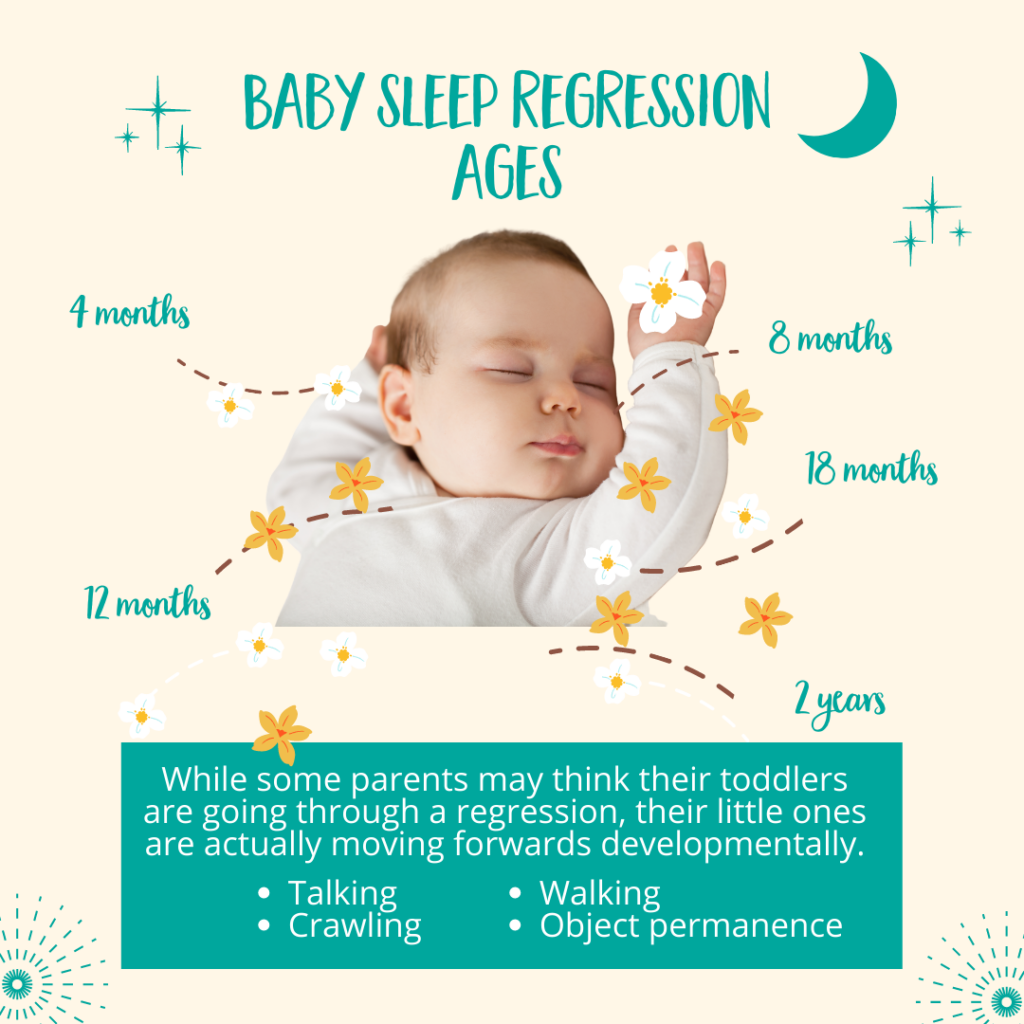
Navigating infant and toddler sleep disruption becomes exponentially easier when caregivers anticipate the predictable sleep regression ages mapped across early childhood development. The first major biological shift typically occurs around the four-month mark, driven by a permanent transition from newborn sleep patterns to mature, adult-like sleep cycles that include distinct light and deep sleep stages. Later developmental milestones trigger additional disruptions, such as the eight-to-ten-month regression fueled by crawling and pulling up to stand, the twelve-month milestone linked to walking and language expansion, the eighteen-month boundary-testing phase, and the two-year nap transition.
While these milestones serve as a reliable roadmap, every child develops at their own unique pace and may experience these phases slightly earlier or later than anticipated. Some infants might breeze right through specific months with barely a ripple in their nightly rest, while others encounter every single milestone disruption intensely. Understanding this overarching timeline empowers caregivers to look at the bigger picture rather than feeling defeated by sudden setbacks. By knowing what to expect around the corner, families can prepare their environment, adjust wake windows appropriately, and respond to their child’s changing developmental needs with confidence and resilience.
Common Signs and Symptoms Your Baby Is Experiencing a Regression
Recognizing the subtle, early warning signs of an approaching developmental leap allows families to adapt their daily routines before total exhaustion completely takes over the household. One of the primary indicators is a sudden, intense resistance to established bedtimes and naptime rituals that previously went smoothly. Parents will often notice that their child suddenly treats sleep like the enemy, crying or playing energetically when they should be winding down. Furthermore, daytime sleep patterns frequently become erratic, resulting in fragmented catnaps that fail to restore the child’s energy reserves.
Another hallmark symptom of sleep regression ages is an escalation in nighttime waking accompanied by heightened separation anxiety during transitions. Infants who previously mastered independent sleep may suddenly demand rocking, nursing, or physical contact to fall back asleep, waking up disoriented every time they transition between sleep cycles. Parents might also observe increased daytime clinginess, general crankiness, and an overall shift in mood. Identifying these multifaceted symptoms early helps caregivers avoid knee-jerk reactions, such as adopting unsustainable long-term sleep props, and allows them to maintain a steady, comforting presence.
How to Survive and Navigate Sleep Regressions
Surviving these intense developmental phases requires an immense amount of patience, steadfast consistency, and a flexible approach to daily routines. Caregivers should focus on maintaining predictable, calming bedtime rituals to provide a secure sense of anchor while avoiding the trap of introducing new, unsustainable sleep associations that will be difficult to break later. Monitoring optimal wake windows and ensuring age-appropriate daytime sleep totals prevents severe overtiredness, which is the primary catalyst for prolonged nighttime battles. Additionally, sharing night duties with a partner or support system is essential to prevent severe parental burnout during the peak weeks of disruption.
During an active regression, flexibility becomes just as important as consistency. If a child needs extra physical comfort, a little more nursing time, or a reassuring hand to hold while falling asleep, offering that temporary security will not ruin their long-term sleep habits. Experts generally recommend holding off on formal sleep training until the active regression has passed and the new developmental skill is fully integrated. By prioritizing connection, maintaining a calm demeanor, and trusting that the phase is entirely temporary, families can weather the storm without losing their collective sanity.
When to Seek Professional Advice
While the vast majority of sleep disruptions resolve naturally within a few weeks as the child adapts to their new developmental milestone, parents must remain vigilant for red flags that fall outside normal behavioral ranges. Persistent feeding difficulties, chronic breathing issues, unusual lethargy, or physical symptoms of acute illness require immediate medical attention from a qualified healthcare professional. If a child’s sleep problems are accompanied by sudden weight loss, recurring fevers, or signs of severe distress during the day, it is important to rule out underlying medical conditions that go far beyond a standard behavioral sleep regression.
Consulting a trusted pediatrician or a certified pediatric sleep consultant provides immense clarity and customized support when standard soothing strategies fail to yield positive results over an extended period. Professional guidance is especially valuable if sleep deprivation is severely impacting parental mental health or if the sleep disruption persists for more than six weeks without any signs of improvement. Having an expert evaluate the child’s complete routine, nutritional intake, and sleep environment can uncover hidden issues, offering reassurance and actionable pathways to restore healthy rest for the entire family.
You may also read: What to Look for in Real Botox Before and After Photos