Success is rarely the result of a single breakthrough. More often, it comes from small actions repeated consistently over time. Whether your goal is to improve your health, increase productivity, strengthen relationships, or develop financial discipline, your daily habits play a crucial role in determining your long-term outcomes. This is why learning effective habit building strategies can have a lasting impact on every area of life.
Many people begin new habits with excitement and strong motivation, only to abandon them weeks later. The problem is not usually a lack of desire but a lack of understanding about how habits actually work. Sustainable habits are built through repetition, structure, and consistency. By applying proven habit building strategies, you can create routines that become automatic and continue delivering results long after the initial motivation fades.
Understanding How Habits Are Formed
Habits are behaviors that become automatic through repetition. When you repeat an action in response to a specific trigger, your brain gradually learns to perform that action with less conscious effort. This process helps conserve mental energy and allows you to focus on more complex decisions throughout the day. Understanding this mechanism is essential for anyone who wants to build positive habits or eliminate negative ones.
Most habits follow a simple pattern known as the habit loop. This loop consists of a cue, a routine, and a reward. The cue triggers the behavior, the routine is the action itself, and the reward reinforces the behavior. Over time, the brain begins to associate the cue with the reward, making the habit easier to repeat. Many successful habit building strategies are designed around strengthening this cycle and making positive behaviors more attractive and rewarding.
Why Most Habits Fail
One of the biggest reasons people fail to build lasting habits is that they attempt to change too much at once. They create ambitious plans that require significant lifestyle adjustments, only to become overwhelmed after a few days. While enthusiasm is helpful in the beginning, sustainable progress usually comes from small, manageable actions that can be maintained consistently over time.
Another common issue is relying entirely on motivation. Motivation is unpredictable and often influenced by emotions, stress levels, and external circumstances. On days when motivation is low, people tend to skip their habits and lose momentum. Effective habit building strategies focus on creating systems and routines that work even when motivation disappears. The goal is to make positive actions easy enough to perform regardless of how you feel.
Start Small and Build Momentum

One of the most effective habit building strategies is to start with actions that feel almost too easy. Small habits reduce resistance and help establish consistency. Instead of committing to a one-hour workout, begin with five minutes of movement. Instead of reading an entire chapter, start with one page. These small actions may seem insignificant, but they create a foundation for long-term success.
Momentum is a powerful force in habit formation. Once you successfully complete a small action, your confidence increases and you become more likely to continue. Over time, these tiny behaviors grow into larger routines without feeling overwhelming. Starting small allows you to focus on consistency first and intensity later, which greatly increases the chances of maintaining the habit.
Create an Environment That Supports Success
Your environment influences your behavior more than most people realize. The objects, people, and situations around you can either support your goals or make them more difficult to achieve. If unhealthy snacks are always visible, you are more likely to eat them. If your workout equipment is easy to access, you are more likely to exercise regularly.
Designing your environment to support positive behavior is one of the most practical habit building strategies available. Remove distractions, prepare for success in advance, and make desired behaviors obvious. When positive habits require less effort to start, consistency becomes easier. Small environmental changes can often produce significant improvements without requiring additional willpower.
Use Habit Stacking to Strengthen New Behaviors
Habit stacking is a simple technique that involves attaching a new habit to an existing routine. Since established habits already have strong mental associations, they can serve as reliable triggers for new behaviors. For example, after making your morning coffee, you might spend two minutes planning your day or practicing gratitude.
This approach works because it eliminates the need to remember a completely new routine. Instead, the existing habit acts as a reminder. Habit stacking is one of the most effective habit building strategies because it integrates new behaviors naturally into daily life. The easier a habit fits into your current schedule, the more likely it is to become permanent.
Focus on Identity Rather Than Outcomes
Many people approach habit formation by focusing exclusively on results. They want to lose weight, earn more money, or become more productive. While goals are useful, lasting change often occurs when habits become part of your identity. Instead of saying, “I want to run regularly,” think, “I am a runner.” This shift changes the way you view your actions and decisions.
Identity-based habits create stronger commitment because they align with how you see yourself. Every positive action becomes evidence that supports your desired identity. Over time, this mindset strengthens consistency and reduces internal resistance. Among all habit building strategies, identity-based thinking is often one of the most transformative because it changes behavior from the inside out.
Track Progress Without Becoming Obsessed
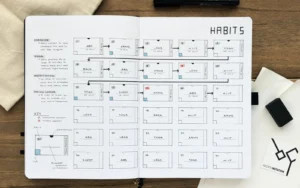
Tracking progress helps maintain awareness and accountability. Whether you use a journal, spreadsheet, calendar, or mobile application, monitoring your habits can provide valuable insight into your consistency. Seeing a visual record of completed actions often creates motivation and encourages continued effort.
However, tracking should support growth rather than create stress. Missing a day should not be viewed as failure. The purpose of tracking is to identify patterns and maintain momentum, not achieve perfection. The most successful habit building strategies focus on long-term consistency rather than flawless execution. Progress matters far more than maintaining an unbroken streak.
Learn to Recover Quickly from Setbacks
Setbacks are a natural part of every habit-building journey. Life is unpredictable, and even the most disciplined individuals occasionally miss a workout, skip a healthy meal, or forget a planned routine. What separates successful people from unsuccessful ones is not perfection but the ability to recover quickly and return to positive behaviors.
One useful principle is to never miss the same habit twice in a row. A single missed day has little impact, but repeated interruptions can turn into new patterns. By treating setbacks as temporary obstacles rather than failures, you maintain momentum and protect long-term progress. This mindset is one of the most valuable habit building strategies for sustainable growth.
Apply Habit Building Strategies Across Every Area of Life
The beauty of effective habit formation is that it can improve virtually every area of life. Health-related habits such as exercise, proper nutrition, hydration, and quality sleep contribute to higher energy levels and better overall well-being. Productivity habits can help you manage time effectively, reduce distractions, and achieve meaningful goals more consistently.
Financial habits are equally important. Simple actions such as tracking expenses, saving regularly, and reviewing budgets can lead to significant financial improvements over time. Personal development habits like reading, journaling, and continuous learning can also create long-term benefits. The same habit building strategies that work in one area can often be adapted successfully to another.
Conclusion
Building lasting habits is not about finding the perfect method or waiting for unlimited motivation. It is about creating systems that encourage consistent action, even when life becomes busy or challenging. Small improvements repeated daily often produce better results than occasional bursts of intense effort. This principle lies at the heart of successful habit formation.
The most effective habit building strategies focus on simplicity, consistency, environmental design, and identity-based change. By starting small, tracking progress, recovering from setbacks, and creating supportive routines, anyone can develop habits that last. The actions you repeat every day shape your future, making habit formation one of the most valuable skills you can learn.
You may also read: Choose Healthy Snacks That Support Your Goals