Monitoring your cardiovascular metrics is one of the most proactive steps you can take to safeguard your long-term physical well-being. Your pulse operates as a direct biometric window into your body’s daily metabolic efficiency, fluctuating seamlessly alongside your emotional state, physical fitness levels, and biological development. Because the human body undergoes massive structural and hormonal shifts as it matures, what represents a safe and healthy rhythm for a growing child looks completely different from the baseline requirements of a fully developed adult.
Developing a deep understanding of a normal heart rate by age empowers you to confidently analyze your family’s vital signs and recognize potential health warnings long before they turn into critical complications. While a highly rapid, energetic pulse is expected in a newborn baby whose organs are growing rapidly, that identical speed would signal a cardiovascular crisis in an older adult. By mastering these clinical baselines and learning how to correctly read your body’s subtle internal rhythms, you gain the clarity needed to optimize your daily health choices and navigate your wellness journey with complete confidence.
What Exactly is a Normal Resting Heart Rate?
A resting heart rate serves as the ultimate foundational benchmark for your everyday cardiovascular health and muscle condition, representing the exact number of times your cardiac muscle contracts per minute when you are completely relaxed, physically still, and mentally at peace. This specific metric offers deep insights into the structural strength of your left ventricle and the overall tone of your autonomic nervous system. When your heart muscle is well-conditioned and physically resilient, it ejects a significantly larger volume of oxygenated blood with every individual contraction, meaning it does not have to beat nearly as frequently to maintain your body’s critical internal functions.
To pinpoint your true baseline without any environmental interference, you should ideally calculate your pulse first thing in the morning immediately after waking up, well before stepping out of bed or consuming any dietary stimulants like coffee. Simply press your index and middle fingers firmly over the radial artery on your wrist or the carotid artery along your neck, count the rhythmic beats for a full sixty seconds, and document the final number in a health tracking application. Monitoring this specific resting figure over several consecutive weeks provides an invaluable point of data that can help you and your healthcare provider spot subtle, early deviations in your systemic physical health.
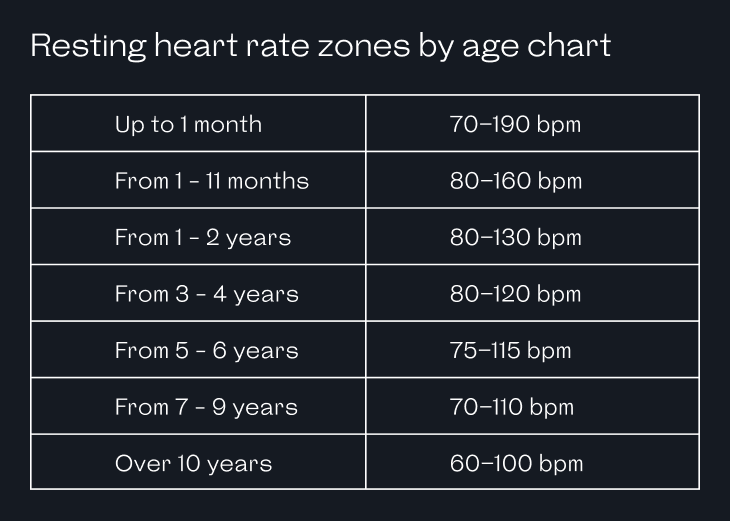
The Complete Normal Heart Rate by Age Chart
To help individuals easily track their cardiac metrics without getting bogged down in complex medical jargon, international clinical organizations have established standardized target ranges across the human lifespan. The following detailed index offers an authoritative breakdown of the normal heart rate by age, allowing you to instantly determine where your own daily metrics, or those of your children, fall on the medical spectrum.By saving this comprehensive guide as a quick reference tool, you can easily demystify the numbers displayed on your modern smartwatch or home health monitor. It is essential to recognize that falling slightly outside these standard boundaries temporarily is not always a reason for panic, but consistent deviations should prompt a conversation with a qualified medical professional.
Understanding Heart Rhythms in Children vs. Adults

Pediatric populations naturally exhibit vastly higher resting pulse rates compared to fully grown adults due to their unique, rapidly evolving physiology and metabolic demands. Because an infant or young child is actively constructing new muscle tissue, bone mass, and neural pathways at an accelerated pace, their metabolic rate is exceptionally high, requiring their smaller heart chambers to pump blood at a rapid clip to fulfill basic cellular needs. As a child slowly progresses through adolescence, their cardiovascular system expands, the heart muscle grows larger and thicker, and the standard normal heart rate by age gradually trends downward toward the typical adult benchmarks.
For individuals who have crossed past their thirteenth birthday, the expected medical baseline permanently stabilizes within the traditional window of sixty to one hundred beats per minute. However, elite fitness enthusiasts, marathon runners, and highly dedicated endurance athletes routinely shatter these standardized boundaries without experiencing any adverse side effects. Because their targeted physical training turns the heart into a remarkably powerful machine, their resting pulses frequently dip between forty and sixty beats per minute, an elite phenomenon that indicates superior cardiovascular wellness rather than a medical deficiency.
Calculating Target Heart Rates During Exercise
When you step into the gym or head out for an intense run, your active skeletal muscles require an immediate, massive surge of oxygenated blood to fuel their contractions, forcing your pulse to climb significantly higher. To guarantee that your physical workouts remain highly effective without crossing over into dangerous overexertion, it is absolutely essential to calculate your unique maximum heart rate using verified sports science guidelines. You can easily determine your theoretical ceiling by subtracting your current age from the number 220, which gives you the maximum safe capacity your heart can handle during peak exertion.
Once you have identified that mathematical ceiling, you can easily divide your workouts into precise, goal-oriented aerobic zones that optimize fat burning and cardiovascular stamina. Medical experts recommend maintaining a active pulse that sits comfortably between fifty percent and eighty-five percent of your calculated maximum during your moderate and high-intensity training sessions. Exercising within this specific personalized window ensures you are successfully challenging your heart muscle and increasing your physical endurance while avoiding the severe risks of overtraining, heat exhaustion, or acute cardiac strain.
Key Factors That Can Temporarily Shift Your Pulse
Your daily pulse is an incredibly dynamic metric that adapts instantly to an expansive web of psychological, environmental, and behavioral triggers throughout the day. Mental stress, unmanaged anxiety, sudden fright, or intense moments of joy spark an immediate release of adrenaline and cortisol from your adrenal glands, sending your heart rate soaring within a matter of seconds. This immediate reaction is a completely normal evolutionary survival adaptation known as the fight-or-flight response, engineered to prime your muscles for rapid movement or self-defense during perceived danger.
Beyond your emotional state, physical environmental variables like hidden dehydration, extreme summer heat, or a running fever will force your heart to contract much faster to cool your internal organs. Everyday lifestyle habits, such as enjoying a double shot of morning espresso, using nicotine products, or taking certain over-the-counter medications can also drastically alter your baseline rhythm. Recognizing these brief, transient daily triggers is vital because it prevents unnecessary anxiety when your numbers temporarily fluctuate away from the standard normal heart rate by age baseline.
Knowing When to Worry: Tachycardia and Bradycardia
While small, daily shifts in your pulse are perfectly healthy, noticing a resting heart rate that stays stubbornly outside of the recommended clinical boundaries warrants a proactive medical evaluation. If an adult’s resting pulse routinely hovers above one hundred beats per minute while they are sitting completely still and calm, the condition is diagnosed as tachycardia and may point to an overactive thyroid or an underlying arrhythmia. On the flip side, an adult resting pace that drops below sixty beats per minute in an individual who is not physically active is known as bradycardia, which can indicate structural wear or electrical signaling issues within the heart.
You should never dismiss chronic or long-standing deviations from the established normal heart rate by age charts, especially when the abnormal readings occur alongside other systemic physical symptoms. If an unusually slow, fast, or chaotic skipping pulse is paired with physical warning indicators like chronic dizziness, unexpected fainting spells, chest tightness, or a sudden shortness of breath, you must contact emergency medical services immediately. These accompanying symptoms often mean your vital organs are not receiving an adequate supply of oxygen, demanding quick clinical intervention from a cardiologist.
Final Conclusion on Cardiovascular Awareness
Consistently monitoring your resting and active pulse over time gives you invaluable, real-time data regarding how your lifestyle choices, stress levels, and age shape your inner vitality. While the standard baseline for the average adult spans from sixty to one hundred beats per minute, remember that your personal ideal number is shaped by your unique genetics and physical fitness journey. Committing to tracking these patterns regularly allows you to take charge of your wellness, notice changes early, and have highly informed, productive conversations with your medical care team.
Frequently Asked Questions Regarding Pulse Rates
What is a good heart rate for my age?
For the vast majority of individuals who are thirteen years old or older, maintaining a resting heart rate that stays between sixty and one hundred beats per minute is highly ideal for daily health. If you are someone who participates in intense, regular cardiovascular conditioning, a resting score that lands between forty and sixty beats per minute is a wonderful sign of an incredibly strong and healthy heart.
Is a resting heart rate of 72 perfect?
Yes, registering a resting pulse of seventy-two beats per minute is widely celebrated as a textbook-perfect reading for a healthy adult. It sits directly in the optimal center of the traditional clinical spectrum, showing that your heart is pumping blood with excellent structural efficiency and minimal daily strain.
What is a normal pulse rate for a 70-year-old?
A healthy resting pulse range for a seventy-year-old adult remains entirely identical to younger individuals, spanning from sixty to one hundred beats per minute. However, seniors should have their doctors regularly review their vital signs, as many common prescriptions for blood pressure can intentionally lower this baseline number.
What is the danger zone for resting heart rate?
For an inactive adult, a resting pulse that constantly climbs past one hundred beats per minute or falls beneath sixty beats per minute is considered a medical danger zone. If you notice these numbers frequently, and they are accompanied by fatigue, lightheadedness, or breathing problems, you should schedule a medical appointment promptly.
You may also read: Step-by-Step First Aid for a Spider Bite