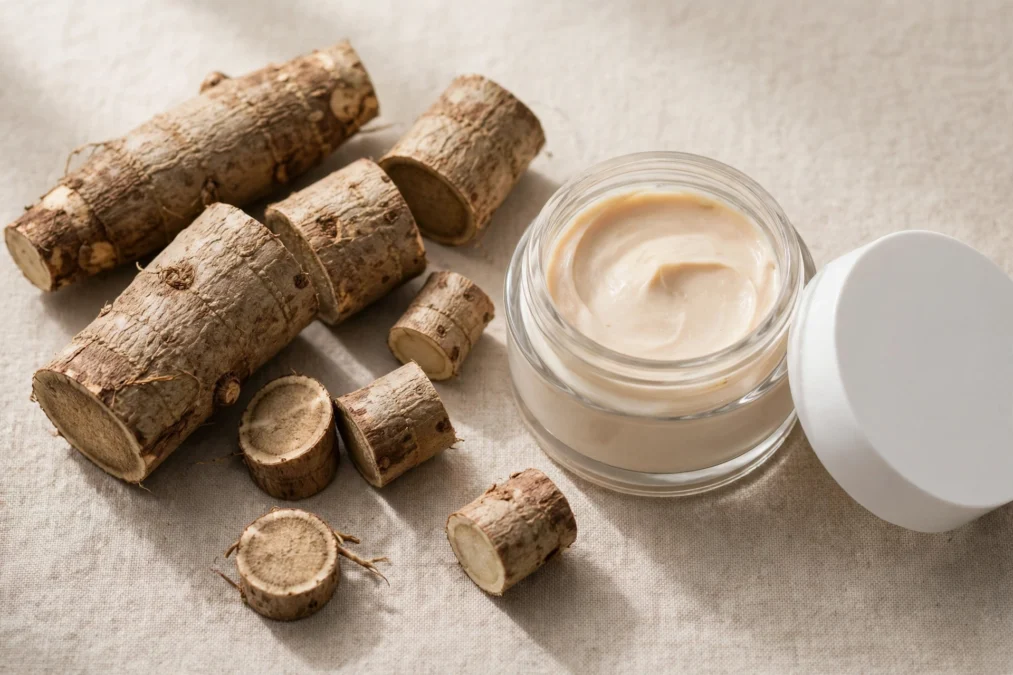
Wild yam cream does not contain real progesterone, despite what many product labels imply. The cream is made from the root of the wild yam plant (Dioscorea villosa), which contains a compound called diosgenin — and while chemists use diosgenin in laboratories as a starting material to manufacture progesterone, the human body lacks the enzymes to perform that conversion, so rubbing the cream on your skin cannot raise progesterone levels. The best clinical evidence, a 2001 double-blind trial in 23 menopausal women, found no meaningful difference between the cream and placebo. As of October 2026, the scientific consensus is that evidence for its benefits is weak, and some safety cautions apply.
What Is Wild Yam Cream?
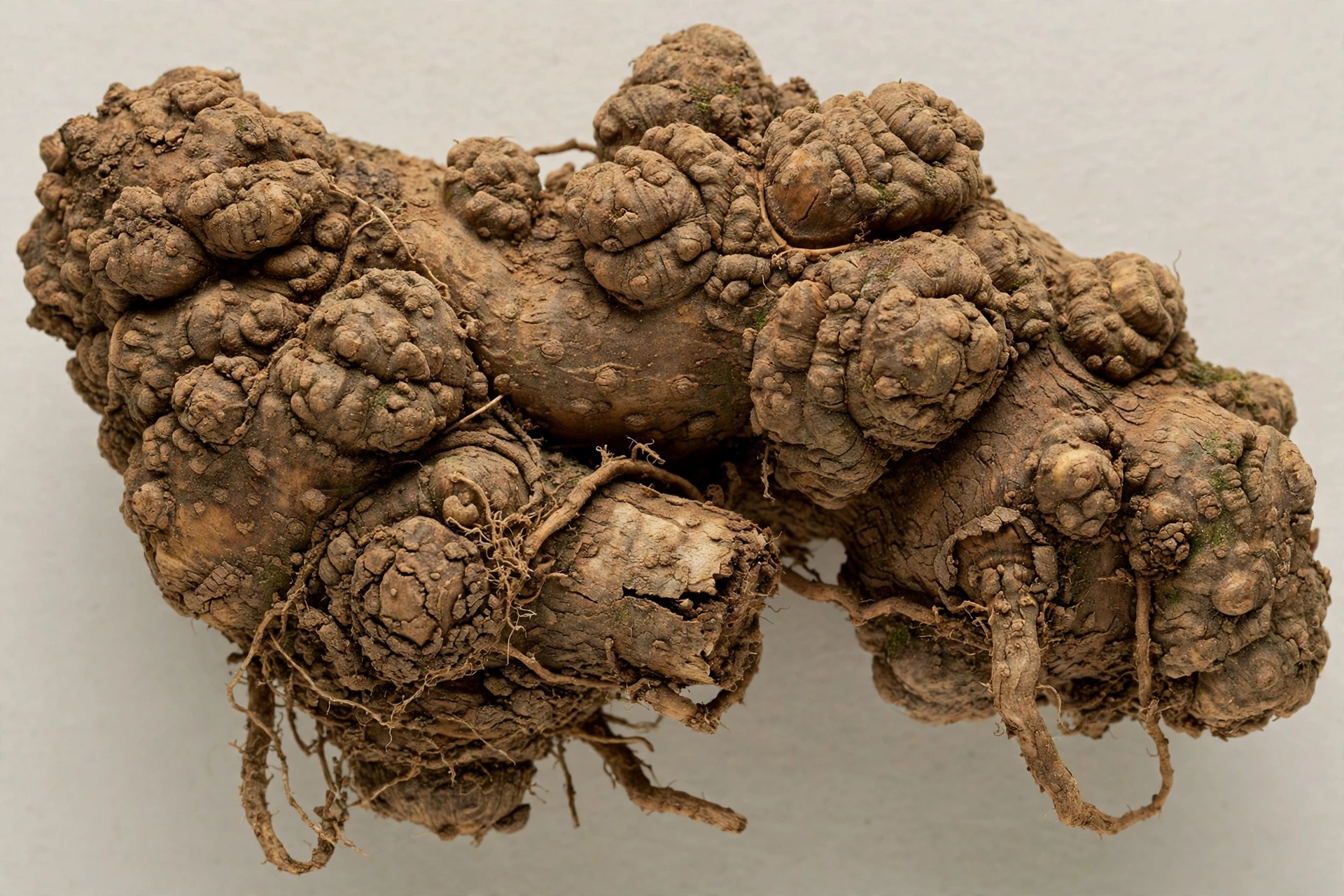
Wild yam cream is a topical product made from the root of Dioscorea villosa, a climbing plant native to North America that is quite different from the sweet potatoes and yams sold in grocery stores. It is sold online and in health shops as a “natural” remedy for menopause symptoms, premenstrual complaints, and hormonal balance, often with marketing that leans heavily on the phrase “natural progesterone.” The creams vary enormously: some contain only wild yam extract in a cosmetic base, while others — more controversially — have synthetic progesterone added during manufacturing and still market themselves as wild yam products. This inconsistency is the first thing to understand, because the label does not always tell the full story.
The appeal is easy to see. Menopause brings hot flushes, night sweats, and sleep disruption that can genuinely wreck quality of life, and many women would prefer a plant-based option over prescription hormones. Wild yam has a long history in traditional herbal medicine, which lends it an air of ancient wisdom. But traditional use is not the same as proven effect, and the specific claim that matters most — that the cream delivers progesterone into the body — collapses the moment you look at the biochemistry. To understand why, you have to meet diosgenin, the compound at the centre of the whole story.
The “Natural Progesterone” Claim — and Why It’s a Myth
Wild yam root contains diosgenin, a plant compound that is genuinely used by the pharmaceutical industry — but only as a raw starting material in laboratory synthesis. In a chemistry lab, diosgenin can be converted into progesterone through a series of deliberate chemical reactions that require specific reagents, catalysts, and conditions. The human body, however, does not possess the enzymes needed to perform this conversion, and no amount of skin absorption changes that fact. MedlinePlus, the US National Institutes of Health’s consumer health resource, states this plainly: the body cannot turn diosgenin into progesterone, so these creams do not supply the hormone, however confidently the packaging suggests otherwise.
This distinction matters because the entire marketing edifice of these creams rests on the progesterone promise. If a product genuinely contained progesterone, it would be a medicine with measurable hormonal effects — and measurable risks. Instead, most wild yam products contain only diosgenin, which the body treats as an inert plant compound in this context. The takeaway is blunt but important: buying the cream in the hope of raising progesterone levels is, on current biochemical evidence, money spent on a mechanism that cannot work. The one exception proves the rule — some creams work because they secretly contain added synthetic progesterone, which brings us to the label warning later in this article.
What Does the Research Actually Show?
The most directly relevant study is Komesaroff and colleagues’ 2001 trial, a double-blind, placebo-controlled crossover study in 23 healthy menopausal women who applied topical wild yam cream for three months. The researchers measured everything that matters: menopause symptoms, body weight, blood pressure, blood lipids, blood sugar, and — crucially — blood levels of FSH, estradiol, and both serum and salivary progesterone. The result was unambiguous: there were no significant changes on any measure, and no statistical difference between the active cream and the placebo cream (PubMed PMID 11428178). If the product were delivering meaningful hormonal activity, this is exactly the kind of trial that would have caught it.
Beyond that trial, the wider evidence base is thin. A systematic review of botanical and dietary supplements for menopause symptoms, linked to the US National Center for Complementary and Integrative Health, found too few and too small human studies to draw conclusions about wild yam — and what exists does not suggest it eases menopause symptoms. One small study of a different species, Dioscorea alata extract, reported improvements in anxiety, insomnia, and pain, but notably not in hot flushes or vaginal dryness, the symptoms women most want treated. In short, the honest scientific verdict as of October 2026 is “insufficient evidence,” not “proven remedy” — and responsible articles should say so plainly.
Does the Cream Work for Hot Flushes?
Hot flushes are the symptom that drives most women to try the cream, so this question deserves a direct answer: there is no reliable evidence that it helps. The Komesaroff trial measured symptoms and found no difference from placebo, and the broader literature offers nothing stronger. This does not mean every woman who feels better on the cream is imagining it — the placebo response in menopause trials is famously powerful, and ritual, hope, and the simple act of self-care can genuinely ease how symptoms feel. But feeling better and the cream having a pharmacological effect are different claims, and only the second one is what the science tests.
If hot flushes are significantly affecting your life, the evidence-based options are worth knowing about. Prescription HRT remains the most effective treatment for hot flushes, and for women who cannot or prefer not to use hormones, there are non-hormonal prescription medicines and behavioural approaches with real trial data behind them. A GP can talk through the options honestly, including what the evidence says about supplements. Spending months on an unproven cream while severe symptoms go untreated is the real cost here — not the price of the jar, but the lost time.
Are There Safety Concerns With These Creams?
“Natural” does not automatically mean safe, and the cream carries several cautions worth knowing. Laboratory studies have found that some components of wild yam show oestrogen-like activity in breast cancer cells — a finding that, while from cell studies rather than human trials, is enough for experts at breastcancer.org to advise caution in anyone with hormone-sensitive cancer. There is also insufficient safety data in pregnancy, so use is best avoided there. MedlinePlus documents moderate interactions between wild yam and oestrogen medicines among dozens of documented drug interactions, which matters for women already on HRT or hormonal contraception.
The broader safety picture is one of unknowns rather than proven dangers: because the products are sold as cosmetics or supplements rather than medicines, they are not held to pharmaceutical standards of purity, dose consistency, or labelling accuracy. Allergic skin reactions to cream ingredients are possible, as with any topical product, and anyone with a hormone-sensitive condition should discuss use with their doctor first. The practical rule is simple: treat the cream with the same caution you would give any product that claims hormonal effects — because if the claim were true, the risks would be real too.
The Hidden-Progesterone Warning: Check Your Label
Here is the twist that explains the glowing reviews some wild yam products receive: independent analyses and consumer-health sources have found that certain products marketed as “wild yam” creams actually contain synthetic USP progesterone added during manufacturing, sometimes labelled misleadingly as being “from wild yam.” If such a cream genuinely eases symptoms, it is almost certainly the added progesterone doing the work — not the yam. This matters enormously, because a product delivering real progesterone is, functionally, an unregulated hormone medicine, with all the implications that carries for dosing, interactions, and who should avoid it.
The practical defence is label literacy. Check the ingredients list for terms like “progesterone,” “USP progesterone,” or “micronized progesterone” — if any appear, you are not buying a simple herbal cream, whatever the front of the jar says. Be wary of products that promise dramatic hormonal transformations while claiming to be “just natural,” and remember that in the UK, medicines regulation exists precisely to keep hormone products under proper oversight. When in doubt, show the product to your pharmacist before you buy: a two-minute conversation can save you from an expensive misunderstanding.
How to Read the Label Like a Skeptic
A few minutes of label scrutiny can tell you most of what you need to know. First, look at the actual ingredients rather than the marketing claims: “Dioscorea villosa extract” means wild yam and nothing more, while any mention of progesterone means added hormone. Second, treat phrases like “natural progesterone,” “bioidentical hormones from yams,” or “balances hormones naturally” as marketing language, not scientific statements — they describe a story, not a mechanism. Third, check whether the product makes disease claims (“treats menopause”) while being sold as a cosmetic, a classic red flag for overpromising.
Fourth, look for transparency about concentration: reputable supplement makers state how much of each ingredient is present, while vague “proprietary blends” hide the details. And finally, remember that enthusiastic customer reviews are not clinical evidence — they cannot distinguish a real effect from placebo, the added-progesterone trick, or simply the passage of time. None of this means every wild yam product is a scam; it means the buyer, not the marketing department, should be the one asking the hard questions. An informed purchase is always better than a hopeful one.
Conclusion
Wild yam cream sits at the intersection of genuine hope and shaky science. The central claim — that it delivers “natural progesterone” — does not survive contact with biochemistry, because the human body cannot convert diosgenin into progesterone, and the best clinical trial found no meaningful difference from placebo. That does not make the women who try it foolish; menopause symptoms are real and disruptive, and the desire for a gentle, plant-based option is entirely understandable. But honesty matters more than hope when health decisions are on the line, and the honest verdict as of October 2026 is that the evidence is not there.
If you are struggling with menopause symptoms, the most productive step is a candid conversation with your GP or pharmacist about options with real evidence behind them — from HRT to non-hormonal treatments — rather than months of trial and error with unproven creams. And if you do choose to try the cream, do it with open eyes: read the label for hidden progesterone, keep expectations modest, and mention it to your doctor, especially if you have a hormone-sensitive condition or take hormonal medicines. Informed choices beat hopeful ones, every time.
Does Wild Yam Cream Increase Progesterone Levels?
No. Wild yam cream does not increase progesterone levels in the body, according to the available biochemical and clinical evidence as of October 2026. Wild yam contains diosgenin, which pharmaceutical chemists use in laboratories as a starting material to manufacture progesterone — but the human body lacks the enzymes to perform that conversion, so the cream cannot deliver the hormone through the skin. The key clinical trial (Komesaroff et al., 2001, published in the journal Climacteric and indexed on PubMed as PMID 11428178) measured serum and salivary progesterone in 23 menopausal women using the cream for three months and found no significant change versus placebo. The one exception: some products secretly contain added synthetic progesterone — if such a cream “works,” it is the added hormone, not the yam.
Is the Cream Safe to Use?
The cream is generally considered low-risk for healthy adults, but “natural” does not mean risk-free. Laboratory studies have shown oestrogen-like activity of some wild yam components in breast cancer cells, so women with hormone-sensitive cancers should be cautious and discuss use with their doctor — a point emphasised by breastcancer.org’s menopause supplement guidance. There is insufficient safety data in pregnancy, so it is best avoided there. MedlinePlus documents moderate interactions between wild yam and oestrogen medicines, which matters if you take HRT or hormonal contraception. Because these creams are sold as cosmetics or supplements rather than medicines, they are not held to pharmaceutical standards of purity or dose consistency. Anyone with a hormone-sensitive condition should speak to a GP or pharmacist before use.
What Is the Difference Between This Cream and Progesterone Cream?
The difference is fundamental. Progesterone cream is a product that actually contains progesterone — typically synthetic USP progesterone — and therefore has genuine hormonal effects (and genuine hormonal risks). A plain wild yam product, in its honest form, contains only wild yam extract with its compound diosgenin, which the human body cannot convert into progesterone — so it does not deliver the hormone at all. The confusion arises because some products marketed as wild yam products secretly contain added synthetic progesterone while implying the yam is the source. Always check the ingredients list: if it names progesterone, you are buying a hormone product regardless of what the front label emphasizes.
How Long Should You Try the Cream Before Deciding If It Works?
The only rigorous trial (Komesaroff et al., 2001) tested the cream for three months and found no difference from placebo on symptoms or hormone levels — which suggests that extending use beyond a few months is unlikely to reveal hidden benefits. A reasonable personal trial would be 8 to 12 weeks with a simple symptom diary (hot flush frequency, sleep quality), so you can judge honestly rather than by vague impression. If there is no clear improvement, stop rather than continuing indefinitely. More importantly, do not let months of unproven cream delay effective treatment: if menopause symptoms are significantly affecting your life, talk to your GP about evidence-based options instead of waiting on a supplement.
Can Wild Yam Cream Help With PMS or Fertility?
There is no reliable clinical evidence that it helps with premenstrual syndrome or fertility as of October 2026. The human studies that exist focus on menopause symptoms and found no meaningful effect, and there are no well-designed trials supporting PMS or fertility claims. Marketing that extends the “natural progesterone” story into fertility is particularly worth treating with skepticism, because genuine progesterone does play a role in the menstrual cycle and early pregnancy — which makes the false equivalence more persuasive and more misleading. Couples trying to conceive should rely on proven approaches and discuss any supplement use with their doctor, rather than a cream whose core mechanism cannot work as advertised.