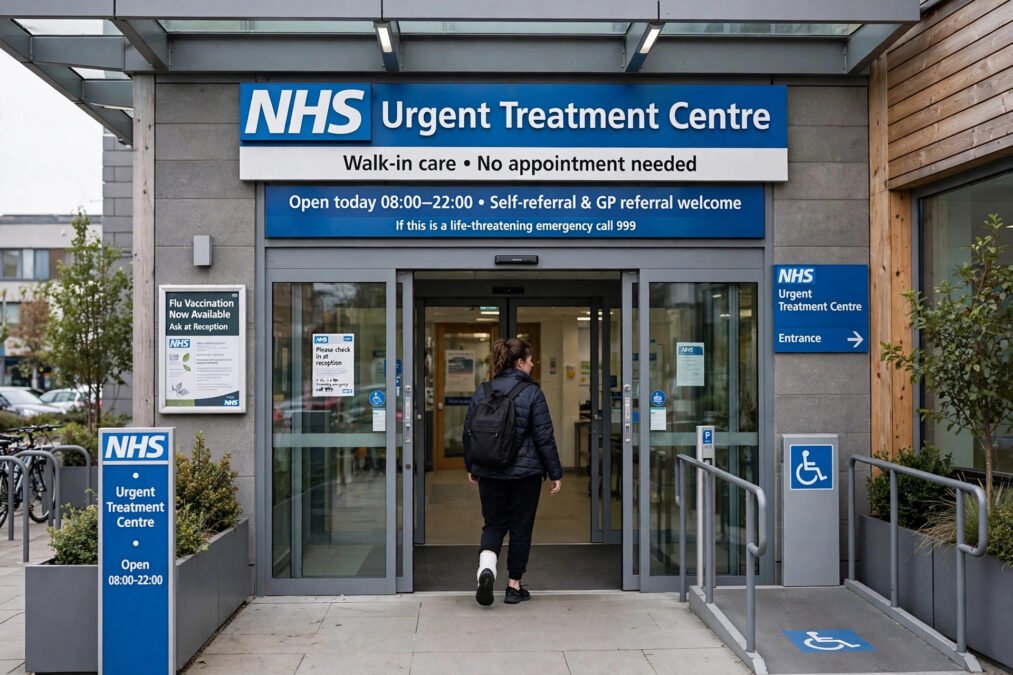
Sprained your ankle on a Sunday morning? Cut your hand cooking, and the GP surgery is closed? These are exactly the situations an urgent treatment centre is designed for. They’re one of the NHS’s busiest — and least understood — services, sitting right between your GP and the A&E department.
This guide explains what an urgent treatment centre (UTC) is, how it differs from A&E and your GP surgery, which conditions it can handle, and how to find your nearest one.
What is an urgent treatment centre?
An urgent treatment centre is an NHS service that provides urgent medical help for problems that are not life-threatening. Think of it as the middle ground: quicker and more focused than sitting in a crowded A&E waiting room, but able to handle things your GP practice isn’t set up for, especially out of hours.
UTCs were introduced across England in 2017 to bring together the old patchwork of walk-in centres, minor injuries units and urgent care centres under one consistent standard. According to NHS England, they are typically GP-led and equipped to investigate, diagnose and treat many of the most common injuries and illnesses that people would otherwise take to A&E.
People who attend a UTC are usually:
- mobile and able to move around on their own
- in need of treatment on the same day
UTCs also carry out basic investigative tests on site, such as X-rays for suspected fractures, and have clear pathways for follow-up when something needs more specialist care.
Urgent treatment centre vs A&E vs GP: what’s the difference?
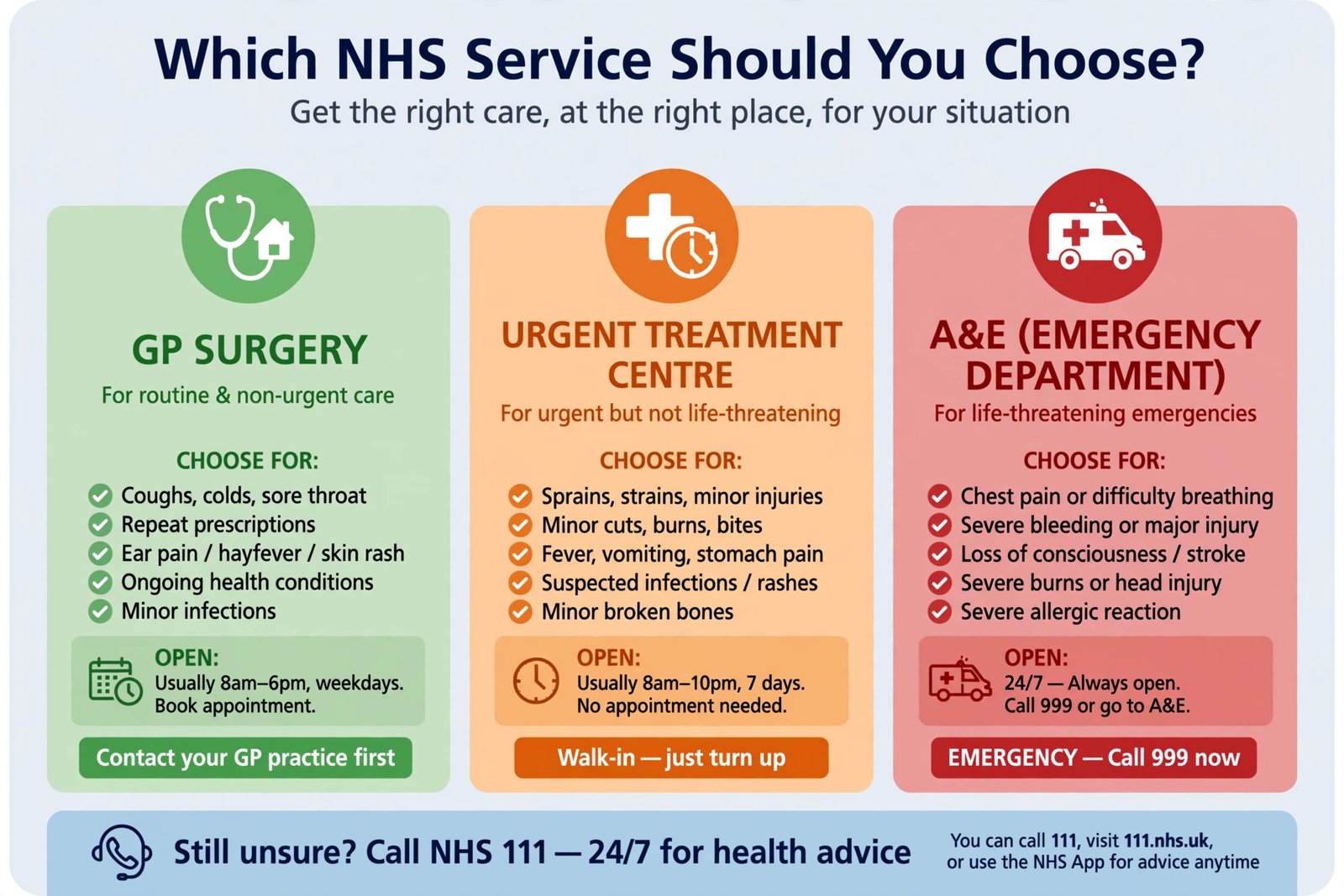
It’s easy to mix these up, especially when you’re in pain. Here’s how they fit together.
Urgent treatment centre vs A&E
A&E (the emergency department) is for serious and life-threatening emergencies: things like heavy bleeding, suspected stroke, heart attack, major injuries, severe breathing difficulties or seizures.
An urgent treatment centre handles problems that need attention today but are not life-threatening: a sprained ankle, a minor burn, a cut that may need stitches, a suspected broken bone.
In fact, many UTCs are now located right next to A&E departments. If you turn up at A&E with something minor, staff may well redirect you to the UTC next door — which is a good sign the service exists precisely to keep emergency departments free for genuine emergencies.
Urgent treatment centre vs GP surgery
Your GP surgery is your first port of call for ongoing or non-urgent health issues: repeat prescriptions, chronic conditions, referrals, and general health concerns. A UTC is not an alternative to your GP practice — it won’t manage your long-term conditions or do routine appointments.
The key difference is timing. A UTC is for urgent, same-day problems that can’t wait for a routine GP appointment, particularly when your surgery is closed (evenings, weekends and bank holidays). If your GP is open and can fit you in, that’s usually the better option.
Urgent treatment centre vs walk-in centre / minor injuries unit
These older names largely describe the same idea. Many former walk-in centres and minor injuries units have been rebranded or absorbed into the UTC standard. If your local service is still called a “minor injuries unit,” it probably offers a very similar service — just check its opening hours and what it treats, as these vary locally.
When should you go to an urgent treatment centre?
Go to a UTC when you need same-day treatment for an injury or illness that is urgent but not an emergency. A useful rule of thumb: if the problem appeared recently (within the last couple of weeks) and it’s getting in the way of normal life, but there’s no threat to life or limb, a UTC is likely the right place.
Examples of when a UTC is the right choice
- A sprained ankle, wrist or knee after a fall or sports injury
- A suspected broken bone in an arm, leg, hand or foot
- A cut or graze that may need cleaning, stitches or a dressing
- A minor burn or scald
- An insect bite or sting that has become swollen or infected
- A minor head injury with no loss of consciousness
- Eye problems such as minor eye injuries or infections
- Ear pain or ear infections
- Skin infections, rashes or allergic reactions
- Coughs, colds, sore throats or chest infections that need same-day advice
- High temperature, vomiting or diarrhoea that isn’t settling
- Stomach pain that is new and worrying but not severe
- Emergency contraception
If you’re unsure where to go for urgent minor injuries, our guide to walk-in clinics offering 24/7 urgent care can help you find one near you.
When to call 999 or go to A&E instead
A UTC is not the right place for life-threatening emergencies. Call 999 or go straight to A&E for:
- Chest pain, pressure or tightness (possible heart attack)
- Signs of a stroke — remember FAST: Face drooping, Arm weakness, Speech difficulty, Time to call 999
- Severe difficulty breathing or choking
- Heavy or uncontrollable bleeding
- Head injury with loss of consciousness, or repeated vomiting after a head injury
- Broken bones where the bone is visible, the limb looks deformed, or you cannot move it at all
- Major trauma from a road accident or serious fall
- Severe burns over a large area
- Seizures, fits or blackouts
- Signs of meningitis (stiff neck, rash that doesn’t fade under pressure, severe headache with fever)
- Severe allergic reaction (anaphylaxis) — swelling of the lips, tongue or throat, difficulty breathing
- Suspected poisoning or overdose
- Severe abdominal pain, especially with vomiting blood or black stools
If in doubt, call NHS 111 (phone or 111.nhs.uk, free, 24 hours a day). A trained adviser will assess your symptoms and direct you to the right service — which might be the UTC, your GP, a pharmacy, or an ambulance.
What conditions do urgent treatment centres treat?
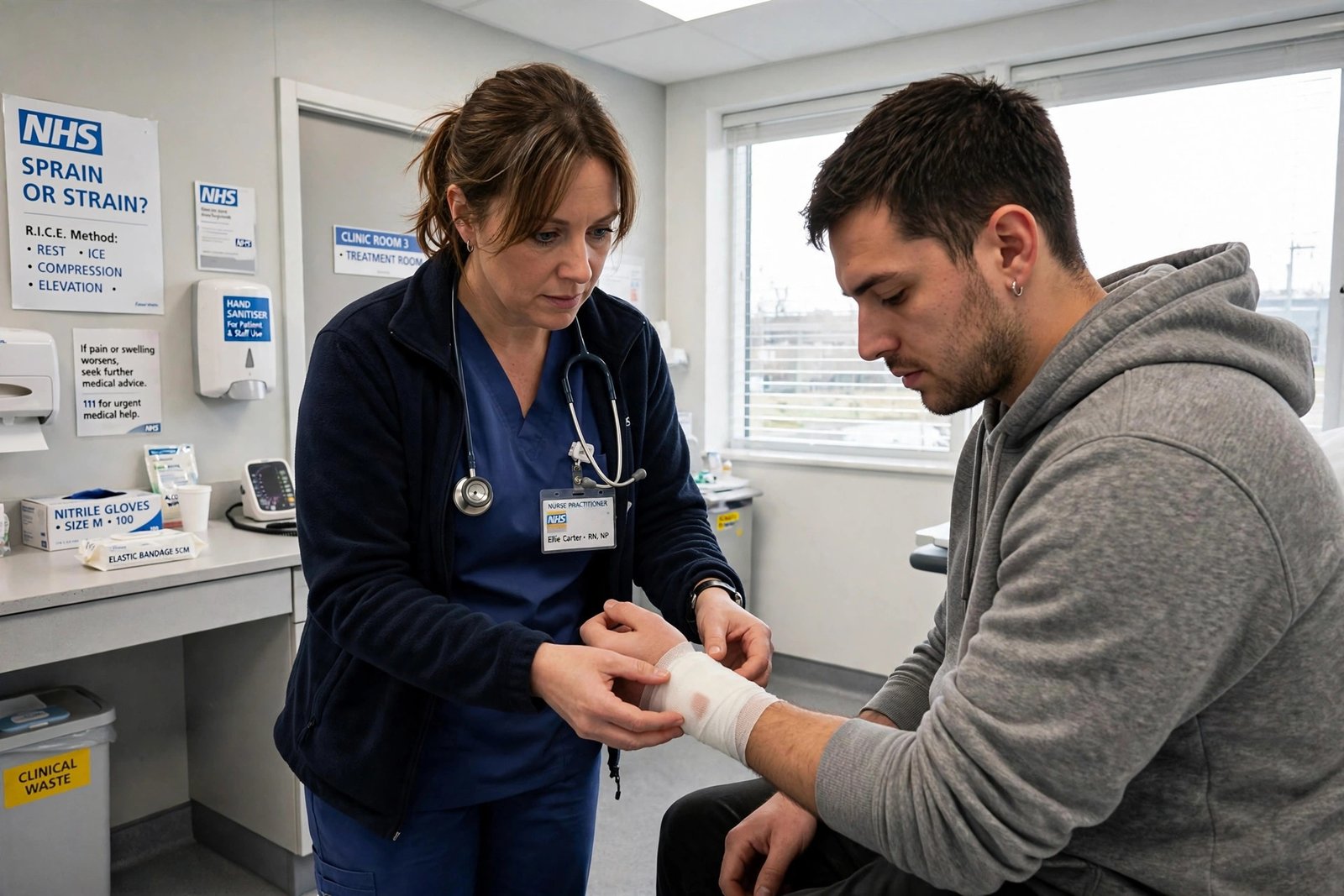
Most UTCs handle a wide mix of minor injuries and minor illnesses, for both adults and children. Typical lists include:
Minor injuries:
- Sprains and strains
- Suspected broken bones (many UTCs have on-site X-ray)
- Cuts, grazes and wounds needing cleaning or stitches
- Minor burns and scalds
- Minor head injuries (no loss of consciousness)
- Bites, stings and splinters
- Minor eye, ear and nose injuries, including removing foreign bodies
- Neck pain after a minor knock or strain
Minor illnesses:
- Skin infections and rashes
- Ear and throat infections
- Coughs, colds and breathing problems
- Feverish illness in adults and children
- Stomach pain, vomiting and diarrhoea
- Urinary symptoms in some cases
- Emergency contraception
The exact list varies between centres, so it’s worth checking your local UTC’s page or calling NHS 111 before setting off if you’re unsure.
What urgent treatment centres do NOT handle
Just as important as knowing what a UTC can do is knowing what it can’t. UTCs generally do not treat:
- Life-threatening emergencies (that’s what A&E and 999 are for)
- Ongoing or chronic conditions — for example, long-term back pain, arthritis flare-ups managed by your GP, or diabetes reviews
- Repeat prescriptions
- Routine services such as blood tests, suture removal or dressing changes for wounds being managed elsewhere
- Dental emergencies and toothache — contact your dentist or NHS 111 for urgent dental care
- Mental health crises — contact your GP, call NHS 111, or in an emergency call 999 or go to A&E; you can also call Samaritans free on 116 123 at any time
- Pregnancy-related problems — contact your midwife, maternity unit or GP
- Overdoses and alcohol-related problems (these need A&E)
If you arrive with something a UTC can’t safely manage, staff will redirect you to the right service — so don’t worry that asking for help in the wrong place will leave you stranded.
What to expect when you arrive
Here’s what a typical visit looks like:
- Booking in. Give your details at reception. If you booked through NHS 111, you’ll usually have a timed arrival slot. Walk-in patients are welcome at most UTCs but may wait longer.
- Triage. A nurse or clinician will do an initial assessment to judge how urgent your problem is and who should see you. This is why someone who arrived after you might be seen first — they’re treated in order of clinical need.
- Assessment and treatment. You’ll be seen by a GP, nurse practitioner, paramedic or other clinician. They may examine you, clean and dress a wound, apply a splint or plaster, prescribe medication, or order tests.
- Tests if needed. Many UTCs have on-site X-ray for suspected fractures, and can arrange basic blood tests. If the tests aren’t available on site, there will be a clear pathway for getting them done.
- Onward referral. If your problem turns out to need A&E, a specialist clinic or your GP, the UTC will arrange that — including transfer to A&E if needed.
How long will you wait?
Waiting times vary a lot depending on how busy the centre is and how serious your condition is relative to others waiting. As a rough guide, many UTCs aim to see and treat most patients within a few hours — often noticeably faster than A&E for minor problems. Booking via NHS 111 first usually gets you a timed slot and a shorter wait than walking in unannounced.
Opening hours and how to find your nearest UTC
UTCs must be open at least 12 hours a day, seven days a week — including weekends and bank holidays, per NHS England’s national standards. In practice, many are open longer (for example 8am–8pm, 8am–10pm or even 24 hours), but hours vary by location, so always check before you travel.
To find your nearest urgent treatment centre:
- Call NHS 111 (free, 24/7) or visit 111.nhs.uk — an adviser can confirm whether a UTC is right for your symptoms and book you an appointment slot
- Use the NHS service finder at nhs.uk to search for urgent treatment centres near you
- Use the NHS App — it can direct you to local urgent care services
Booking through NHS 111 first is recommended: it means the centre knows you’re coming, your details are already on the system, and you’ll typically be seen faster.
Is it free? Who can attend?
Yes — urgent treatment centres are free at the point of use under the NHS, just like A&E and GP care. You don’t need to be registered with a GP to attend, you don’t need an appointment (though booking helps), and you don’t need a fixed address. UTCs see patients of all ages, and under national standards they must be able to see young children too — although some individual centres set their own age limits for X-ray or specific treatments, so check locally if you’re bringing a baby or toddler.
You also don’t need to live in the local area. If you’re away from home — visiting family, on holiday, or travelling for work — you can use the nearest UTC.
Practical tips for your visit
- Call NHS 111 first if you can. It takes a few minutes, and a booked slot usually means a much shorter wait.
- Bring identification and your NHS number if you have them (not essential, but it speeds up booking in).
- Bring a list of any medication you take and mention any allergies — the clinician will ask.
- For children, bring their red book (personal child health record) if handy, plus any comfort items — waiting rooms can be unsettling for little ones.
- Don’t eat or drink if you think you might need stitches under local anaesthetic or a procedure — the clinician will advise.
- Arrive in good time before closing. Many centres stop accepting new walk-ins 30–60 minutes before their stated closing time so everyone already there can be seen.
- Go alone if possible, or bring just one person with you, so waiting areas don’t get overcrowded — though of course bring a parent, carer or companion if you need one.
If your situation needs hospital-level care instead, see our guide to Whipps Cross Hospital services, location and directions.
FAQs about urgent treatment centres
Do I need an appointment to visit an urgent treatment centre?
No — most UTCs accept walk-in patients. However, booking through NHS 111 (by phone or at 111.nhs.uk) gives you a timed arrival slot, which usually means a shorter wait. Walk-in patients are triaged on arrival but may wait longer.
Is an urgent treatment centre the same as A&E?
No. A&E (the emergency department) is for serious and life-threatening emergencies. An urgent treatment centre is for urgent but non-life-threatening problems that need same-day treatment, like sprains, minor burns, cuts and minor infections. Many UTCs sit alongside A&E departments and take the minor cases.
Can I take my child to an urgent treatment centre?
Yes. Under NHS national standards, UTCs must see patients of all ages. That said, individual centres sometimes have their own rules — for example, some can’t X-ray children under a certain age — so check your local centre’s details or ask NHS 111 first.
How much does it cost to use an urgent treatment centre?
Nothing. UTCs are part of the NHS and free at the point of use. You don’t need insurance, GP registration or proof of address.
What should I do if I’m not sure whether to go to a UTC, A&E or my GP?
Call NHS 111 or use 111.nhs.uk. It’s free, available 24 hours a day, and a trained adviser will assess your symptoms and direct you to the most appropriate service — and can book you a UTC appointment if that’s the right option.
Will I be seen faster at a UTC than at A&E?
For minor injuries and illnesses, usually yes. UTCs are designed specifically for these problems, while A&E prioritises the most seriously ill and injured patients. Booking a slot via NHS 111 helps further.
Medical disclaimer
This article is for general information only and is not medical advice. It cannot replace the judgement of a qualified healthcare professional. If you are worried about your health or someone else’s, contact your GP, call NHS 111, or speak to a pharmacist.
In an emergency — for example chest pain, difficulty breathing, signs of stroke, heavy bleeding or loss of consciousness — call 999 immediately or go to your nearest A&E.