Stepping onto a digital scale can sometimes feel like decoding a secret language, especially if you are actively tracking your fitness progress across different global standards. While most medical devices, fitness trackers, and modern gym applications record your metrics using the metric system, a massive portion of the population in the United Kingdom and Ireland still visualizes personal body mass exclusively in stones and pounds. Navigating between these two distinct worlds of weight measurement can quickly become confusing and frustrating without a clear, precise point of reference to guide your daily calculations.
If you need an immediate answer to clear up your confusion right now, 63kg in stone translates to exactly 9 stone and 12.9 pounds, which equals approximately 9.92 stones in pure decimal form. For individuals who prefer tracking their physical metrics entirely in standard imperial units, this exact same mass calculates out to a total of 138.9 pounds. Whether you are aiming for a new target fitness goal, configuring a global health application, or just curious about your current weight, this comprehensive guide will break down the essential formulas and real-world contexts seamlessly.
The Step-by-Step Math: How to Convert 63kg to Stone
To truly master the relationship between metric and imperial scales, it helps to examine the underlying mathematical architecture that governs these everyday units. A single stone is scientifically defined in the imperial system as exactly 6.35029 kilograms, meaning that any conversion requires a precise division process. Therefore, when you want to calculate 63kg in stone, the basic mathematical formula requires you to divide your total kilogram figure by that specific conversion factor. When you divide 63 by 6.35029, you instantly get the baseline decimal result of 9.9208 stones.
However, because almost nobody measures their actual body weight using complex decimals on a day-to-day basis, we must convert that remaining fraction into real imperial pounds to make it practical. You easily achieve this by taking the remaining 0.9208 decimals and multiplying them by 14, since there are exactly 14 pounds packed into a single stone. This second calculation yields 12.9 pounds, providing you with a highly accurate, real-world reading of 9 stone and 12.9 pounds, which can be rounded to 9 stone 13 pounds for casual use.
Demystifying 63kg to Pounds and Total Lbs
While stones remain incredibly popular across households in the United Kingdom, global fitness software, online nutrition logs, and international weight calculators generally skip stones entirely in favor of total pounds. Understanding how to instantly translate 63kg to lbs or 63kg in pounds ensures you can seamlessly input your data into any international digital platform without calculation errors. One single kilogram is equivalent to roughly 2.20462 pounds on a standard imperial scale, which serves as the foundational multiplier for most digital fitness applications.
By multiplying 63 kilograms by this 2.20462 ratio, the mathematical equation shows that 63kg=lbs translates directly to 138.89 pounds on a calibrated scale. Having this specific total number handy is incredibly useful when calculating your daily macronutrient needs, tracking weight fluctuations, or setting specialized resistance targets on modern, smart gym equipment. It acts as a universal mathematical language that completely bridges the historical gap between European metric tracking and traditional American imperial measurements, giving you complete clarity over your data.
The Health Perspective: Assessing a 63kg Woman
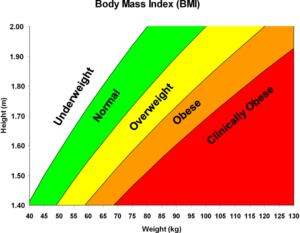
Weight numbers never exist in a complete vacuum, which is why so many people search for human contexts surrounding a 57-63kg women range to understand their own bodies better. If you are a 63kg woman, your overall health portrait and physical frame depend entirely on your specific height rather than just the isolated number on the scale. To see how this works in real life, we can analyze two distinct Body Mass Index (BMI) examples using common height variations found across global health databases.
For instance, an individual measuring 163cm 63kg bmi calculates out to an estimated score of 23.7, placing them safely and comfortably in the ideal, medically healthy weight range. Similarly, a taller individual measuring 169cm 63kg yields a baseline BMI score of approximately 22.1, which represents an incredibly balanced and excellent health benchmark for adults. It is always important to remember that active muscle tissue weighs significantly more than fat by volume, meaning your unique body composition matters just as much as the raw numbers.
Athletic Excellence: The 63kg Weight Class in Sports

In the exciting and disciplined world of competitive athletics, hitting an exact weight target is viewed as a highly calculated art form requiring immense dedication. The 63kg weight class serves as a vital, fiercely competitive division across many international combat sports, including mixed martial arts, Olympic judo, and classic amateur boxing. Athletes competing within this specific tier must carefully balance their raw physical strength with peak agility to dominate their opponents without stepping over the strict boundaries of the scale.
This specific number holds a truly legendary status within the realm of women’s 63kg weightlifting, acting as a historical benchmark for power-to-weight ratios globally. For many years, this specific tier was a historic powerhouse division in international weightlifting competitions, highlighting elite athletes who possessed unbelievable explosive power relative to their physical size. Watching an elite lifter at this precise weight hoist double their own body mass completely overhead proves that 63kg in stone represents a baseline of incredible human athletic potential.
Conclusion to Your Weight Tracking Journey
In conclusion, understanding your precise body metrics across different regional systems shouldn’t feel like an impossible mathematical puzzle or an annoying chore during your fitness journey. We have clearly established that 63kg in stone equals 9 stone and 12.9 pounds, which can also be viewed globally as roughly 139 total imperial pounds. Armed with these specific conversions, you can confidently manage your personal health metrics across any application, country, or medical chart you happen to encounter in the future.
Maintaining an awareness of how these metrics shift between systems allows you to stay fully informed and highly adaptable, whether you are traveling abroad or buying a new scale. Ultimately, consistency in tracking is the most critical element of long-term health success, regardless of whether you choose to measure your progress in kilograms, pounds, or stones. By treating these numbers as simple data points rather than sources of stress, you can focus on building sustainable habits that support your long-term physical well-being.
Frequently Asked Questions (FAQs)
What is 63kg in stone and pounds exactly?
When converted precisely using scientific multiplication factors, 63kg in stone gives you a final real-world measurement of 9 stone and 12.9 pounds. For everyday casual tracking, fitness goals, or clothing adjustments, most individuals simply round this figure up to 9 stone and 13 pounds for total convenience.
How do you calculate 63kg to lb quickly?
To find the total value of 63kg in lbs without using a complex digital calculator, you just need to multiply 63 by the standard imperial conversion factor of 2.20462. This quick and reliable formula shows that 63kg translates directly to 138.89 total pounds on a traditional imperial weight scale.
¿Cuánto es 63kg a libras en el sistema imperial tradicional?
Si estás convirtiendo el peso métrico para un público internacional o hispanohablante, 63 kg es exactamente igual a aproximadamente 138.89 libras en una báscula tradicional. Esta medida es sumamente útil para quienes configuran aplicaciones de salud en regiones americanas que no utilizan el sistema de piedras.
Is 63kg a healthy weight for the average adult woman?
Yes, for adult individuals who fall within the average global height range between 5’2″ and 5’7″, a body weight of 63kg falls squarely within the medically recognized normal and healthy BMI boundaries. However, you should always consult with a medical professional to analyze your unique muscle mass and overall body composition.
You may also read: Step by Step Guide to Safe Home Treatment