Waking up with a sharp, stabbing pain in your heel can make taking those initial morning steps feel nearly impossible. This distinct discomfort is the classic hallmark of plantar fasciitis, a common foot condition caused by micro-tears and inflammation along the thick band of connective tissue running across the bottom of your foot. Thankfully, incorporating targeted plantar fasciitis exercises into your daily routine offers a highly effective, non-invasive path toward calming irritated tissues, improving foot mobility, and eliminating persistent arch strain permanently.
By consistently performing specific stretches and strengthening routines, you directly address the underlying causes of heel pain, such as calf tightness and weak intrinsic foot muscles. Engaging in guided plantar fasciitis exercises boosts localized blood circulation, restores flexibility to stiff connective tissues, and enhances structural support across the entire lower leg. Before starting any workout program, remember to begin gently, avoid pushing into sharp discomfort, and give your body adequate time to adapt to new movements safely.
Essential Stretches for Immediate Arch and Heel Relief
The seated plantar fascia cross-over stretch is widely recognized as one of the most effective plantar fasciitis exercises for obtaining immediate morning relief. To perform this stretch correctly, sit comfortably in a sturdy chair, cross your painful foot over your opposite knee, and use your fingers to gently pull your toes back toward your shin until you feel a deep stretch along your arch. Holding this extended position for 10 to 15 seconds and repeating it 10 times right before stepping out of bed prevents sudden micro-tearing of the fascia.
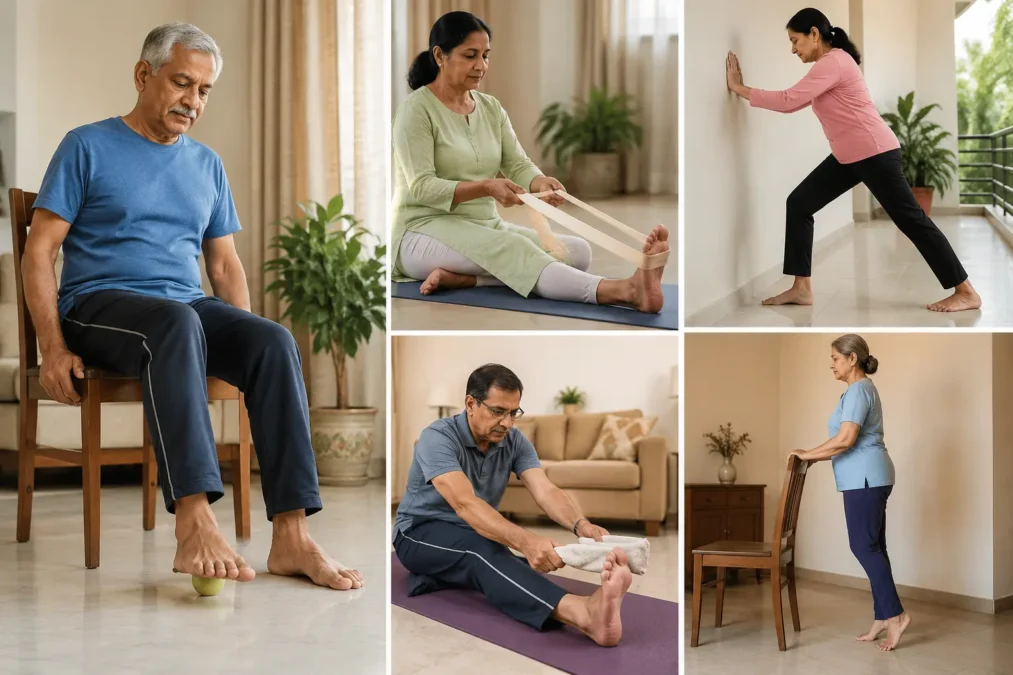
The standing calf and Achilles stretch directly targets the tight lower leg muscles that continuously pull on the heel bone during daily movement. Stand facing a wall with your hands supported against the surface for balance, extend your painful leg straight behind you with your heel planted flat on the floor, and slowly bend your front knee. Lean forward steadily until you feel a deep, controlled tension throughout your back calf, holding for 15 to 30 seconds to lengthen restricted muscle fibers effectively.
The seated towel stretch provides a smooth, gentle method to release the entire posterior chain without placing heavy body weight on your sensitive foot arch. Sit comfortably on the floor with your legs fully extended in front of you, loop a folded towel around the ball of your affected foot, and gently pull the ends backward toward your torso. Maintaining this smooth, steady stretch for 15 to 30 seconds eases muscular tension along your calf, ankle, and sole, facilitating much smoother morning movement.
Targeted Strength Exercises to Support the Foot Arch
Building structural endurance through key plantar fasciitis exercises helps fortify your foot arch and prevents frustrating pain relapses over time. Towel curls are exceptionally simple yet powerful for building intrinsic foot strength, which is vital for stabilizing your foot during daily walking. Place a small hand towel flat on the floor and use only your toes to scrunched up and pull the fabric toward you for 10 to 12 controlled repetitions, building essential muscle density across your foot bed.
Controlled heel raises progressively build load tolerance in your calf muscles and Achilles tendon, providing stronger dynamic balance for high-impact activities. Stand near a sturdy wall or chair for balance, slowly rise up onto the balls of your feet over two seconds, hold at the top, and lower yourself back down over three full seconds. Completing 10 to 15 smooth, controlled repetitions encourages long-term resilience throughout the underlying connective tissues, protecting your heel from repetitive stress.
A daily deep tissue foot roll provides essential myofascial release, breaking up stubborn tissue adhesions and easing persistent tension across the inflamed plantar fascia. While seated in a comfortable chair, place the sole of your foot over a tennis ball or a frozen water bottle, applying moderate downward pressure as you roll it back and forth for three to five minutes. This therapeutic practice combines physical massage with targeted temperature therapy to quickly soothe tired, sore foot muscles after long hours.
Daily Morning and Evening Routine for Optimum Healing

Establishing a structured, consistent daily routine dramatically amplifies the benefits of your plantar fasciitis exercises while protecting your foot from sudden setbacks. Performing gentle ankle rolls and plantar fascia stretches before stepping out of bed prevents the abrupt, painful micro-tearing that typically characterizes the first steps of the morning. Pausing for just five to ten minutes every morning and evening to systematically loosen tight tissues significantly accelerates your long-term tendon recovery and rebuilds tissue flexibility.
Knowing precisely when to apply soothing heat or cold therapy can further streamline your daily healing journey and reduce localized tissue discomfort. Using warm heat therapy or warm water soaks prior to stretching makes stiff muscles much more pliable, flexible, and receptive to exercise. Conversely, following your exercise sessions or coming home after a long workday standing up, applying a cold ice pack for 15 minutes cools down irritated tissues, curbs lingering inflammation, and accelerates muscle recovery.
Your selection of everyday supportive footwear plays an indispensable role in preserving the functional structural gains achieved through daily stretching routines. Avoid walking completely barefoot on hard, unyielding floors like tile or hardwood during your recovery phase, as unpadded impact rapidly re-aggravates sensitive, healing fascia fibers. Instead, opt for supportive shoes equipped with deep heel cups, structured arch support, or custom orthotic inserts to keep your foot properly aligned and stabilized throughout the entire day.
When Exercise Isn’t Enough: Seeking Professional Care
While dedicated plantar fasciitis exercises yield remarkable improvements for the vast majority of individuals, severe or long-standing symptoms may occasionally require specialized clinical guidance. If your persistent heel pain continues past four to six weeks despite regular daily stretching, scheduling a formal evaluation with a physical therapist or podiatrist is highly recommended. A medical professional can assess your walking gait and lower body alignment to correct subtle mechanical issues contributing to ongoing tissue strain.
A healthcare specialist can recommend advanced conservative treatments tailored specifically to your unique foot structure, biomechanics, and daily physical activity level. Custom-molded orthotic devices, temporary night splints that keep the fascia elongated while sleeping, or targeted physical therapy modalities can break through stubborn recovery plateaus. For chronic, non-responsive cases, specialized shockwave therapy or localized cortisone injections may be discussed to calm down persistent tissue irritation and stimulate renewed healing responses.
It remains crucial to stay vigilant for warning signs that may indicate a condition more complex than routine soft tissue inflammation. Seek prompt medical evaluation if you experience sudden, severe swelling, visible bruising, localized warmth, or numbness and tingling sensations radiating along your foot or ankle. Addressing severe or unusual symptoms early protects your overall long-term mobility and helps you return to a fully active, pain-free lifestyle much faster and far more safely.
Conclusion: Consistency is the Key to Recovery
Overcoming chronic heel discomfort requires patience, proper execution, and above all, daily consistency with your therapeutic movement routine. Integrating these six straightforward stretches and strength movements into your regular schedule builds a strong, resilient foundation for your feet over time. With steady effort, proper supportive footwear, and dedicated daily attention, you can successfully banish stubborn heel pain and enjoy comfortable, effortless movement every single day.
Frequently Asked Questions About Plantar Fasciitis Exercises
How long does it take for plantar fasciitis exercises to work?
Most individuals begin to experience noticeable pain relief within 2 to 4 weeks of starting consistent daily stretching routines. However, complete recovery and tissue repair typically require between 3 to 12 months, depending on the initial severity of the tissue inflammation and how consistently you follow your rehabilitation plan throughout the recovery process.
Should I do plantar fasciitis exercises when my foot is actively hurting?
Gentle, low-impact movements like seated towel stretches or soft tissue rolling can generally be performed safely during mild discomfort. However, if any specific movement triggers sharp, worsening heel pain, you should stop that particular exercise immediately, allow the tissue to rest, and focus on ice therapy until the acute inflammation subsides.
What is the worst thing you can do for plantar fasciitis?
The most damaging habits include walking barefoot on hard, unpadded surfaces like tile or concrete, wearing flat, unsupportive shoes such as flip-flops, pushing through sharp pain during high-impact running or jumping activities, and completely ignoring chronic calf tightness, which continually pulls on the sensitive heel bone and delays healing.
Can walking make plantar fasciitis worse?
Excessive walking on hard ground without adequate arch support or cushioned orthotics can easily re-injure the healing fascia and prolong your recovery time. During active flare-ups, it is best to limit prolonged standing and replace long walks with low-impact cardiovascular alternatives like swimming, stationary cycling, or upper-body rowing to stay fit safely.
What is the single best exercise for plantar fasciitis?
The seated plantar fascia cross-over stretch is widely considered the single most effective exercise for fast, targeted heel relief. Performing this stretch regularly—especially right before taking your initial steps out of bed in the morning—directly lengthens the constricted arch ligament and prevents the painful tissue tearing that typically occurs after sleeping.
You may also read: Safety Warnings, Side Effects, and Medical Advice