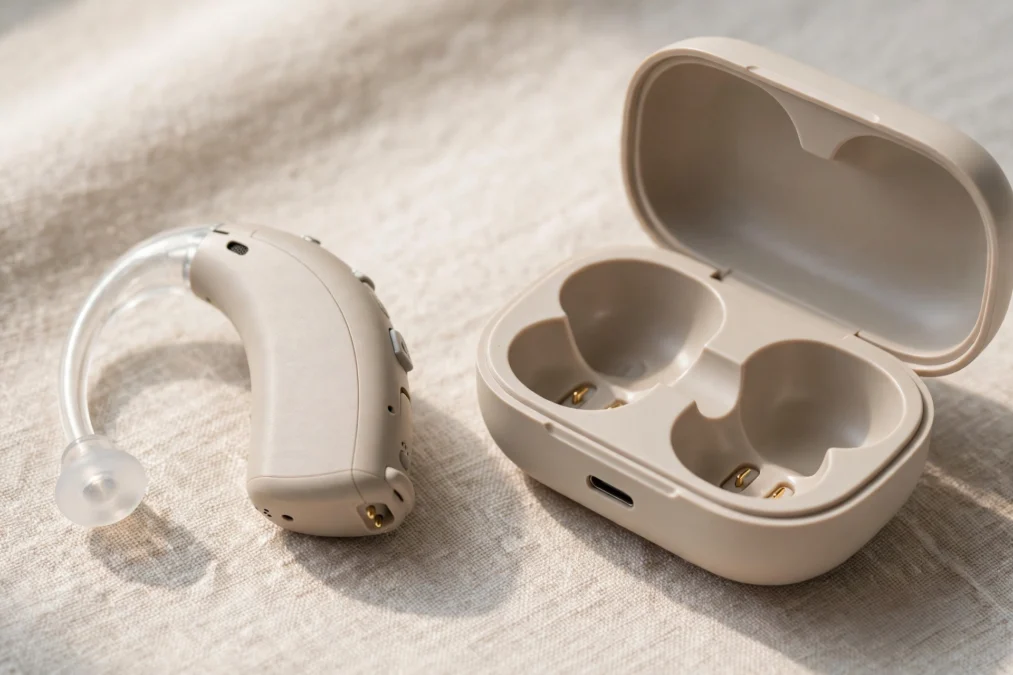
If you are researching phonak hearing aids, the short answer is that they are premium, Swiss-made hearing aids from one of the world’s largest hearing-care companies, best suited to people who want strong speech understanding in noisy places, direct Bluetooth streaming from almost any phone, and rechargeable models that last a full day. The right model for you depends on your hearing test results, your lifestyle, and your budget, rather than on the newest product name, and this guide will help you match the range to your needs before you spend anything. Prices vary widely by model and provider, and a good fitting matters at least as much as the device itself.
This guide covers, as of October 2026, who Phonak is and why audiologists recommend the brand, the Audéo, Lumity and Paradise ranges explained in plain language, the key features including Bluetooth, rechargeable batteries and AI noise reduction, what phonak hearing aids cost privately compared with the NHS route, how the fitting process works, and how Phonak compares with other leading brands. Where a detail depends on your local provider or on the exact model, that is stated honestly, because a buyer’s guide that hides those differences would not help you make a good decision.
Who Is Phonak and Why Do Audiologists Recommend It?
Phonak is a Swiss hearing-aid brand owned by the Sonova Group, with its headquarters in Switzerland and a history in hearing care going back to its founding in nineteen forty-seven. It is one of the largest hearing-aid manufacturers in the world, and its devices are fitted by independent audiologists, hospital audiology departments and high-street hearing centres across the United Kingdom. That scale matters for buyers, because it means spare parts, accessories and aftercare are widely available, and because the company invests heavily in research, including its own hearing research centre work on speech understanding in background noise.
Audiologists recommend Phonak for several practical reasons rather than brand loyalty alone. The sound quality is consistently well regarded, particularly for speech clarity, the range covers mild to severe hearing loss in a single receiver-in-canal style, and features such as universal Bluetooth connectivity and rechargeable batteries solve the two complaints that used to put people off hearing aids most: fiddly batteries and poor phone compatibility. No brand suits every ear, and a good audiologist will compare options with you, but Phonak’s combination of sound performance, connectivity and support is why it appears so often at the top of recommendation lists.
Phonak Hearing Aid Ranges Explained: Audéo, Lumity and Paradise
Phonak’s main modern range is called Audéo, which is a receiver-in-canal style where a small device sits behind the ear and a thin wire carries sound into the ear canal. Within that style, Paradise was the generation launched in twenty twenty, and it introduced motion sensors, tap control for answering calls, and universal Bluetooth connectivity that works with Apple and Android phones alike. Lumity followed in twenty twenty-two as the next generation, with improved speech understanding technology designed to make conversations clearer in background noise, and it remains a popular choice for people who want strong performance without paying for the very latest flagship.
Since then, Phonak has moved into an AI generation of devices, with the Audéo Sphere family using a dedicated AI chip to separate speech from surrounding noise, a feature Phonak calls Spheric Speech Clarity. As shown on Phonak’s own United Kingdom website in October 2026, the current flagship family is Audéo EON Sphere, which builds on that AI approach with the aim of keeping voices clear even in busy restaurants and group conversations. Older ranges such as Paradise and Lumity are still fitted by many providers, often at lower prices, so asking which generation you are being quoted for is one of the most useful questions you can ask before agreeing to anything.
Key Features: Bluetooth Streaming, Rechargeable Batteries and AI
Bluetooth streaming is the feature that has changed hearing aids most in recent years, and Phonak’s version is unusually flexible because it connects directly to almost any Bluetooth phone, whether iPhone or Android, without needing an extra streaming accessory. That means phone calls, music, podcasts and television audio can stream straight into both hearing aids, and many models allow hands-free calling, so you can answer a call with a tap on the hearing aid and speak without holding the phone. The free myPhonak app lets you adjust volume, change programmes, and fine-tune the sound for different environments, which gives wearers far more control than the tiny buttons on older devices.
Rechargeable batteries are now standard across most of the Audéo range, using built-in lithium-ion cells that charge overnight in a case and typically last a full day of normal use, although heavy streaming and phone calls will shorten that. That removes the fiddly weekly battery changes that used to discourage people, and the charger cases are small enough to travel with, with some versions holding extra charges for weekends away. The newest AI features work differently from simple noise reduction: instead of just turning background sound down, the AI chip in Sphere models analyses the soundscape and separates speech from noise, which is why wearers often report the biggest improvement in exactly the situations that used to defeat hearing aids, such as crowded rooms and family gatherings.
Phonak Hearing Aid Prices: Private vs NHS
Private prices for phonak hearing aids vary so widely that any single figure would be misleading, because the cost depends on the model, the technology level within that model, the provider, and what aftercare is included. As a general guide, private hearing aids in the United Kingdom are usually quoted per pair and the price normally includes the hearing assessment, the fitting, programming, a trial period, and follow-up appointments, so comparing a bare device price with an all-inclusive package is not comparing like with like. Always ask for an itemised quote that separates the devices from the professional services, and be cautious of online-only deals that sell devices without a proper fitting, because an unfitted hearing aid, however advanced, will rarely perform well. To see how another major private provider structures its packages, read our Boots Hearing Aids Prices Types & Review 2026 guide.
The NHS route is very different: hearing aids are provided free of charge through NHS audiology after a referral from your GP, but the specific brand and model you receive depends on what your local service stocks, and you may not be offered a particular Phonak model. That does not mean NHS hearing aids are poor, because modern NHS devices are digital, programmable and perfectly capable, but it does mean less choice, longer waiting times in some areas, and fewer premium features such as the latest AI noise reduction or universal Bluetooth streaming. Many people use the NHS for their first pair and then choose private care later if they want a specific model, and there is no rule against moving between the two routes.
How to Get Fitted for Phonak Hearing Aids
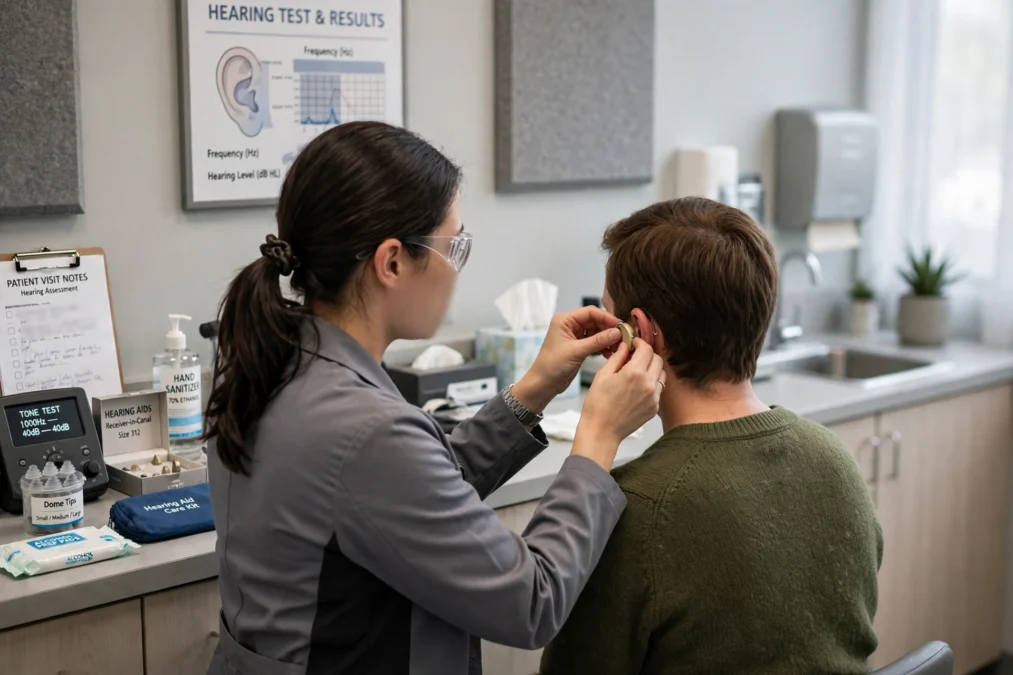
Fitting starts with a hearing test, which you can arrange privately with an audiologist or through the NHS by asking your GP for a referral to audiology. The test measures how quietly you can hear tones at different pitches, and the result is plotted as an audiogram, which shows the pattern of your hearing loss and lets the audiologist judge which devices and power levels are appropriate. That appointment is also the time to talk honestly about your life: whether you struggle most in meetings, on the phone, in restaurants or while watching television, because the best device for a quiet retiree and the best device for a busy professional are often different models.
At the fitting appointment, the audiologist programmes the hearing aids to your audiogram, checks the physical fit in your ears, and ideally carries out real-ear measurements, which verify with a tiny microphone that the sound reaching your eardrum matches the prescription. You should then get a trial period, typically several weeks, during which you wear the aids in real life and return for adjustments, because first fittings are rarely perfect and small changes to volume, clarity and background-noise handling make a large difference. Good aftercare, including regular reviews, cleaning advice and help when something goes wrong, matters as much as the initial fitting, so ask what follow-up is included before you commit.
Phonak vs Other Leading Brands
Phonak competes with several other major manufacturers, including Oticon, ReSound, Signia, Widex and Starkey, and each has its own approach to sound, its own app, and its own range of accessories. Oticon is known for an open sound philosophy that keeps background sounds audible, ReSound has a strong record in direct streaming and app design, Signia emphasises its own speech processing, Widex is praised for natural sound quality, and Starkey has pushed health-tracking features inside hearing aids. In practice, the differences between flagship models from these brands are smaller than the marketing suggests, and all of them produce devices that, properly fitted, help most wearers a great deal.
That is why experienced audiologists often say that the fitting matters more than the brand, and the evidence supports them: a mid-range device fitted carefully with real-ear measurements and good follow-up will usually outperform a flagship device fitted hastily and never adjusted. When comparing brands, pay attention to the things that affect daily life, such as how the app feels, whether the charger suits your routine, how the aids handle phone calls, and whether your audiologist can service them locally. Choose the audiologist first, because you will work with that person for years, and let the brand choice follow from your hearing test, your lifestyle and your budget rather than from an advertisement.
Conclusion
Phonak hearing aids earn their reputation as a strong all-round choice: Swiss engineering, a long research heritage, universal Bluetooth streaming, rechargeable batteries, and AI noise reduction in the newest Sphere models make them suitable for a wide range of hearing losses and lifestyles. The right model depends on your audiogram, on where you struggle most, and on what you can afford, and the difference between the Paradise, Lumity and Sphere generations is worth understanding before you accept a quote. Above all, remember that no hearing aid works well without a careful fitting, a real trial period, and follow-up adjustments.
If you are considering phonak hearing aids, the next step is simple: book a hearing test, either through your GP for the NHS route or directly with a private audiologist, and go in with questions about the model generation, the total price including aftercare, and the trial period. Take your time, try the devices in the situations that matter to you, and do not be rushed into a decision on the day. Hearing well again changes daily life in ways that are hard to overstate, and choosing carefully now will pay off every day for years.
How much do Phonak hearing aids cost?
There is no single price for Phonak devices, because private providers quote by model, technology level and the package of services included, and those packages differ from one clinic to another. A basic model from an older generation, fitted privately, will cost substantially less than a current flagship Sphere model, and the quoted price usually bundles the hearing assessment, the fitting, programming, a trial period and follow-up appointments into one figure. That bundling is why two quotes for apparently similar devices can differ by a large amount, and why an itemised quote that separates devices from professional services is the only fair basis for comparison.
Several factors push the price up or down, including whether you need one aid or two, the severity of your hearing loss, which accessories you add such as a television streamer or a remote microphone, and how much aftercare the clinic includes over the following years. Some clinics offer interest-free payment plans or staged payments, and it is worth asking whether the price includes future reprogramming, repairs and servicing, because those costs add up over the five-to-seven-year life of a pair of hearing aids. If a quote seems far below every other, check whether it excludes the fitting or the trial period, because an unfitted device is a poor bargain at any price.
Can you get Phonak hearing aids on the NHS?
You can receive hearing aids free of charge through NHS audiology, but whether you receive a Phonak model specifically depends on what your local audiology service stocks, and there is no guarantee of a particular brand. NHS services buy devices through national procurement arrangements, and different services stock different manufacturers, so one area may fit Phonak devices routinely while another fits a different brand entirely. Your GP can refer you to audiology for assessment, and the audiologist will select a device that matches your hearing loss from the range their service holds, which will be a modern digital aid even if it is not the brand you had in mind.
If you have your heart set on a specific Phonak model, the realistic route is private care, where you can choose the exact device, often with a shorter wait and access to premium features such as the latest AI noise reduction. Some people combine the two routes, using an NHS pair as a backup and a private pair as their main device, and nothing prevents you from seeking a private assessment even after an NHS fitting. If you go privately, tell the audiologist about any NHS devices you already own, because that history helps them programme the new aids and avoids duplicating tests unnecessarily.
How long do Phonak rechargeable batteries last?
Phonak rechargeable hearing aids typically last a full day on a single overnight charge for most wearers, which in practice means putting them in the charger when you go to bed and wearing them all the next day without thinking about batteries. Heavy use of Bluetooth streaming, long phone calls and noisy environments all draw more power, so a day packed with streaming and calls may end with less charge remaining than a quiet day, and the newest AI features also use energy when they are working hard in background noise. That is normal, and most wearers find that a full day is comfortably achievable, with the charger case ready for the night.
Charging itself is simple: the aids sit in a small case connected to mains power, and most cases also hold extra charges, so you can top up away from home or keep a spare charge for a weekend trip. Over several years the rechargeable cells gradually hold less charge, just like a phone battery, and when that happens the manufacturer or your audiologist can usually replace the cells or advise on the next step. To get the longest life from the batteries, keep the charger contacts clean, avoid leaving the aids in very hot or cold places, and charge them every night rather than letting them run completely flat.
Do Phonak hearing aids work with iPhone and Android?
Yes, Phonak’s devices work with both iPhone and Android phones, because Phonak uses universal Bluetooth connectivity rather than a system that only supports one brand of phone. That means calls, music, podcasts and other audio can stream directly into both hearing aids from almost any modern smartphone, and many models support hands-free calling, so you can answer a call by tapping the hearing aid and speak without picking up the phone. The myPhonak app, which lets you adjust volume and programmes, is available for both iOS and Android, and it is worth checking that your phone’s operating system version is supported before you buy.
There are a few practical points to check, because older phones and some budget models may not support every feature, and hands-free calling in particular can depend on the phone’s Bluetooth profile. Newer Phonak models also support Auracast, a newer Bluetooth broadcast standard that lets hearing aids pick up audio in public venues such as theatres and airports, although that depends on the venue providing an Auracast broadcast. If streaming matters to you, bring your own phone to the fitting appointment and test a call and a music track with the actual hearing aids, because five minutes of real testing tells you more than any compatibility list.