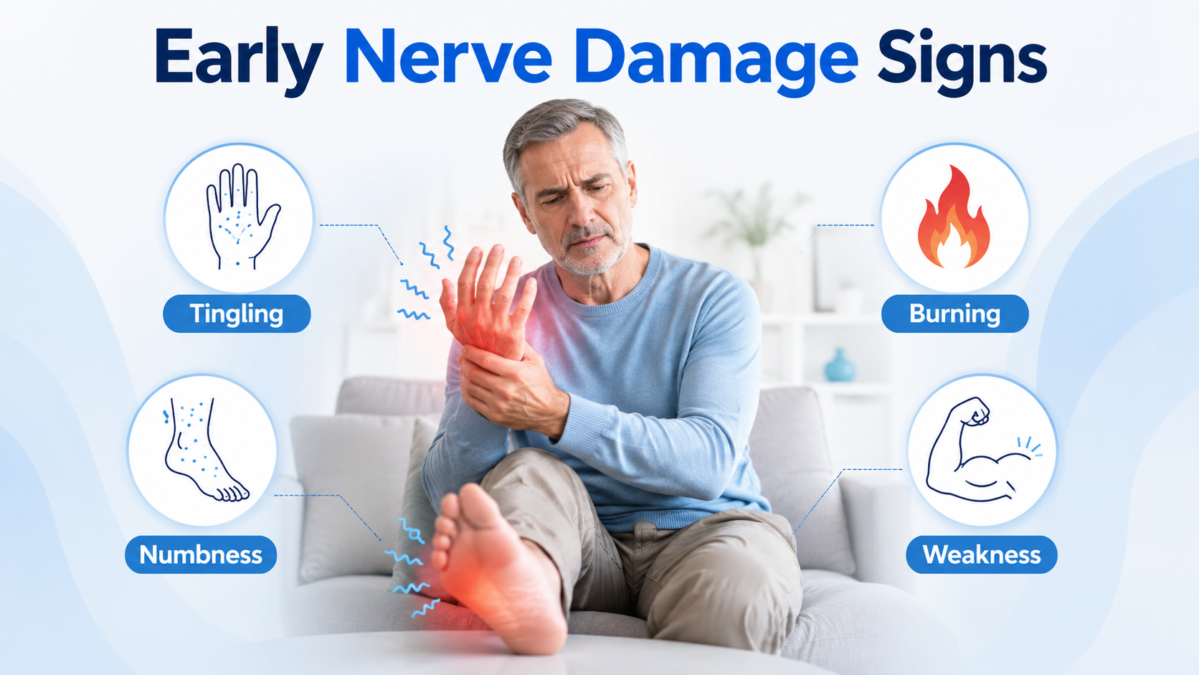
Nerve health is something many people overlook until discomfort starts affecting daily life. A small tingling feeling in the feet, mild numbness in the fingers, or a burning sensation at night can seem harmless at first. However, these changes may sometimes be the body’s early way of saying that the nerves need attention, support, or proper medical checking.
Understanding early nerve damage signs can help people notice symptoms sooner and take sensible action. This does not mean every strange feeling is dangerous, but repeated numbness, tingling, weakness, or burning pain should not be ignored. The earlier a possible nerve issue is discussed with a healthcare professional, the better the chance of finding the cause.
What Are Early Nerve Damage Signs?
Early nerve damage signs are the first changes a person may feel when nerves are not sending signals properly. These signs can include tingling, numbness, burning, prickling, sharp pain, or unusual sensitivity. Some people describe the feeling as pins and needles, while others say it feels like walking on cotton, sand, or a folded sock.
These symptoms often begin in the feet or hands because the longest nerves in the body can be more vulnerable. At first, the feeling may come and go, which makes it easy to dismiss. Over time, it may become more regular or noticeable, especially at night, after walking, or during simple daily activities.
Common Peripheral Neuropathy Symptoms
Peripheral neuropathy happens when nerves outside the brain and spinal cord are affected. These nerves help control feeling, movement, temperature awareness, and pain signals. Common peripheral neuropathy symptoms include numbness, tingling, burning pain, weakness, poor balance, and sensitivity to touch. The symptoms may feel mild at first but can become more disruptive if the cause is not addressed.
Some people may lose feeling in their toes or fingers, while others may feel pain from light pressure. This can make everyday life uncomfortable, especially when walking, sleeping, typing, or holding objects. In some cases, reduced sensation can also make it harder to notice small cuts, blisters, or injuries, particularly on the feet.
Can Vitamin B12 Deficiency Cause Nerve Damage?
Vitamin B12 is important for healthy nerves, red blood cells, and normal body function. When the body does not have enough B12, nerve signals may be affected. This can lead to tingling, numbness, balance problems, tiredness, weakness, or memory-related concerns. B12 deficiency can develop slowly, so symptoms may not feel obvious at the beginning.
Some people are more likely to develop low B12 levels, including those who follow a strict vegan diet, have digestive absorption issues, or take certain medicines for a long time. Older adults may also have a higher risk. If someone has nerve symptoms and suspects a deficiency, a blood test and medical advice are the safest next steps.
Tingling, Numbness, and Burning Sensations
Tingling is one of the most common early nerve-related symptoms. It may feel like tiny electric sparks, crawling under the skin, or pins and needles that do not fully go away. Numbness can feel like reduced feeling in the toes, feet, fingers, or hands. Burning sensations may feel hot, sharp, or uncomfortable without any visible skin problem.
These symptoms may become more noticeable when the body is resting, especially at night. A person may lie in bed and suddenly feel burning feet, prickling toes, or numb fingers. If this keeps happening, it is worth keeping a simple note of when it occurs, how long it lasts, and whether anything makes it better or worse.
Early Nerve Damage Signs in Feet and Hands
The feet are often one of the first places where nerve symptoms appear. People may feel numb toes, burning soles, sharp foot pain, or a strange feeling while walking. Some may feel unsteady, as if the ground is harder to judge. These symptoms can make shoes uncomfortable or make standing for long periods more difficult.
Hands may also show early signs, especially when fine movements become harder. A person may struggle with buttons, zips, typing, cooking, or holding a cup securely. Tingling in the fingers or weakness in grip can affect confidence during normal tasks. When both feeling and movement are involved, it is important to get proper medical guidance.
When Should You Speak to a Doctor?
You should speak to a doctor if tingling, numbness, burning, weakness, or balance problems continue, worsen, or affect daily life. It is also important to seek help if symptoms spread from the toes to the feet or legs, or from the fingers to the hands and arms. Early checks can help identify possible causes before symptoms become more difficult.
Urgent medical attention may be needed if symptoms appear suddenly, affect one side of the body, or come with speech problems, confusion, severe weakness, chest pain, or loss of balance. For non-urgent but ongoing symptoms, a doctor may suggest blood tests, nerve checks, medication reviews, or lifestyle changes based on the person’s health history.
How Nutritional Support May Help Nerve Health
Good nutrition can support normal nerve function, especially when the body is missing important nutrients. Vitamin B12, folate, vitamin D, and other nutrients may all play a role in general wellbeing. However, supplements should not be used as a guessing game. Taking the right nutrient depends on the cause of the symptoms and the person’s actual levels.
If a B12 deficiency is confirmed, a healthcare professional may recommend tablets, injections, or dietary changes depending on the reason for the deficiency. Nutritional support works best when combined with proper diagnosis. If nerve symptoms are linked to diabetes, thyroid issues, alcohol use, injury, or medicine side effects, those causes also need attention.
Simple Ways to Protect Nerve Health
Protecting nerve health often starts with everyday habits. Eating a balanced diet, staying active, managing blood sugar, limiting alcohol, and wearing comfortable footwear can all help support the body. People with diabetes or circulation problems should be especially careful with foot checks, as reduced feeling can make small injuries easier to miss.
It is also helpful to avoid ignoring repeated symptoms. Many people wait until discomfort becomes severe before asking for help, but the body often gives smaller signals earlier. Think of nerve symptoms like a warning light on a dashboard. It does not always mean something serious, but it does mean the issue deserves attention.
Conclusion
Early nerve symptoms can be confusing because they may come and go at first. Tingling, numbness, burning, weakness, and balance changes may seem small, but they can sometimes point to nerve irritation or damage. Paying attention to these signs can help people take action sooner and avoid unnecessary delays in getting checked.
Vitamin B12 deficiency is one possible cause of nerve-related symptoms, but it is not the only one. That is why self-diagnosis is not enough. A healthcare professional can help find the real reason and suggest the right next steps. When symptoms persist, getting advice is always better than waiting and hoping they disappear.