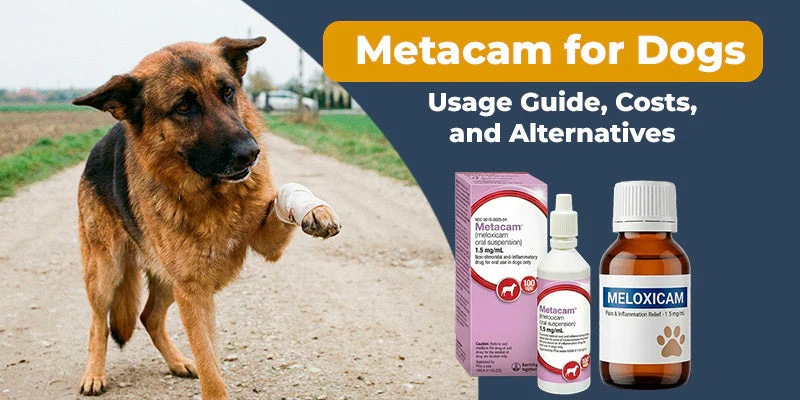
Watching a beloved four-legged family member slow down due to stiff joints or struggle to find a comfortable resting position after a major veterinary operation is a truly heartbreaking experience for any pet parent. Fortunately, modern veterinary medicine offers highly advanced, reliable solutions designed to restore your companion’s joyful spirit and natural range of physical mobility. One of the most frequently trusted and widely prescribed pharmaceutical treatments in modern veterinary care is a medication known commercially as Metacam, or generically as meloxicam.
This comprehensive guide is meticulously crafted to help you safely navigate every critical aspect of administering this powerful medication to your canine companion. From calculating the exact weight-based amount for your unique pet to identifying the very early warning signs of adverse drug reactions, we will explore the essential safety protocols every dog owner needs to know. Armed with this practical, expert-backed knowledge, you can confidently collaborate with your family veterinarian to manage your dog’s daily discomfort, reduce painful tissue inflammation, and significantly elevate their overall quality of life.
What is Metacam for Dogs and How Does It Work?
Metacam for dogs is a highly effective, prescription-only non-steroidal anti-inflammatory drug, a medical classification commonly referred to by veterinarians as an NSAID. This specific pharmaceutical agent is uniquely engineered to target and suppress the complex cellular pathways that trigger swelling, physical discomfort, and localized heat within distressed canine tissues. By precisely inhibiting specific cyclooxygenase enzymes—specifically known within the veterinary medical community as the COX enzymes—this medication efficiently interrupts painful cellular signals right at their biological source, granting your suffering animal profound physical relief.
Veterinary professionals globally rely on this powerful anti-inflammatory agent to manage chronic, long-term musculoskeletal disorders such as canine osteoarthritis, which frequently causes painful wear and tear on structural joints. Additionally, it is widely utilized to treat acute, sudden orthopedic injuries, such as muscle strains or ligament sprains, as well as serving as a foundational post-operative pain management tool to ensure smooth, stress-free surgical recoveries. The medication is commonly distributed as a highly palatable, sweet-tasting oral suspension liquid or as convenient chewable tablets, both of which are carefully crafted so that the vast majority of canines will accept the treatment quite readily without requiring forced administration.
Metacam Dosage for Dogs: How to Calculate and Administer Safely
Determining the absolute exact metacam dosage for dogs requires immense precision and careful calculation, as the appropriate amount of medication must be calculated based strictly on your animal’s current, verified body weight. Veterinary professionals always utilize a strategic, dual-phase dosing methodology to safely introduce this potent anti-inflammatory compound into a canine’s biological system without overloading their internal organs. Administering an excessive amount can place a dangerous, sudden strain on their sensitive metabolic pathways, while accidentally giving too little leaves your companion suffering in unnecessary, preventable discomfort.
On the very first day of the treatment plan, your pet will receive a single, elevated “loading dose” calculated at precisely $0.2\text{ mg}$ of active ingredient per kilogram of body weight to rapidly establish the drug within their bloodstream. From the second day of treatment onward, you will transition to a significantly reduced daily “maintenance dose” calculated at a steady $0.1\text{ mg}$ per kilogram of body weight. Pet parents must always utilize the specially graduated, weight-calibrated measuring syringe provided in the official packaging to measure the oral suspension liquid, and you should ideally mix the fluid directly into a substantial meal to protect the delicate lining of your dog’s stomach.
Side Effects and Risks: What Pet Parents Need to Watch For

While this particular medication is incredibly successful at restoring physical mobility, maintaining a strict awareness of potential metacam for dogs side effects is a critical, lifelong responsibility for every attentive pet owner. The vast majority of domestic canines tolerate this daily medication beautifully, but just like a human taking ibuprofen, a small percentage of dogs can experience varying degrees of gastrointestinal irritation or systemic sensitivity. Recognizing these subtle bodily adjustments or sudden behavioral shifts during the first few days of starting the therapy allows you to intervene before minor issues escalate into severe medical complications.
The most frequently documented clinical warning signs of a mild, localized stomach upset include unexpected vomiting, abnormally loose stools, dark diarrhea, or a sudden, uncharacteristic loss of appetite during mealtime. If you observe generalized lethargy or find yourself anxiously wondering does metacam make dogs sleepy, the clinical answer is yes—occasional drowsiness or mild sluggishness can happen as the body rests, but extreme weakness requires immediate veterinary attention. Pet parents must stay vigilant for rare but severe symptoms, including black or tarry stools, yellowing of the eyes and gums, or persistent, unquenchable dehydration, all of which point to serious internal stress that requires urgent medical intervention.
Critical Drug Interactions and Contraindications
One of the most foundational, unyielding rules of canine pharmacology dictates that you must never, under any circumstances, combine metacam for dogs with other NSAIDs or any form of corticosteroids like prednisone. Mixing these specific classes of powerful prescription drugs drastically multiplies the mathematical risk of your pet developing severe gastric ulcerations, life-threatening internal bleeding, or acute liver and kidney failure within a incredibly short timeframe. Because of these severe interactions, it is absolutely paramount that you provide your veterinary team with a complete, transparent checklist of every single supplement, joint chew, or over-the-counter remedy your pet is taking.
Furthermore, a responsible, highly qualified veterinarian will always mandate a comprehensive diagnostic blood test before writing an initial prescription for any variation of metacam dogs. This thorough laboratory screening ensures that your pet’s metabolic organs, specifically the liver and kidneys, are functioning optimally and possess the physiological capability to safely process and excrete the daily medication. If an animal is actively suffering from systemic dehydration, dealing with dangerously low blood pressure, or harboring an undiagnosed underlying renal condition, administering this specific anti-inflammatory compound could inadvertently cause severe, irreversible organ damage.
Timeline: How Long Does Metacam Take to Work and How Long Does It Last?
When your beloved animal is in visible, agonizing physical distress, knowing exactly how long does metacam take to work can provide an immense amount of emotional peace of mind to an anxious household. For acute, sudden painful events, the highly bioavailable oral suspension liquid begins absorbing rapidly through the dog’s digestive tract, typically providing noticeable initial physical comfort within just one to four hours following administration. However, for deep-seated chronic conditions like advanced osteoarthritis, it may require three to four consecutive days of steady, uninterrupted daily dosing to fully witness major, transformative improvements in your dog’s overall mobility.
Once fully absorbed by the canine body, the therapeutic anti-inflammatory benefits of this medication are engineered to remain highly active for a complete, uninterrupted twenty-four-hour window. This remarkably long-lasting biological formula is the precise reason why the medication is strictly designated by pharmaceutical manufacturers as a once-daily medical treatment. It is critical for pet parents to establish a rigorous routine and administer the exact prescribed dose at the same time every single day, maintaining a steady baseline of pain management and preventing the underlying discomfort from returning between doses.
Can You Give Metacam to Cats? (Important Warning)
It is absolutely vital for multi-pet households to recognize that feline biology processes non-steroidal anti-inflammatory medications in a radically different manner than canine anatomy. While specialized metacam cats formulas do exist in the veterinary marketplace, they are carefully engineered with a significantly weaker, highly diluted concentration of the active ingredient meloxicam to accommodate sensitive feline metabolisms. A cat’s liver lacks the specific metabolic pathways required to safely break down dense, concentrated canine medications, meaning that even a minor accidental cross-contamination can quickly prove fatal.
The standard canine version of this popular oral suspension contains a potent $1.5\text{ mg/mL}$ of the active drug, whereas the approved feline variation is formulated at a vastly milder $0.5\text{ mg/mL}$ concentration. Administering even a tiny, seemingly insignificant droplet of your dog’s high-strength medication to a household cat can induce rapid, completely irreversible acute kidney failure within less than a single day. To prevent a catastrophic domestic medication error, always store your various pet prescriptions in entirely separate cabinets and never, under any circumstance, attempt to share medications across different animal species.
Conclusion & Next Steps for Pet Owners
When utilized responsibly and under the direct, watchful guidance of a licensed veterinary professional, metacam for dogs stands as an incredibly safe, reliable, and genuinely transformative milestone in modern pet care. Over the last several decades, it has allowed countless aging, arthritic dogs to successfully regain their precious freedom of movement, navigate household stairs effortlessly, and live out their golden senior years with dignity. Your primary role as a loving pet parent in this therapeutic journey is to act as an attentive, well-informed observer, ensuring incredibly precise weight-based measurements while monitoring daily behavioral patterns.
If you ever suspect that your dog is reacting poorly to their medication, or if you notice any unusual changes in their baseline eating and drinking habits, stop the treatment immediately and call your local veterinary clinic. By staying thoroughly educated, adhering closely to professional weight-based dosing guidelines, and prioritizing routine veterinary wellness checkups and blood screenings, you can safely harness the full power of this exceptional anti-inflammatory drug. Together with the trusted guidance of your family veterinarian, you can easily provide your furry best friend with the highly comfortable, active, and joyfully pain-free life they truly deserve.
Frequently Asked Questions (FAQs)
Can I buy Metacam for dogs without a vet prescription?
No, it is legally impossible to purchase this specific medication without a valid, current prescription issued by a licensed veterinarian. Because the active ingredient presents highly specific, documented risks regarding long-term kidney and liver health, a professional physical evaluation and regular diagnostic blood monitoring are legally mandated to safeguard your pet’s systemic well-being.
What should I do if I accidentally miss a dose?
If you accidentally miss a scheduled dose and happen to remember the mistake within a few hours of the normal time, it is generally perfectly safe to administer it immediately. However, if you realize the error when it is nearly time for the subsequent day’s application, skip the missed dose entirely and resume your standard twenty-four-hour calendar schedule. You must never double the size of the dose to compensate for a past oversight, as this dramatically increases the risk of toxicity.
Can I give my dog human aspirin or ibuprofen instead?
Absolutely not under any circumstance. Human over-the-counter pain relievers are profoundly dangerous to the canine species and should never be viewed as a safe or acceptable substitute for specialized metacam dog formulas. Human medications possess chemical structures that can spark severe, life-threatening stomach perforations, massive internal bleeding, and sudden renal shutdown within a matter of hours if ingested by a dog.
You may also read: Understanding Heart Rhythms in Children vs. Adults