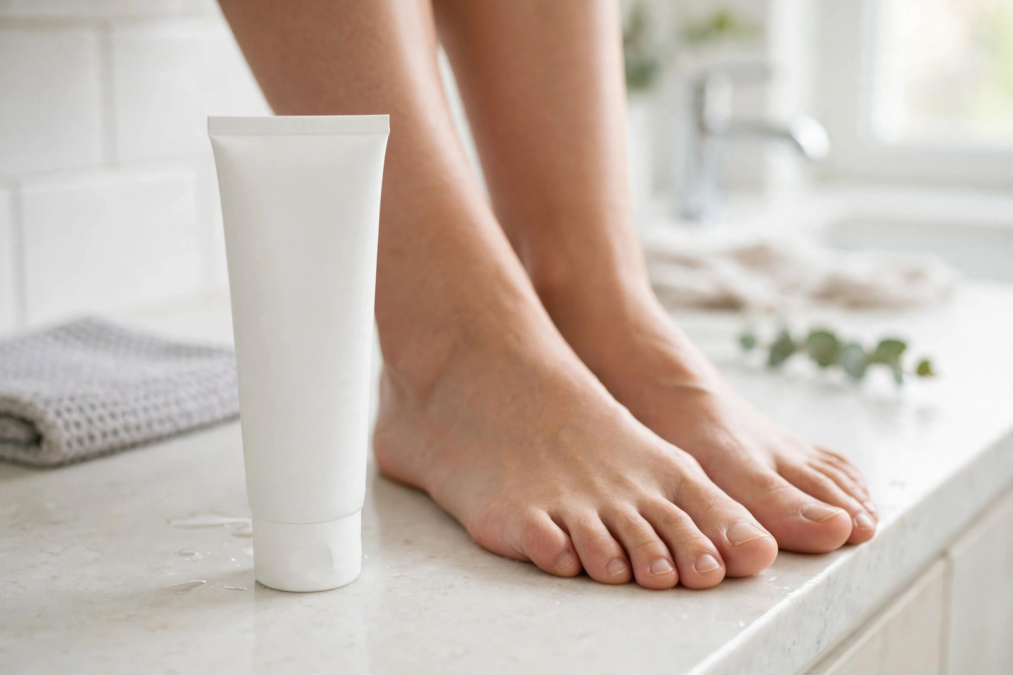
Athlete’s foot cream is the first-line treatment for athlete’s foot (tinea pedis), the itchy fungal infection that thrives in the warm, damp spaces between your toes. Most cases clear up within one to four weeks of correct use, and effective creams are available without prescription from any UK pharmacy. The keys to success are choosing a product with a proven active ingredient, applying it exactly as directed, and finishing the full course even after the itching stops — because stopping early is the single most common reason the infection comes straight back.
This complete guide explains what these antifungal creams are and how they work, compares the main active ingredients so you can pick the right product, walks you through correct application step by step, flags the mistakes that make treatment fail, and shows how to stop the infection returning. You will also learn exactly when self-treatment is enough and when you should see a GP instead, so you can treat your feet with confidence rather than guesswork, using clear and practical advice you can put into action from today.
What Athlete’s Foot Cream Is and How It Works
Athlete’s foot, known medically as tinea pedis, is a skin infection caused by dermatophytes — fungi that feed on keratin, the protein in your skin, hair and nails. Despite the sporty name, you do not need to be an athlete to catch it; anyone whose feet stay warm and sweaty inside shoes for long hours can develop the characteristic itchy, scaly patches between the toes. Athlete’s foot cream delivers antifungal medicine directly to the infected skin, which is why it works faster and with fewer side effects than trying to fight the infection from the inside out.
Once applied, the cream’s active ingredient penetrates the outer skin layers and attacks the fungal cells themselves, either killing them outright or stopping them multiplying until your skin’s natural renewal clears the infection away. As the colony shrinks, the maddening itching usually eases within a few days, followed by a gradual calming of burning, scaling and cracked skin over one to two weeks. That early relief is welcome but deceptive — visible symptoms fade long before every fungal cell is gone, which is precisely why pharmacists and the NHS both stress finishing the full recommended course of any antifungal treatment you start.
The Main Types of Antifungal Creams (Active Ingredients Compared)
Pharmacy shelves hold a dozen different boxes, but the brand name on the front matters far less than the active ingredient in small print on the back. The most effective group is the allylamines, led by terbinafine (sold as Lamisil and own-brand versions), which kills dermatophyte fungi directly and usually needs only once-daily application for one to two weeks. Clinical evidence, including guidance summarised by BMJ Best Practice, suggests terbinafine-based athlete’s foot cream tends to clear the infection slightly faster and more reliably than the alternatives, making it the usual first recommendation from pharmacists.
The second major family is the azoles, including clotrimazole (Canesten) and miconazole (Daktarin), which disrupt the fungal cell membrane so the organisms cannot grow and reproduce. Azole creams are effective and widely available, but they generally need twice-daily application and a longer course — often up to four weeks — to match a shorter terbinafine course. You may also spot tolnaftate or ciclopirox on some labels; both are legitimate antifungals, though less commonly stocked in UK pharmacies. Whatever you choose, check the packet for the active ingredient and its concentration, confirm it suits your age group, and ask the pharmacist if you take other medicines.
How to Apply Athlete’s Foot Cream Correctly
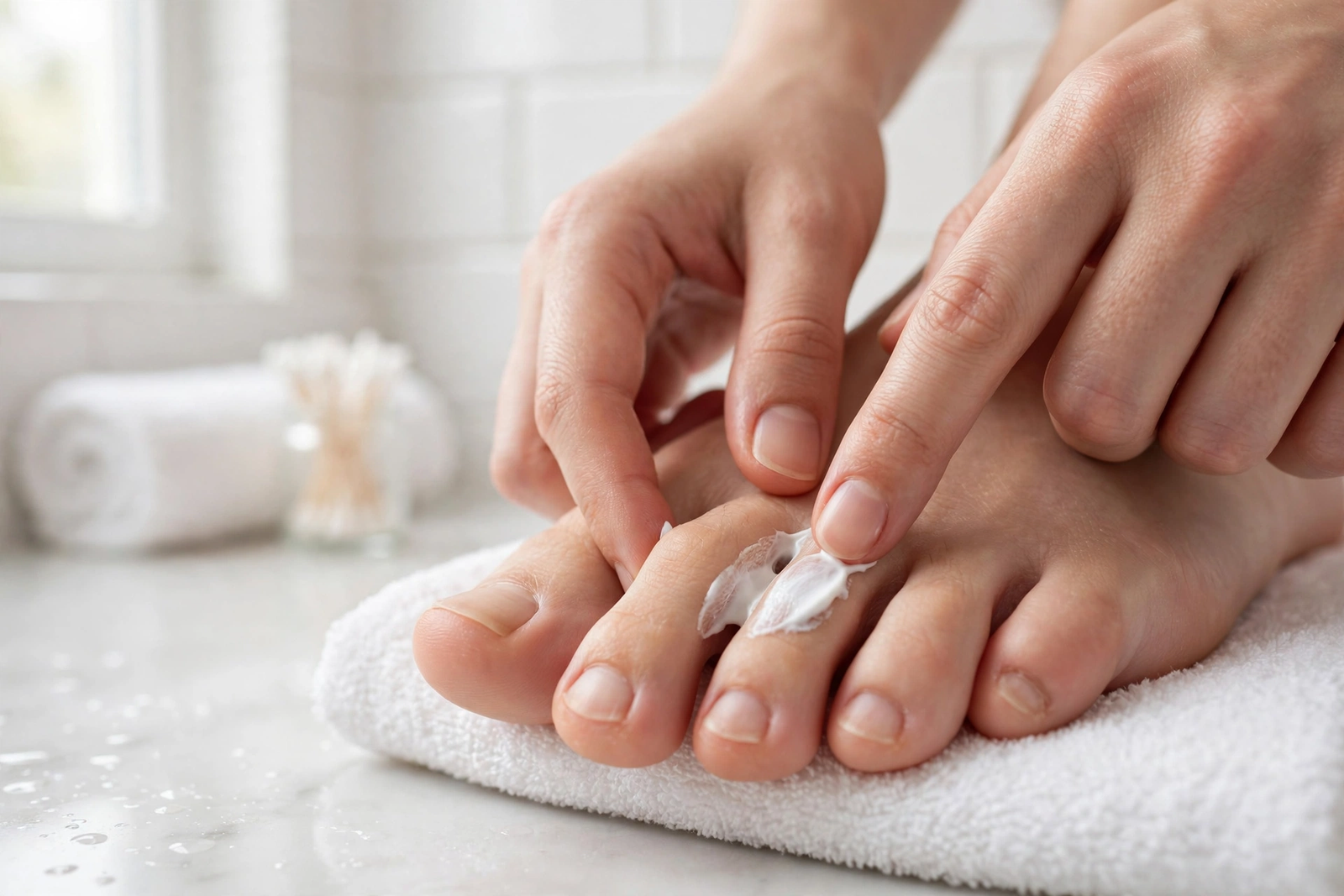
Correct application matters as much as choosing the right product, because even the best antifungal cannot work if it never reaches the fungi hiding in the skin folds. Start by washing your feet with soap and warm water, then dry them completely — paying special attention to the spaces between your toes, where trapped moisture gives the infection its ideal breeding ground. Dab the skin dry with a clean towel rather than rubbing, which can irritate already inflamed skin, and consider using a separate foot towel that you wash frequently at a high temperature.
Once the skin is fully dry, smooth a thin layer of athlete’s foot cream over the affected area, extending slightly beyond the visible rash onto healthy-looking skin, since the fungal colony almost always spreads further than the eye can see. Most products are applied once or twice daily exactly as the packet directs, and you should continue for the entire recommended course — usually one to four weeks — even if the itching disappeared days ago. Stop only when the skin has looked and felt completely normal for at least a week or two, because quitting at the first sign of relief lets surviving fungi regroup.
Common Mistakes That Make Treatment Fail
The number one reason antifungal treatment appears “not to work” has nothing to do with the product: people stop using it the moment the itching fades, leaving a weakened but living fungal colony to return within weeks. Closely related is applying cream to damp feet straight out of the shower, which dilutes the medicine and traps exactly the moisture the fungi love, or dabbing it only on the itchiest spot while missing the webbed spaces between the toes where the infection is actually centred. Each shortcut feels harmless, yet together they account for the vast majority of treatment failures pharmacists see every week.
Another classic error is re-infecting yourself from your own belongings while treatment is working, by pulling on yesterday’s sweaty socks, lacing up damp trainers, or sharing towels with family members. Change into clean, dry socks every single day — cotton or moisture-wicking sports socks are best — rotate your shoes so each pair gets a day or two to air out, and never share towels, socks or shoes while treating the infection. Finally, do not improvise with the product: these creams are formulated for intact foot skin, so avoid using them on toenails or broken, bleeding skin without first checking with a pharmacist.
Preventing Athlete’s Foot Coming Back
Clearing the current infection is only half the battle, because the same warm, sweaty conditions that caused it will invite it back unless you change the environment your feet live in. Make dryness your daily mantra: wash your feet every day, dry meticulously between the toes, and choose breathable, well-fitting shoes that do not trap heat — leather and mesh uppers beat plastic every time. Fresh socks daily are non-negotiable, and if your feet sweat heavily, consider antifungal powders or sprays dusted inside your shoes to keep the interior hostile to fungi between wears.
Communal damp areas are the other great source of re-infection, so wear flip-flops or pool sandals in shared showers, changing rooms and around swimming pools rather than walking barefoot where other people’s skin cells linger. It is also wise to treat both feet even if only one looks infected, since the “healthy” foot very often carries the fungus silently, and to wash towels, socks and bedding regularly at 60 degrees to kill lingering spores. These small habits take barely a minute a day, yet they are the difference between a one-off nuisance and a problem that returns every summer for years.
When to See a GP Instead of Self-Treating
Pharmacy treatment handles the great majority of cases, but there are clear situations where professional help is the safer choice. Book a GP appointment if you have used an antifungal correctly for two to four weeks with no real improvement, if the infection spreads beyond the feet to your hands or groin, or if you develop blisters, open sores, severe cracking or intense pain. Be especially alert to hot, rapidly spreading redness moving up the foot or leg, which can signal a bacterial skin infection such as cellulitis — our guide to pictures of cellulitis explains the warning signs — because that needs prompt medical treatment rather than more antifungal cream.
Extra caution applies if you live with diabetes, poor circulation or a weakened immune system, or if you are pregnant: foot problems can escalate faster and complications are harder to spot in these groups, so speak to your GP or pharmacist before starting treatment rather than self-managing. A GP can confirm the diagnosis with a simple skin scraping, prescribe stronger antifungal tablets if creams are not enough, or refer you to a dermatologist for stubborn cases. Please remember this article is general information for a UK audience and not medical advice — if you are ever unsure, a quick chat with your pharmacist or GP is always the right call. For the NHS’s own overview, see the NHS athlete’s foot guide.
Conclusion
Beating athlete’s foot comes down to a simple formula that works every time: the right active ingredient, applied correctly, for the full course, followed by dry-foot habits that stop the fungi moving back in. Terbinafine-based creams offer the shortest, most reliable route for most people, while clotrimazole and miconazole remain solid alternatives if you follow their longer courses faithfully. Resist the temptation to stop when the itching fades, keep your feet dry and your socks fresh, and treat both feet as routine rather than waiting for symptoms to appear.
Most cases of athlete’s foot resolve fully without ever needing a doctor, but knowing the red flags — no improvement after a few weeks of proper treatment, infection spreading beyond the feet, severe pain or cracking, or any foot problem alongside diabetes — means you will never let a minor fungal nuisance turn into something serious. Treat it properly once, prevent it diligently afterwards with the dry-foot habits in this guide, and your feet can stay comfortable, healthy and itch-free for good.
How Long Does Athlete’s Foot Cream Take to Work?
Most people notice itching starting to ease within three to seven days of correct use, which is encouraging but not the finish line. Visible scaling and flaking typically improve over one to two weeks, while complete clearance usually takes the full recommended course — one to two weeks for terbinafine-based products, and up to four weeks for clotrimazole or miconazole. If you have followed the instructions faithfully for the full course and symptoms persist, or if things are clearly getting worse after two weeks, speak to a pharmacist about switching products or book a GP appointment for stronger treatment.
Can I Use Athlete’s Foot Cream on Other Fungal Infections?
Many of these creams can also treat closely related fungal infections such as jock itch and ringworm, because the same dermatophyte fungi cause all three conditions and the active ingredients work identically on them. However, always check the product packet first, as some formulations are licensed only for feet, and certain areas of skin — particularly the face, scalp and groin — can be more sensitive or may need a different strength. When in doubt, describe your symptoms to a pharmacist, who can confirm whether your existing cream is suitable or recommend a better-targeted alternative for that area.
Should I Treat Both Feet If Only One Is Infected?
Yes — treating both feet is standard advice and one of the simplest ways to prevent the infection bouncing from one foot to the other. Fungal spores spread easily across damp skin, socks and bedding, so the apparently healthy foot is very often already colonised at a level too early to show symptoms. Applying cream to both feet costs little extra effort and closes off the most common route of re-infection, which is why pharmacists routinely recommend it even when only one foot looks or feels affected by the fungus.
Is Athlete’s Foot Contagious?
Athlete’s foot is mildly contagious and spreads through direct contact with infected skin or with the tiny flakes of skin that infected feet shed onto floors, towels and fabrics. You are most likely to pick it up by walking barefoot in communal changing rooms, showers and pool surrounds, or by sharing towels, socks or shoes with someone who has the infection. It does not travel through the air or spread through casual brief contact, so simple hygiene — your own towel, clean socks daily, and flip-flops in shared wet areas — is highly effective protection for the whole household.
Can I Use Athlete’s Foot Cream If I Have Diabetes?
People with diabetes need to be considerably more cautious with any foot problem, because reduced circulation and nerve sensation mean infections can worsen unnoticed and heal more slowly than usual. While many antifungal creams are technically suitable, the standard medical advice is to speak to your GP, pharmacist or diabetes care team before starting treatment rather than self-managing the problem alone. They may want to examine your feet themselves, confirm the diagnosis, and arrange follow-up — and you should seek prompt medical help for any foot issue that does not improve quickly, however minor it may seem.