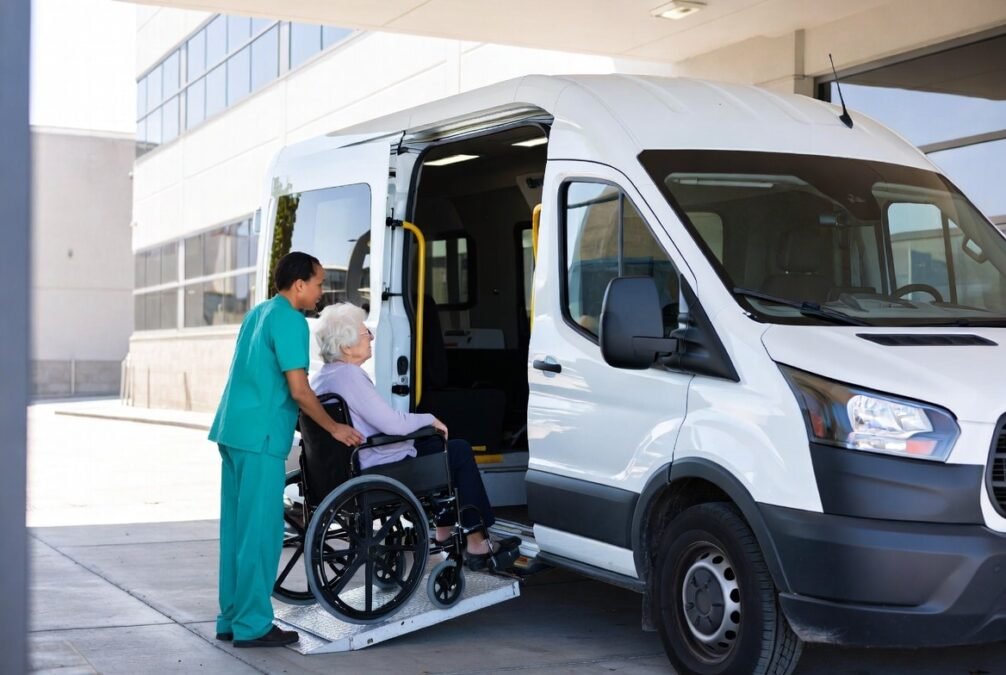
Nearly $12 million in federal funding for transportation coordination, a growing senior population, and new technology initiatives are bringing renewed attention to Non-Emergency Medical Transportation (NEMT) in the United States.
As healthcare systems work to improve access to treatment, transportation is becoming an increasingly important part of the conversation. For millions of Americans, reaching a hospital or medical appointment is not always as simple as booking a ride.
Recent federal initiatives highlight why the connection between healthcare and transportation deserves greater attention.
Federal Funding Highlights the Importance of NEMT
In July 2026, the Federal Transit Administration (FTA) announced approximately $12 million in competitive funding through its Innovative Coordinated Access and Mobility (ICAM) Pilot Program.
The initiative focuses on improving coordination between transportation providers and non-emergency medical transportation services, particularly for older adults, people with disabilities, and individuals with low incomes.
Eligible projects include transportation coordination technology, mobility management solutions, one-call/one-click transportation access systems, and vehicles used for shared or coordinated services.
The application period closed in September 2026. The announcement demonstrates that improving medical transportation coordination remains an active federal policy priority.
Importantly, this funding is intended for eligible projects rather than direct payments to individual NEMT companies.
An Aging Population Creates New Transportation Challenges
Demographic changes are another important factor.
According to the U.S. Census Bureau’s 2024 American Community Survey, approximately 61.2 million Americans were aged 65 or older.
Not every older adult requires specialized transportation. However, age-related mobility limitations, disabilities, and reduced access to personal vehicles can make regular medical travel more complicated.
For patients who attend dialysis, rehabilitation, physical therapy, or specialist appointments, transportation may be needed several times a week.
These journeys require more than vehicle availability. Appropriate accessibility, scheduling, passenger assistance, and dependable return transportation can all influence whether a trip meets the patient’s needs.
Technology Is Changing How Medical Rides Are Organized
One of the most promising developments in NEMT is the growing emphasis on transportation coordination technology.
Healthcare transportation often involves multiple participants: patients, medical facilities, transportation brokers, dispatch teams, and drivers.
Without effective coordination, scheduling becomes difficult, particularly when organizations manage numerous recurring appointments.
Modern transportation systems can help address these challenges through:
- Digital reservations and recurring trip scheduling
- Automated dispatch and vehicle assignment
- Route planning and optimization
- Real-time trip status information
- Communication between drivers and dispatchers
- More efficient coordination of wheelchair-accessible vehicles
The 2026 ICAM funding initiative specifically identifies coordination technology as an eligible investment area.
However, technology alone cannot guarantee reliable service. Accurate passenger information, trained personnel, suitable vehicles, and effective operational procedures remain essential.
Medicaid Remains Central to the NEMT System
Medicaid is another important part of the national medical transportation landscape.
Federal Medicaid requirements obligate states to assure necessary transportation for eligible beneficiaries to and from covered healthcare services.
States organize these transportation programs differently. Some rely on transportation brokers, while others use managed care arrangements or additional transportation coordination models.
This decentralized structure creates operational differences between states, including variations in booking procedures, provider networks, and service administration.
For transportation organizations, understanding these requirements is essential to maintaining compliant and dependable operations.
Why NEMT Matters Beyond Transportation
The broader importance of NEMT becomes clear when considering what happens without an appropriate transportation option.
A patient may have health insurance, an appointment with a specialist, and access to an excellent medical facility. Yet none of these resources solves the practical problem of reaching the appointment.
Transportation barriers can affect patients living in rural communities, people with disabilities, individuals who no longer drive, and those who require repeated treatment.
NEMT addresses a specific part of this problem by connecting medically stable passengers with transportation suited to their mobility and scheduling needs.
For healthcare facilities, dependable transportation coordination can also simplify the management of scheduled patient journeys.
What Comes Next for Medical Transportation?
The developments of 2026 suggest several priorities for the sector.
Accessibility will remain important as transportation systems respond to the needs of older adults and passengers with disabilities.
Technology will continue to offer opportunities for improving scheduling, dispatch operations, and coordination across transportation networks.
Healthcare organizations and transportation providers may also benefit from closer cooperation, particularly when managing recurring medical appointments or transitions between care facilities.
The central challenge is not simply increasing the number of available vehicles. It is ensuring that the right transportation can be arranged for the right passenger at the appropriate time.
Non-Emergency Medical Transportation is more than a ride to a medical facility. It is one of the practical connections that makes healthcare accessible.
Explore NEMT services and transportation solutions: